






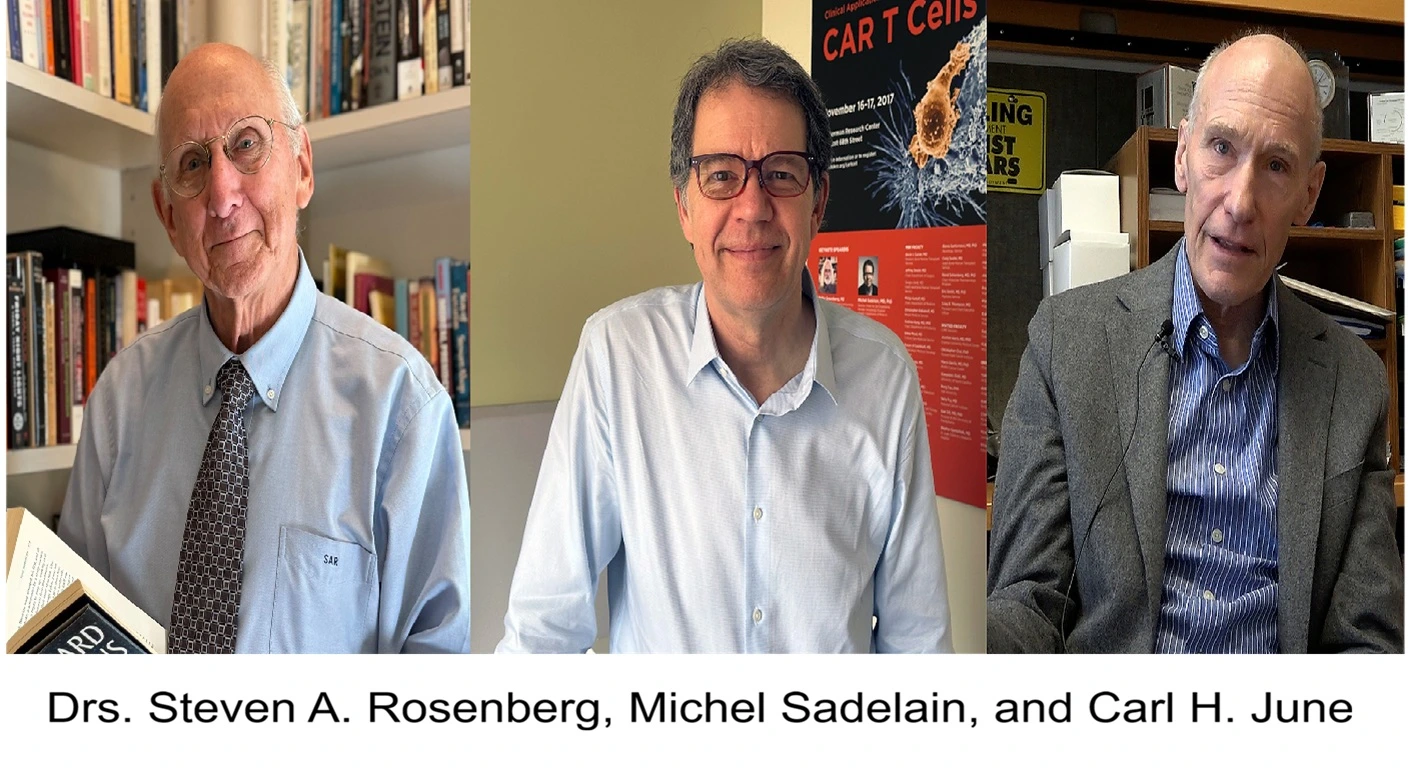
The 2026 Tang Prize in Biopharmaceutical Science has been awarded jointly to Dr. Steven A. Rosenberg, Dr. Michel Sadelain, and Dr. Carl H. June in recognition of their groundbreaking contributions to cellular immunotherapy, a field that has transformed cancer treatment.
Announced on June 16, the award recognises the trio “for the discovery and development of tumour-infiltrating lymphocyte (TIL) and chimeric antigen receptor T-cell (CAR-T) therapies, which have revolutionized treatment for blood cancers and solid tumours.”
The prize committee highlighted that the work of the three laureates has helped lay the foundation for a new era of “living drugs.”
Dr. Rosenberg, often referred to as the “Father of Cancer Immunotherapy,” has led the Surgery Branch at the US National Cancer Institute since 1974. His pioneering work established the foundational clinical framework for adoptive cell therapy and demonstrated that high-dose interleukin-2 (IL-2) could stimulate T-cell proliferation and enhance their ability to kill cancer cells, leading to regression of metastatic tumours. He also showed that tumour-infiltrating lymphocytes could induce regression of metastatic melanoma. In the 1990s, he received the first regulatory approval to introduce foreign genes into humans.
Dr. Sadelain and Dr. June were recognised for their leadership in advancing CAR-T therapy.
Dr. Sadelain discovered that adding the CD28 co-stimulatory domain to the CD3ζ chain yielded T cells with therapeutic potential, establishing the core architecture that has become the standard framework for all subsequently FDA-approved CAR-T therapies. He also identified CD19 as an effective therapeutic target for B-cell malignancies and provided the first demonstration that human CD19 CAR-T cells could treat cancer in mice.
Dr. June helped demonstrate CD28 co-stimulation as essential for T-cell activation and applied the anti-CD3 and anti-CD28 bead expansion protocol, which has become the global manufacturing standard for CAR-T cells. His partnership with Novartis culminated in Kymriah becoming the first FDA-approved CAR-T therapy in 2017, marking a major step in bringing CAR-T therapy from research into clinical medicine.
Cellular immunotherapy harnesses a patient’s own immune system to fight cancer by using immune cells, including genetically engineered CAR-T cells, to identify and destroy malignant cells. In recent years, the approach has emerged as one of the most transformative advances in cancer treatment.
Since receiving its first US regulatory approval in 2017, CAR-T therapy has benefited more than 30,000 patients with blood cancers worldwide, offering new hope to people with recurrent and/or refractory blood cancers. TIL therapy has also opened new treatment possibilities for advanced solid tumours, particularly metastatic melanoma.
Recent developments in CAR-T technology have extended beyond oncology into areas including CRISPR-Cas9-enabled cell engineering, treatment of autoimmune diseases such as systemic lupus erythematosus, cardiac tissue repair, and research targeting senescence.
Established in 2012 by Dr. Samuel Yin, the Tang Prize recognises exceptional achievements across four categories: Sustainable Development, Biopharmaceutical Science, Sinology, and Rule of Law. Awarded every two years, the prize includes NT$50 million (approximately US$1.6 million), including a dedicated research and educational outreach grant intended to encourage professionals in every field to examine mankind’s most urgent needs in the 21st century.