






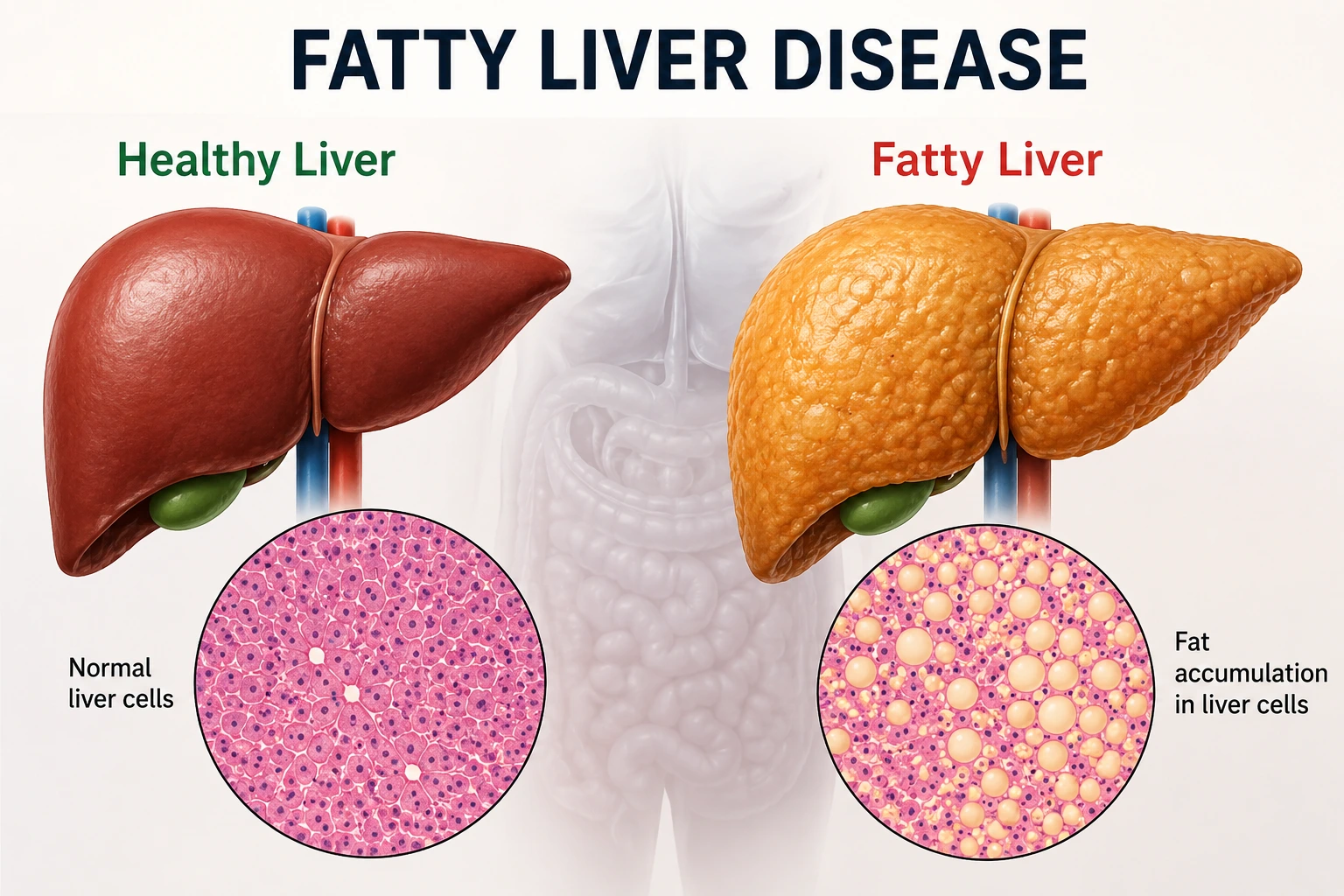
Millions of people worldwide are living with metabolic dysfunction-associated steatohepatitis (MASH), a severe fatty liver disease linked to obesity and type 2 diabetes. The condition can quietly progress for years without noticeable symptoms before leading to cirrhosis, liver failure, or liver cancer. Researchers at the University of California San Diego School of Medicine believe they may have found a way to stop the disease before it becomes life-threatening.
They have developed a new experimental drug called ION224 that attacks a biological pathway directly involved in liver fat buildup. Unlike many existing treatments for fatty liver disease that mainly focus on weight loss, ION224 targets the disease process itself, the researchers said.
In clinical trials, patients showed significant improvements in liver health even without major weight loss. The findings were published in The Lancet.
How the Drug Works
According to researchers, ION224 blocks an enzyme known as DGAT2, which helps the liver produce and store fat. Excess fat accumulation inside liver cells is believed to trigger inflammation, tissue damage, and scarring over time.
“This study marks a pivotal advance in the fight against MASH,” said Rohit Loomba, principal investigator of the study and chief of the Division of Gastroenterology and Hepatology at UC San Diego School of Medicine.
“By blocking DGAT2, we’re interrupting the disease process at its root cause, stopping fat accumulation and inflammation right in the liver,” he added.
UC scientistsbelieve ION224 may eventually be used alongside popular GLP-1 weight loss medications and other therapies.
Clinical Trial Results
The Phase IIb clinical trial involved 160 adults in the United States with MASH and mild to moderate liver fibrosis. Participants received monthly injections of ION224 at different doses or a placebo over a 51-week period.
Patients receiving the highest dose showed some of the strongest results, with around 60 per cent experiencing meaningful improvements in liver health compared with those receiving placebo treatment. Researchers also reported that the medication was generally well tolerated, with no serious side effects linked to the drug.
The study is believed to be the first to demonstrate that blocking DGAT2 with an antisense therapy can improve liver inflammation and fibrosis in people with MASH. Importantly, the treatment also avoided some side effects associated with other drugs targeting liver fat production, including dangerous increases in triglycerides.
“This is the first drug of its kind to show real biological impact in MASH. If these findings are confirmed in Phase III trials, we may finally be able to offer patients a targeted therapy that halts and potentially reverses liver damage before it progresses to life-threatening stages,” Loomba said.
The researchers now plan to conduct larger Phase III clinical trials to further evaluate the drug’s safety and effectiveness in a broader patient population before seeking regulatory approval.