





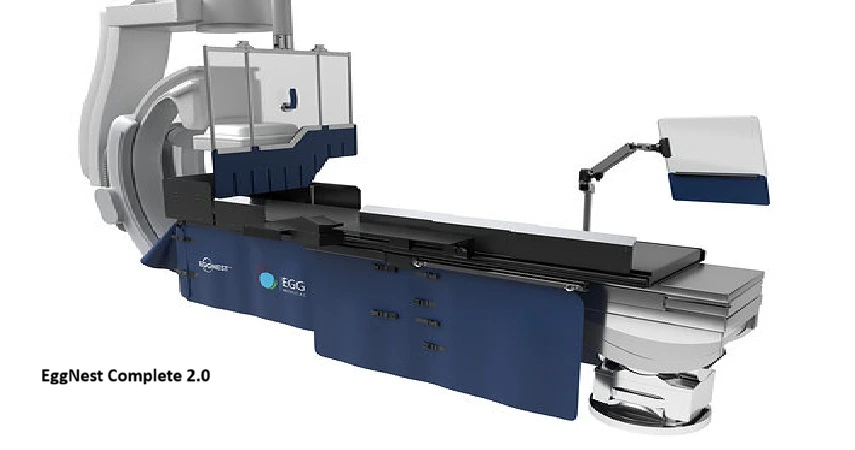
US-based medical technology company Egg Medical has launched EggNest Complete 2.0, the latest generation of its Enhanced Radiation Protection Device (ERPD) designed to reduce scatter radiation exposure during interventional procedures.
The upgraded system combines comprehensive radiation protection with a lightweight engineered design and premium components, offering enhanced durability, easier maintenance, and seamless integration into existing clinical workflows.
EggNest Complete 2.0 requires no structural modifications, architectural permits, or lengthy installation processes. Hospitals can deploy the system immediately while keeping interventional labs fully operational, helping avoid downtime, revenue loss, and costly infrastructure upgrades.
The Protect 2.0 base platform features a streamlined engineering design that significantly reduces overall system weight without compromising radiation protection.
Built for high-volume clinical environments, it incorporates easy-to-clean molded carbon fiber components for seamless workflow integration.
The company said, “EggNest remains the only comprehensive radiation protection system that requires zero construction and zero trip hazards— it works in any lab, from day one. With this next generation, our engineering team made the proven platform meaningfully better: lighter, without any compromise to protection, and more durable and easier to clean for high-volume environments.”
The EggNest Complete 2.0 system features a unified matrix of premium radiation safety components, including:
- Telescoping Shield and Upper Flip Shields: Molded carbon fiber shields designed to provide adaptive, articulation-friendly scatter radiation shielding.
- Sealed EggPad and Egg Blanket: Reusable, easy-to-clean shielding solutions optimized for interventional procedures.
By eliminating the need for capital construction projects or structural alterations, EggNest Complete 2.0 enables hospitals and health systems to quickly enhance radiation safety for physicians, nurses, technologists, and other healthcare professionals exposed to scatter radiation during image-guided procedures, without interrupting clinical operations.