






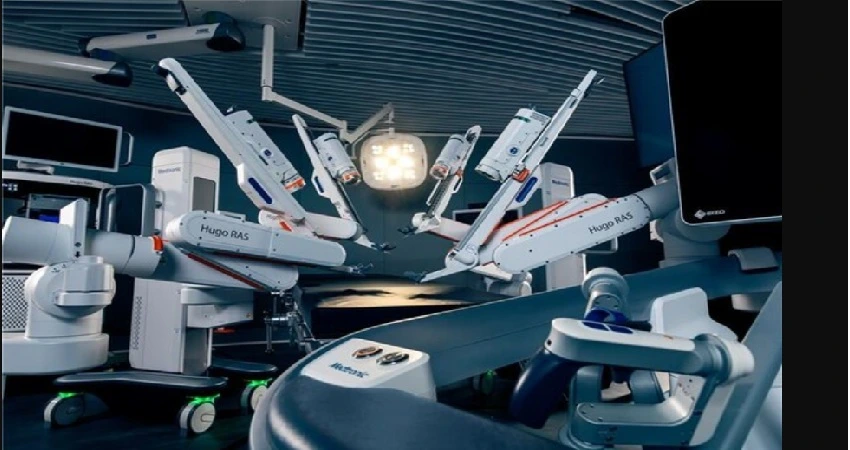
Image: Medtronic’s Hugo RAS system
Medtronic has entered into a strategic partnership with China-based surgical robotics company Cornerstone Robotics, including an approximately $700 million strategic investment in the company.
Under the partnership, Medtronic will secure rights to distribute Cornerstone Robotics’ Sentire surgical system in select markets outside the US where the system has received market approval.
Medtronic plans to distribute the Sentire system alongside its Hugo robotic-assisted surgery (RAS) system. The company said the two complementary platforms, combined with its connected surgical ecosystem, will expand access to robotic-assisted surgery while providing surgeons and health systems with greater choice and flexibility.
“Surgeons, health systems and markets have varying needs and preferences, which is why we are investing across robotic platforms, digital tools and platform-enhancing technologies,” said Matt Anderson, senior vice president and president, Surgical, Medtronic.
“With Sentire complementing the Hugo RAS system, Medtronic will be the only company offering this two-platform portfolio combined with our surgical ecosystem—giving customers more access, more choice and flexible solutions that fit their clinical and operational needs,” he added.
Professor Kwok Wai Samuel AU, Founder and CEO of Cornerstone Robotics, described the partnership as an important step towards expanding access to robotic-assisted surgery globally.
“There remains a significant gap between the growing demand for minimally invasive surgery and the availability of robotic-assisted surgical technologies. Our partnership with Medtronic positions us to further accelerate and scale our work to bring the benefits of robotic-assisted surgery to more surgeons and patients around the world,” he said.
Medtronic’s Hugo RAS system is designed for a broad range of soft-tissue surgical procedures and combines wristed instruments, 3D visualisation and the Touch Surgery ecosystem, along with dedicated support for robotics programme optimisation, service and training. The system is currently used in more than 35 countries across six continents, including the US, where it received FDA clearance within the past year.
Cornerstone Robotics’ Sentire system has completed multi-speciality clinical trials and received the CE Mark in May 2026 for use in minimally invasive general, gynaecological, thoracic and urological surgical procedures. The system is also approved for use in China and Singapore.
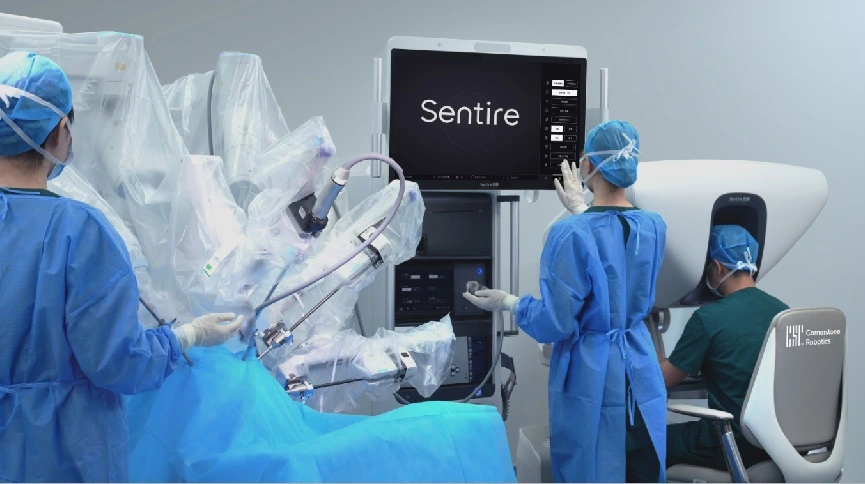
Cornerstone Robotics’ Sentire surgical system
Medtronic Announces Strategic Investment in Pi-Cardia
Separately, Medtronic has announced a strategic investment of up to $80 million in Israeli medical device company Pi-Cardia, which specialises in leaflet modification technologies for structural heart disease.
Medtronic said the investment is aimed at addressing the evolving needs of increasingly complex transcatheter aortic valve replacement (TAVR) procedures and patients.
Under the agreement, Medtronic is expected to become the exclusive global commercial distributor of Pi-Cardia’s ShortCut device in 2027.
ShortCut device is the first FDA-cleared leaflet modification technology designed to enable valve-in-valve TAVR procedures in patients at risk of coronary obstruction. The device is intended to provide physicians with a safe, easy-to-learn, reproducible approach to leaflet modification that can help preserve coronary access and enable future transcatheter valve procedures.
In FDA-reviewed clinical studies, ShortCut demonstrated successful leaflet splitting in all pivotal trial patients and a favourable safety profile.
“Our investment in Pi-Cardia reflects our commitment to building a portfolio of technologies that will shape the future of TAVR, particularly for patients with complex anatomy,” said Jorie Soskin, vice president and general manager of Medtronic’s Structural Heart business within its Cardiovascular portfolio.
“We believe leaflet modification technologies like ShortCut have the potential to become an important component of structural heart care and the future of TAVR as transcatheter therapies continue to advance,” she added.
The agreement also gives Medtronic an option to acquire Pi-Cardia upon achievement of predefined milestones. The potential acquisition would have an estimated upfront purchase price of up to $210 million, subject to customary adjustments, along with additional potential earn-out payments following the acquisition that could significantly increase the total consideration. The transactions remain subject to regulatory approvals and customary closing conditions.
Erez Golan, CEO of Pi-Cardia, said the company aims to make leaflet modification a standard component of complex TAVR procedures.
“Medtronic is the right partner to help us achieve this vision given their global reach and commitment to bringing innovative tools to physicians and patients worldwide,” he said.
Medtronic noted that the investment provides the company with an option to strengthen its structural heart portfolio with a technology that addresses a significant challenge in valve-in-valve TAVR, while complementing its existing transcatheter valve therapies.
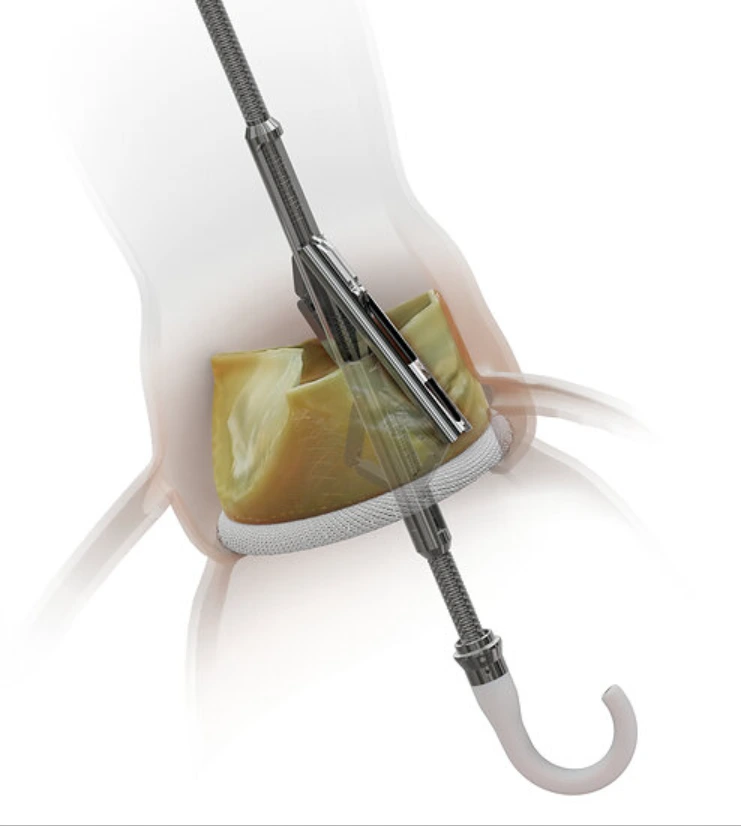
Pi-Cardia ShortCut device