





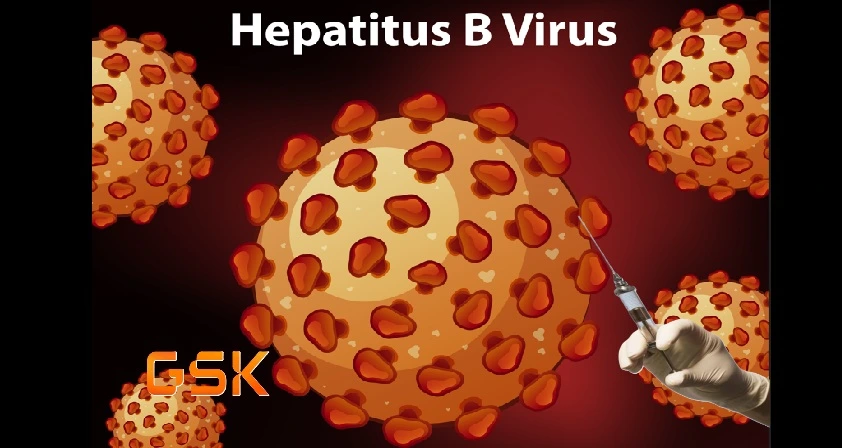
The US Food and Drug Administration (FDA) has approved GSK’s Hibsago (bepirovirsen) injection, in combination with existing antiviral therapy, to treat chronic hepatitis B virus (HBV) infection in certain adults without cirrhosis.
Hibsago is the first FDA-approved antisense oligonucleotide (ASO) for treating chronic hepatitis B. It is indicated for adults without cirrhosis who have received nucleos(t)ide analogue reverse transcriptase inhibitor (NrtI) therapy for at least six months, have suppressed HBV DNA levels in their blood and have hepatitis B surface antigen (HBsAg) levels of 3,000 IU/mL or less, as determined by an FDA-authorised test.
The approval was granted under the FDA’s Priority Review programme and Breakthrough Therapy Designation, recognising the potential of bepirovirsen, in combination with nucleos(t)ide analogue therapy, to offer significant improvement over the existing standard of care.
The approval was supported by results from the phase III B-WELL trials, which demonstrated a functional cure rate of 19% among adults with HBsAg levels of 3,000 IU/mL or less. By comparison, the current standard of care typically achieves functional cure rates of less than 1% after one year of treatment.
A functional cure is defined as undetectable HBV DNA and HBsAg levels for at least 24 weeks after discontinuation of all treatment, indicating that the immune system can maintain control of the infection without medication.
Tony Wood, Chief Scientific Officer at GSK, said many people living with chronic hepatitis B continue to require indefinite treatment and remain at risk of serious liver complications despite the availability of existing therapies.
“For the first time, with Hibsago, US patients have the potential to achieve functional cure after a six-month treatment course, with the added convenience of the option of self-administration after the first dose,” he added.
Wendy Carter, Acting Director of the Office of Infectious Diseases in the FDA’s Center for Drug Evaluation and Research, said treatment for chronic hepatitis B often involves taking antiviral medication for years to keep the virus suppressed.
“Hibsago provides a new treatment approach that gives some patients the possibility of maintaining control of the virus after all chronic HBV treatment has ended. This approval represents an important advance for people living with this serious disease,” she said.
How Hibsago (bepirovirsen) works
Chronic hepatitis B is a long-term liver infection caused by HBV. Over time, it can lead to serious complications, including cirrhosis and liver cancer.
Bepirovirsen is designed to target the viral RNA involved in HBV replication and the production of viral proteins. By reducing viral RNA and proteins, including HBsAg, the drug may help the immune system regain control of the infection and improve the likelihood of a durable response.
Hibsago is administered as a subcutaneous injection for up to 24 weeks. Patients receive it alongside their existing hepatitis B medication and continue that treatment for at least 24 weeks after their final Hibsago injection. Some patients may subsequently be able to discontinue their existing medication if they meet specified clinical and laboratory criteria.
Researchers studied Hibsago in two clinical trials that compared it with a placebo. Across the two clinical trials, 24% of patients who received Hibsago met the criteria for stopping their existing medication, compared with none in the placebo groups. At 24 weeks after discontinuing all hepatitis B treatment, 19% of patients who received Hibsago maintained control of the infection, with HBsAg undetectable in their blood.
The FDA has also authorised Roche’s Elecsys HBsAg II quant II RxDx assay as a companion diagnostic device. The assay is intended to help identify eligible patients for treatment in accordance with the approved drug labelling and support patient monitoring throughout treatment.
Regulatory outlook
GSK continues to advance regulatory submissions for bepirovirsen in multiple markets, with key regulatory decisions anticipated in the coming months.
The company licensed bepirovirsen from Ionis Pharmaceuticals and collaborated with Ionis on its development. The investigational therapy has received Breakthrough Therapy Designation and Priority Review in the US, as well as Breakthrough Therapy and Priority Review designations in China and SENKU designation in Japan. Bepirovirsen has been approved in Japan and the US.