



Redcliffe Labs researchers have highlighted the role of advanced prenatal genomic testing in investigating unexplained foetal abnormalities when conventional investigations do not provide a definitive diagnosis.
In a study involving Redcliffe Labs researchers, whole-exome sequencing helped identify a novel TAPT1 gene variant in a foetus with nonimmune hydrops fetalis (NIHF) and skeletal abnormalities, offering a potential genetic explanation for the condition.
Researchers from Redcliffe Labs, in collaboration with other institutions, reported the findings in a study published in Clinical Dysmorphology, titled “Nonimmune hydrops fetalis with skeletal dysplasia due to a novel homozygous recessive TAPT1 splice-donor variant.”
The study describes a prenatal case involving a 22-year-old pregnant woman referred for a detailed second-trimester ultrasound. The woman had experienced a previous first-trimester pregnancy loss. The couple was non-consanguineous.
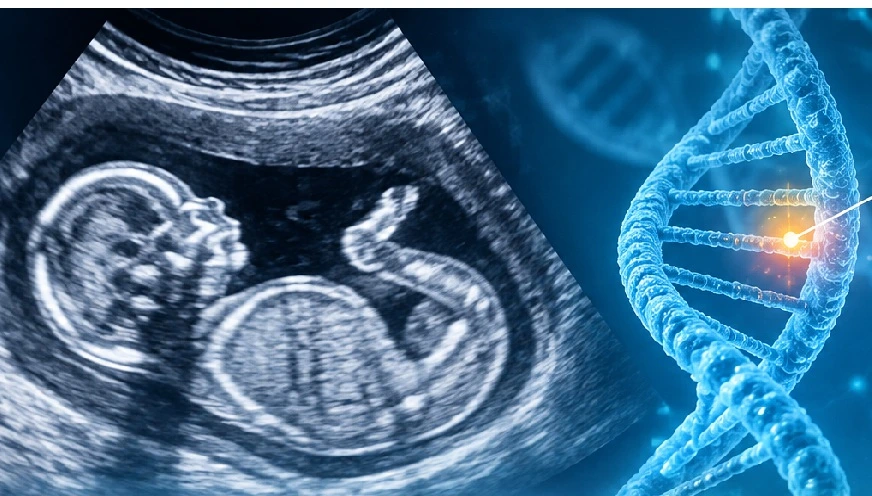
The ultrasound revealed generalised swelling beneath the foetal skin, fluid accumulation around the lungs and heart, and fluid in the abdominal cavity. Other findings included a small head circumference, short long bones with bowing of the femurs, bilateral talipes (inward and downward turning of the feet), and a Blake’s pouch cyst in the posterior region of the brain.
These findings were consistent with NIHF, a condition characterised by abnormal fluid accumulation in at least two foetal body compartments. Although NIHF can have several underlying causes, including genetic disorders, some cases remain unexplained after initial investigations.
Genomic testing identifies likely pathogenic TAPT1 variant
Chromosomal microarray analysis (CMA), performed at Redcliffe Labs, did not identify a definitive chromosomal abnormality. However, it revealed long contiguous stretches of homozygosity (LCSH) measuring 31.14 Mb on chromosome 4 and 13.53 Mb on chromosome 10. No trisomy, monosomy, polyploidy or copy-number variations were detected.
Researchers noted that LCSH can occur even when parents are not related, including through shared ancestry.
Following the non-diagnostic CMA results, researchers performed whole-exome sequencing (WES) on the amniotic fluid sample. The analysis identified a likely pathogenic homozygous splice-donor variant in the TAPT1 gene, designated TAPT1 c.1236+1G>A.
According to the researchers, the variant had not been reported in the ClinVar or gnomAD v4 databases at the time of the study. Sanger sequencing confirmed the variant in the maternal sample, where it was present in the heterozygous state, and in the foetal amniotic fluid sample. The father was unavailable for confirmation testing.
Computational analysis predicted that the variant would cause exon 11 to be skipped during RNA processing, potentially resulting in a truncated TAPT1 protein.
The TAPT1 gene is involved in cellular processes relevant to skeletal development. Disease-associated variants in the gene have been linked to osteochondrodysplasia, a group of disorders affecting bone and cartilage development. The identified variant therefore offered a potential molecular explanation for the foetal abnormalities.
According to the researchers, only 17 cases had been reported in the literature at the time of publication. To their knowledge, the study represents only the second documented case of TAPT1-associated osteochondrodysplasia from India, expanding the known range of genetic variants associated with the condition.
Researchers highlight role of genomic diagnostics
The researchers said the case highlights the value of combining prenatal imaging with advanced genetic testing.
While ultrasound can identify structural abnormalities, it may not establish their genetic cause. CMA can detect chromosomal changes but may not identify certain sequence variants. In cases involving multiple foetal abnormalities and inconclusive initial findings, WES can help uncover underlying genetic causes and support genetic counselling and informed reproductive decision-making, they added.
Dr Himani Pandey, Lab Head – Genomics, Redcliffe Labs, and co-author of the study, said, “This case highlights how advanced genomic testing can help identify the underlying cause of rare foetal disorders. By detecting genetic variants that may not be identified through conventional investigations, such testing can support clearer diagnoses, strengthen genetic counselling and help families make informed decisions about future pregnancies.”
Aditya Kandoi, Founder and CEO, Redcliffe Labs, said investments in advanced diagnostic capabilities and research are essential to improving understanding of rare genetic disorders and helping clinicians identify their underlying causes.
“By documenting clinical findings and contributing to scientific knowledge, we aim to support more informed diagnosis and clinical decision-making. Our continued investment in accessible, advanced diagnostics reflects our commitment to helping families across India find answers and make informed decisions about their healthcare,” he said.
Genomic testing capabilities, including CMA, WES, clinical exome sequencing, targeted genetic testing and Sanger sequencing, can support the investigation of rare inherited disorders and complex clinical presentations.
The researchers also cited a 2026 study from Western Rajasthan in which WES identified disease-associated genetic variants in 36.6% of 41 foetuses with NIHF who underwent testing. While the findings are specific to the study group, the results highlight the potential of advanced genetic testing to help identify the causes of complex foetal abnormalities.