


The global insulin delivery devices market is projected to grow from USD 16.92 billion in 2026 to USD 26.37 billion by 2031, registering a compound annual growth rate (CAGR) of 9.3% during the forecast period, according to a new report by MarketsandMarkets.
Rising prevalence of diabetes, increasing demand for convenient insulin administration methods, and technological advancements in insulin delivery systems are cited as key growth factors.
Growing adoption of insulin pens, insulin pumps and automated insulin delivery systems is improving dosing convenience, treatment adherence and diabetes management. In addition, rising healthcare expenditure, expanding reimbursement coverage and government initiatives to improve diabetes care are supporting market expansion.
Technological innovations in connected devices, smart insulin pens, needle technology and tubeless insulin pumps are further enhancing patient convenience. Increasing awareness of diabetes management and the growing emphasis on personalised treatment approaches are also creating opportunities for advanced insulin delivery technologies.
Insulin pens dominated the market in 2025
By type, insulin pens accounted for the largest share of the global insulin delivery devices market in 2025, representing approximately 51–52% of the market.
The market is segmented into insulin pens, insulin pumps, insulin pen needles, insulin syringes and other insulin delivery devices. Insulin pens are further categorised into reusable and disposable pens.
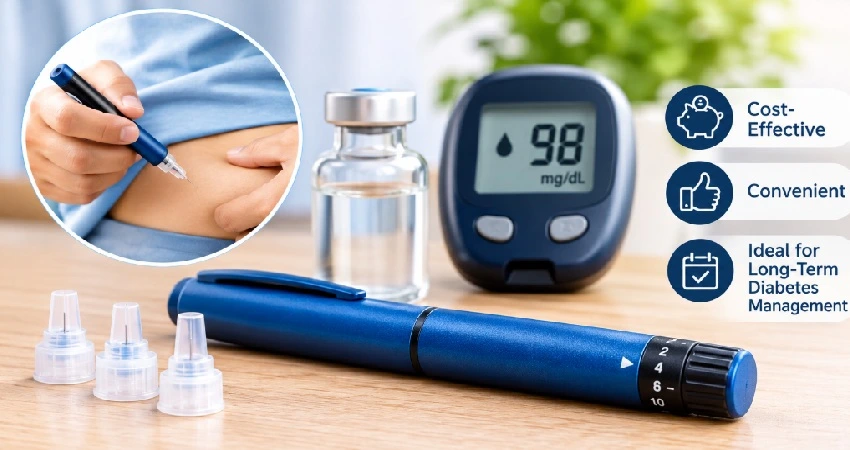
Among these, reusable insulin pens held the largest share in 2025, supported by their cost-effectiveness, convenience and suitability for long-term diabetes management. These devices allow patients to replace insulin cartridges while retaining the pen mechanism, eliminating the need to purchase an entirely new device each time a cartridge is exhausted.
“Their durable design, accurate dosing, portability, and ease of use support adoption among patients who require regular insulin injections. Additionally, compatibility with different insulin cartridges and disposable pen needles makes reusable pens a practical option for routine diabetes care, particularly for cost-conscious users,” the report said.
Meanwhile, insulin pumps are gaining traction with advances in automated insulin delivery, integration with continuous glucose monitoring (CGM) systems and tubeless designs.
Type 2 diabetes accounted for the largest application share
By application, the type 2 diabetes segment accounted for approximately 82–84% of the global insulin delivery devices market in 2025, making it the largest application segment.
The market is divided into type 1 and type 2 diabetes. The dominance of the type 2 diabetes segment is primarily attributed to the significantly higher global prevalence of the condition. According to the International Diabetes Federation (IDF), more than 90% of people with diabetes have type 2 diabetes.
Asia Pacific held the second-largest regional share
North America dominated the global insulin delivery devices market in 2025, accounting for approximately 35–37% of the market, while Asia Pacific held the second-largest share.
The region’s substantial diabetes burden and growing demand for effective disease management solutions are supporting market growth.
According to IDF estimates, China had approximately 148 million adults with diabetes in 2024, followed by India with 89.8 million and Japan with around 9 million. The high disease burden in these countries is generating considerable demand for insulin pens, pen needles, syringes and insulin pumps.
Self/home healthcare segment to register the fastest growth
By end user, the self/home healthcare segment accounted for approximately 78–80% of the global insulin delivery devices market in 2025 and is also expected to register the fastest CAGR during the forecast period.
The segment’s growth is driven by the need for regular, long-term insulin administration, which can often be managed outside healthcare facilities. Insulin pens, syringes and pumps allow patients to administer insulin independently, reducing the need for frequent hospital visits.
Growing preference for home-based diabetes management, particularly in emerging markets, is creating further opportunities for manufacturers to expand their customer base and increase market penetration.
Key market players
Key companies operating in the global insulin delivery devices market include Embecta (US), Novo Nordisk (Denmark), Ypsomed (Switzerland), Medtronic (Ireland), Tandem Diabetes Care (US), Sanofi (France), Eli Lilly (US), Insulet Corporation (US), F. Hoffmann-La Roche (Switzerland) and Terumo Corporation (Japan), among others.
The market remains competitive, with the five leading companies collectively accounting for an estimated 25–50% of total market revenue.
Novo Nordisk, Sanofi and Eli Lilly offer insulin pen products, while Embecta specialises in pen needles and syringes. Medtronic focuses on insulin pumps and automated insulin delivery systems.
Regional manufacturers and emerging companies account for the remaining market share, contributing to competition across different product categories.