






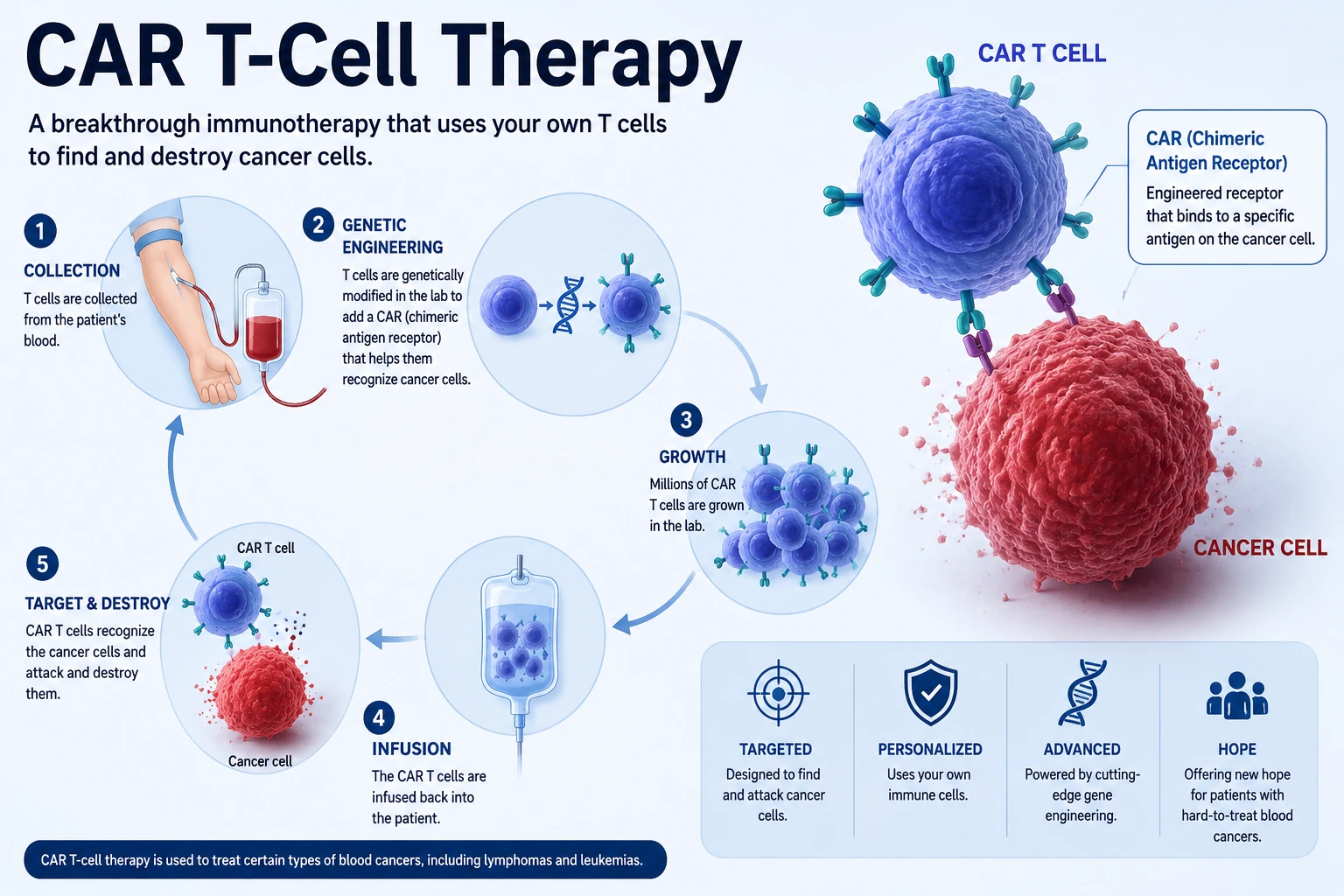
Chimeric antigen receptor T-cell therapy, commonly known as CAR T-cell therapy, is transforming treatment outcomes for patients with hard-to-treat blood cancers. This advanced form of immunotherapy has shown remarkable success in certain types of lymphomas and leukemias, particularly in patients whose disease has not responded to standard treatments or has returned after therapy. In some cases, CAR T-cell therapy has led to long-term remission and even potential cures.
CAR T-cell therapy is a personalized, cell-based gene therapy that modifies a patient’s T cells — a type of white blood cell — to recognize and attack cancer cells. During the process, T cells are collected from the patient’s blood and genetically engineered in a laboratory to produce chimeric antigen receptors (CARs) on their surface. These receptors enable the modified T cells to identify specific antigens found on cancer cells. The engineered CAR T cells are then reinfused into the patient’s bloodstream.
FDA-Approved CAR T-Cell Therapies
Several CAR T-cell therapies have been approved by the US Food and Drug Administration (FDA) for treating specific blood cancers, including leukemias, lymphomas, and multiple myeloma. These therapies are generally used after patients have undergone other forms of treatment.
Approved CAR T-cell therapies include:
- Tisagenlecleucel (Kymriah) for acute lymphoblastic leukemia in children and young adults
- Axicabtagene ciloleucel (Yescarta) for several types of B-cell lymphomas
- Brexucabtagene autoleucel (Tecartus) for mantle cell lymphoma
- Lisocabtagene maraleucel (Breyanzi) for diffuse large B-cell lymphoma
- Idecabtagene vicleucel (Abecma) for multiple myeloma
- Ciltacabtagene autoleucel (Carvykti) for multiple myeloma
- Obecabtagene autoleucel (Aucatzyl) for acute lymphoblastic leukemia
Researchers are also investigating several next-generation CAR T-cell therapies in clinical trials, with the aim of expanding their use to additional cancers and disease areas.
Serious Side Effects Require Careful Monitoring
Despite its potential, CAR T-cell therapy can cause severe and sometimes life-threatening side effects. As a result, it is recommended that such treatments be administered in specialized medical centers with trained healthcare professionals. Patients often require close monitoring for weeks after infusion.
The two most common complications are cytokine release syndrome (CRS) and neurological toxicities.
Cytokine Release Syndrome (CRS)
As CAR T cells multiply in the body, they can release large amounts of chemicals called cytokines into the blood, which can ramp up the immune system. Symptoms of CRS may include:
- High fever and chills
- Trouble breathing
- Severe nausea, vomiting, or diarrhea
- Dizziness or lightheadedness
- Headaches
- Rapid heartbeat
- Extreme fatigue
Neurological Complications
CAR T-cell therapy may also affect the nervous system, causing immune effector cell-associated neurotoxicity syndrome (ICANS). Symptoms can include:
- Headaches
- Confusion or agitation
- Aphasia (difficulty speaking)
- Dysgraphia (difficulty writing)
- Seizures
- Tremors or twitching
- Loss of balance
Other possible serious side effects may include allergic reactions during infusion, low blood cell counts, weakened immunity, abnormal levels of minerals in the blood, and increased risk of secondary cancers.
Global Market Expected to Double by 2031
The global CAR T-cell therapy market is projected to grow from USD 6.78 billion in 2026 to USD 13.56 billion by 2031, registering a CAGR of 14.9 per cent, according to a report by MarketsandMarkets.
Rapid technological advancements, expanding clinical adoption, and rising investments from pharmaceutical and biotechnology companies are cited as factors accelerating growth across the CAR T-cell therapy landscape.
The report identified Asia Pacific as one of the fastest-growing regions in the CAR T-cell therapy market, driven by rising clinical trial activity, supportive regulatory pathways, and growing investment in cell therapy infrastructure.
Major companies operating in the global CAR T-cell therapy market include Bristol Myers Squibb, Johnson & Johnson, Gilead Sciences, Novartis, JW Therapeutics, and ImmunoACT.
High Costs and Safety Concerns Remain Challenges
Despite strong growth prospects, CAR T-cell therapy continues to face challenges related to high treatment costs.
“CAR-T therapies involve complex and individualized manufacturing processes that can exceed USD 350,000 per treatment, creating financial barriers for healthcare systems and patients,” the report said.
Additionally, the report noted that the market faces ongoing regulatory and safety challenges, including long-term monitoring requirements for adverse events and secondary malignancies. These post-treatment surveillance requirements are increasing operational complexity for hospitals and specialized treatment centers.
The Future of CAR T-Cell Therapy
While blood cancers remain the primary commercial focus for CAR T-cell therapy, researchers and companies are increasingly turning their attention toward solid tumors and non-oncology indications. It is expected to play a pivotal role in the future of precision medicine and advanced cancer care, offering renewed hope to patients worldwide.
References
https://www.cancer.org/cancer/managing-cancer/treatment-types/immunotherapy/car-t-cell.html
https://my.clevelandclinic.org/health/treatments/17726-car-t-cell-therapy