



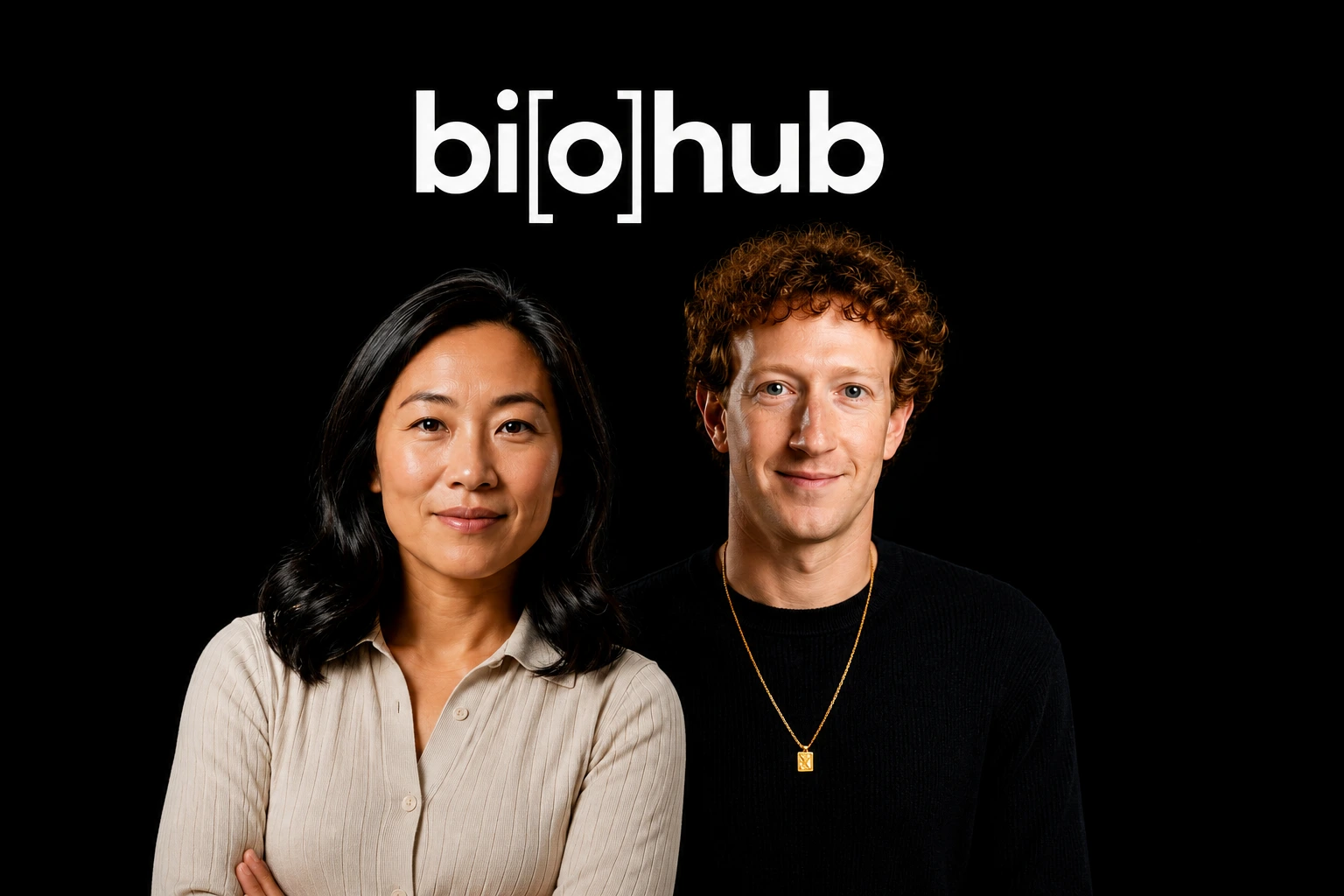
Biohub, the philanthropic research venture founded by Meta CEO Mark Zuckerberg and his wife, Dr. Priscilla Chan, has unveiled a new AI-powered “world model” of protein biology aimed at accelerating drug discovery.
The platform, launched on Wednesday (May 27), is built around a suite of open-source AI models designed to help scientists predict protein structures, design new therapeutic proteins, and better understand biological systems.
Biohub describes the world model as “a scientific engine for prediction, design, and discovery that can map proteins across the tree of life, predict their structures, and design new protein binders that function in laboratory experiments.”
Proteins play a central role in nearly every biological process in the human body and remain among the most important targets in medicine. However, designing stable and functional proteins that behave as intended inside the body remains a major scientific and technical challenge.
To support global research efforts, Biohub has released three key tools to the scientific community through its Biohub Platform: ESMC, ESMFold2, and ESM Atlas.
ESMC is a state-of-the-art protein language model trained on approximately 2.8 billion protein sequences collected from across the tree of life.
ESMFold2 serves as the design engine, transforming ESMC’s sequence representations into atomically resolved 3D structures of biomolecular complexes. According to Biohub, researchers used the model to design protein binders against five targets central to cancer and immunology, and the computational process was completed within days, instead of the months or years typically required using conventional methods.
Meanwhile, ESM Atlas allows researchers to navigate ESMC’s representations across 6.8 billion protein sequences and 1.1 billion predicted protein structures, making it the largest AI application in protein biology to date.
Together, ESMFold2, ESMC, and ESM Atlas form a state-of-the-art, openly available ecosystem for protein structure prediction and design, providing a shared foundation for researchers working in fundamental biology and the development of next-generation therapeutics.
All three tools are being made freely available to researchers worldwide.
“Designing the interactions between proteins is a fundamental problem in biochemistry, and critical for the design of medicines. What we’ve shown is that these models have learned such a high-fidelity world model of biology that you can design protein interfaces computationally, take them into the laboratory, and they function as predicted,” said Alex Rives, Head of Science, Biohub.
Dr. Priscilla Chan, co-founder of Biohub, said the initiative reflects the organization’s commitment to open science.
“Biohub was built on the belief that open science accelerates discovery. Making these tools freely available means researchers everywhere can move faster toward personalized cures that work for individual patients, because they target the specific biology driving their disease,” Chan said.