







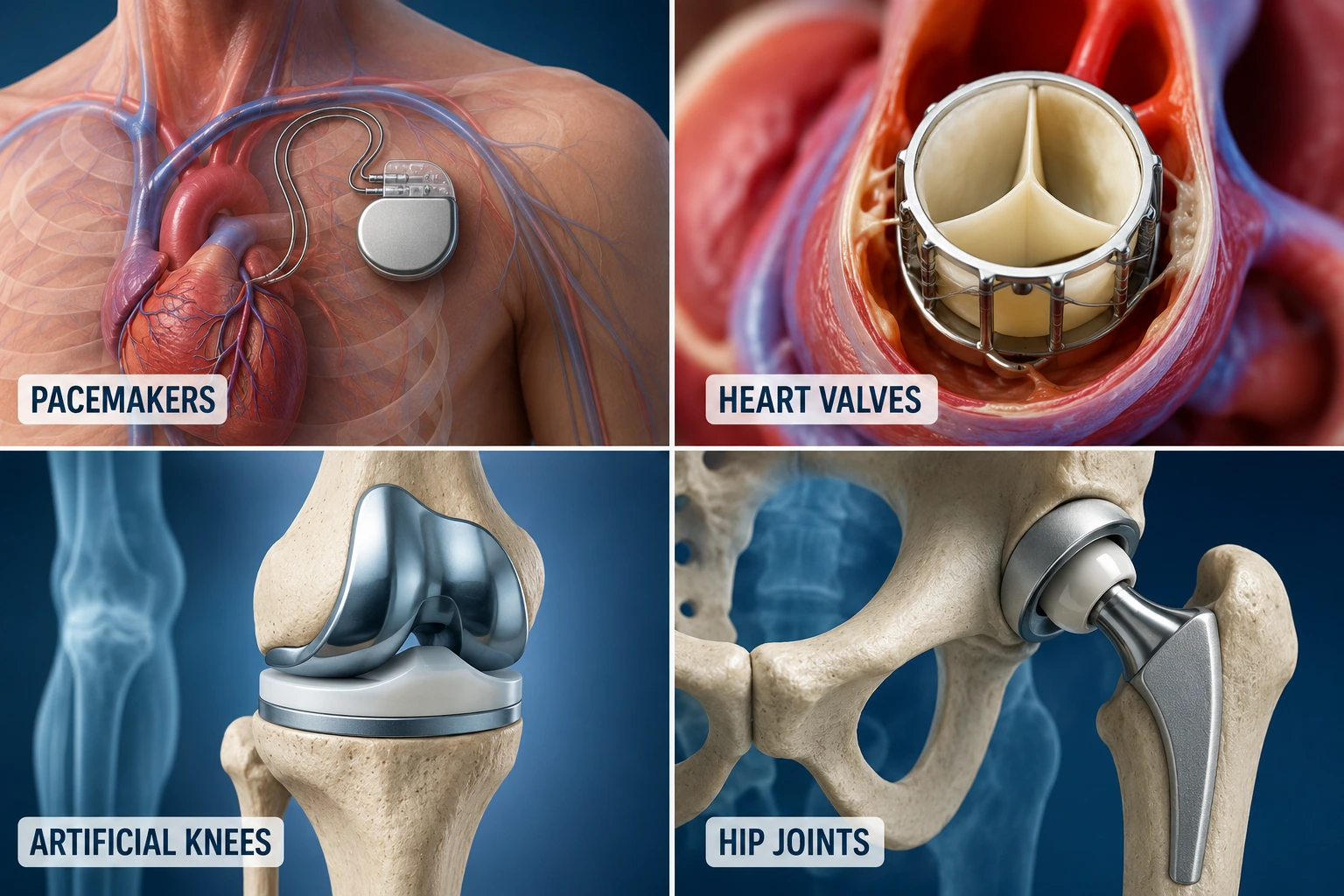
India is planning to establish a national registry to monitor implantable medical devices and patients receiving them, a move aimed at strengthening regulatory oversight and preventing the use of low-quality products.
According to government officials, the tracking system will be rolled out in phases, initially focusing on cardiac and orthopaedic implants such as pacemakers, heart valves, artificial knees, and hip joints before gradually expanding to cover all implantable medical devices. Manufacturers, suppliers, and hospitals are likely to be required to maintain detailed records of implanted devices under the proposed system.
The system is expected to improve post-market surveillance and enhance traceability, allowing authorities to track devices in cases of global recalls, adverse events, or safety concerns. Officials said the system would improve procurement decisions, especially for government-run healthcare schemes, guide policy measures and create a clearer distinction between high-quality and low-cost devices.
Additionally, the move is intended to strengthen oversight against low-quality and substandard imports entering the Indian market from neighbouring countries.
Rajiv Nath, forum coordinator of the Association of Indian Medical Devices Industry, welcomed the proposal, noting that India currently lacks a robust mechanism to trace implanted medical devices.
“India implants lakhs of devices every year but cannot trace them. A National Implant Registry will help identify patients during recalls, monitor real-world safety and build Indian evidence,” he said.
The initiative is currently at the planning stage, with implementation timelines yet to be announced
India’s implantable medical device sector has long grappled with challenges such as regulatory gaps, heavy dependence on imports, rising costs, and inadequate monitoring systems. To address these issues and boost domestic manufacturing, the Centre introduced the National Medical Devices Policy in 2023.
According to the latest report by IMARC Group, India’s implantable medical devices market, valued at USD 121.6 billion in 2025, is projected to reach USD 199.4 billion by 2034, expanding at a CAGR of 5.17 per cent during the forecast period. The report attributed this growth to the rising burden of chronic diseases and increasing awareness and adoption of advanced healthcare technologies.