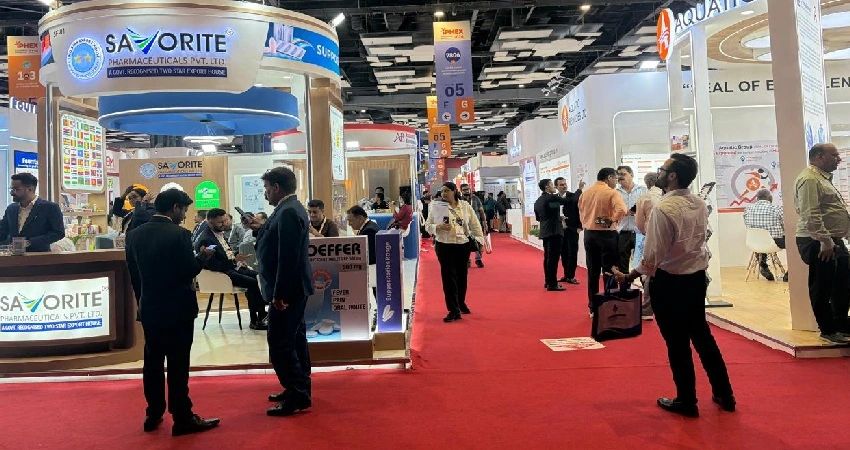





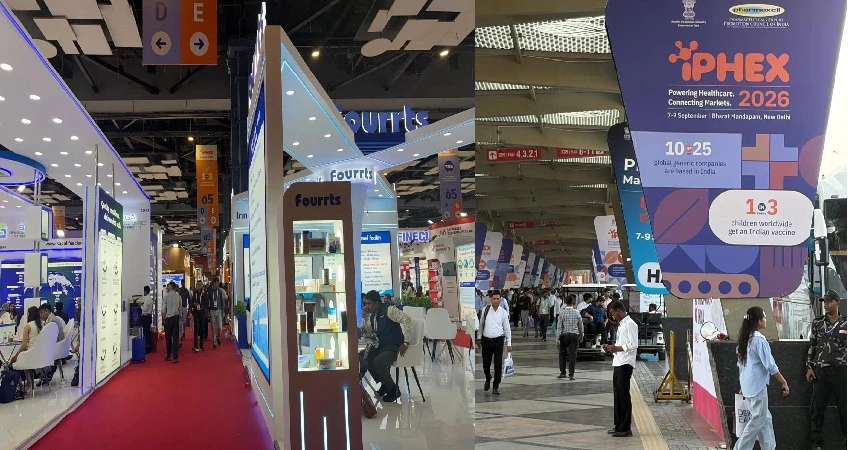
iPHEX 2026, the International Exhibition on Pharma and Healthcare organised by the Pharmaceuticals Export Promotion Council of India (Pharmexcil), concluded at Bharat Mandapam, New Delhi, with potential business discussions estimated between USD 4.5 billion and USD 5 billion.
The 12th edition of iPHEX 2026, held from September 7–9, recorded 468 buyers, 405 sellers and 8,504 meetings. It drew over 30,000 business visitors, with overall footfall, including exhibitors, crossing 50,000.
Buyers from 128 countries participated, including national procurement agencies from Cuba, the Philippines, Zambia, Palestine, Tajikistan, Maldives, Afghanistan, Mali, El Salvador, Libya, Fiji, Burkina Faso, Tunisia, Kenya, Mauritius and Malawi.
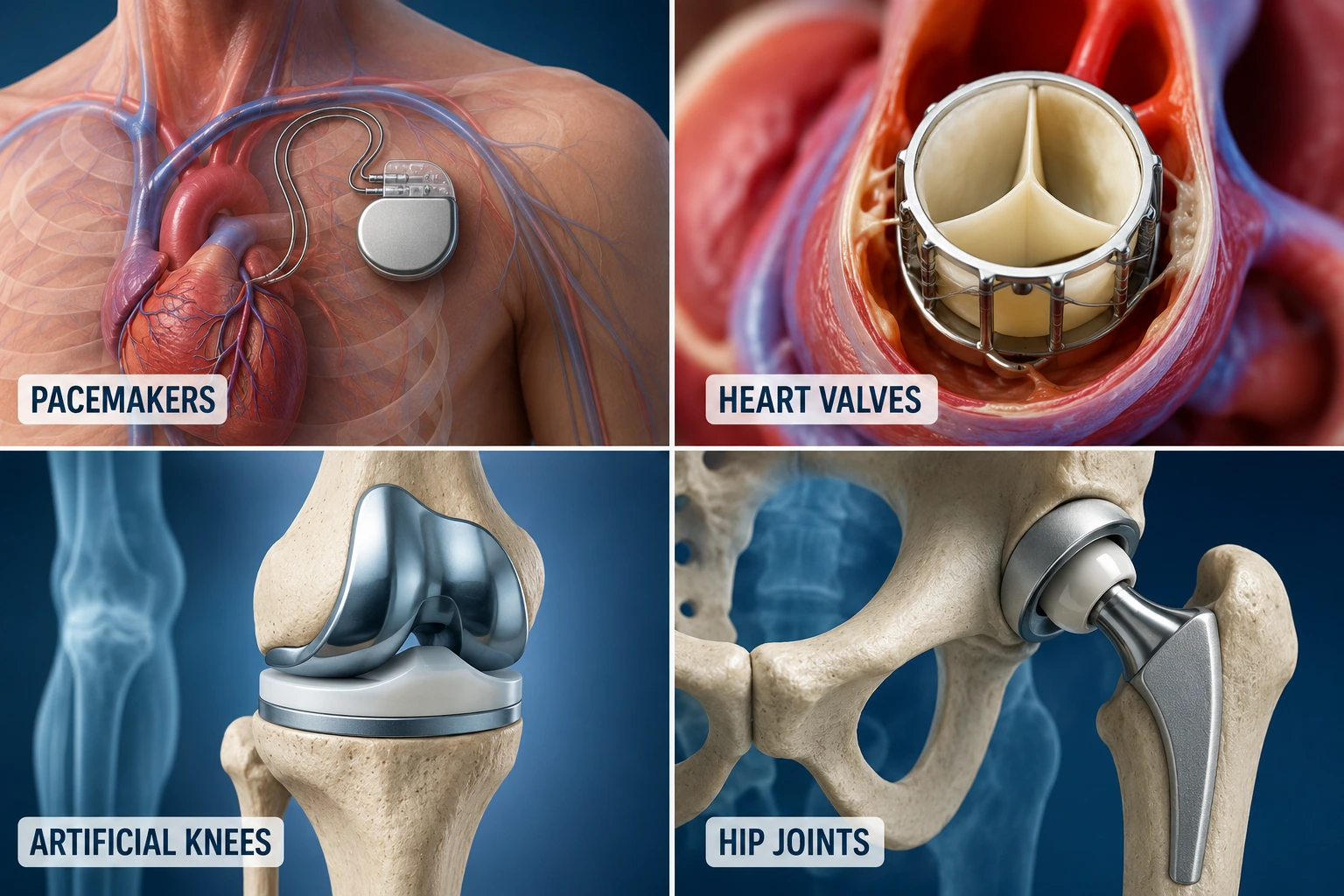
Discussions covered pharmaceuticals, APIs, formulations, therapeutics, medical devices and other healthcare segments, with a focus on sourcing, supplier relationships, market expansion and long-term partnerships. The overall product mix discussed comprised approximately 39% therapeutics, 35.1% formulations and 25.8% APIs.
The event also focused on market access, supply-chain resilience and quality standards. Officials from the Central Drugs Standard Control Organisation (CDSCO) outlined a move towards a more proportionate, risk-based regulatory framework, greater use of digital systems and simpler compliance while maintaining safety, quality and efficacy.
Namit Joshi, chairman, Pharmexcil, said the participation of buyers from 128 countries reflects the continued interest in sourcing from and partnering with Indian pharmaceutical companies.
“Our focus now is on helping the industry convert these discussions into sustained commercial relationships, deepen its presence in established markets and build stronger access to newer geographies,” he said.
Bhavin Mehta, vice chairman, Pharmexcil, said that Indian pharma had built scale and credibility globally, but future growth would increasingly depend on moving into more complex products, strengthening manufacturing and technology capabilities, as well as expanding into markets where India still had significant headroom.
He added that platforms such as iPHEX helped connect these capabilities directly with global demand.
“The presence of national procurement agencies from across 15 countries at iPHEX 2026 reflects the trust placed in Indian pharmaceuticals for their quality, affordability and reliability,” said K. Raja Bhanu, director general, Pharmexcil.
He said Pharmexcil would work closely with exporters and regulatory agencies to ensure compliance with global standards while maintaining commercial viability. He added that the council would continue to facilitate market access and help convert these engagements into business opportunities.
Nipun Jain, chairman, iPHEX, said the exhibition allows Indian companies to understand buyer requirements directly, build relationships and identify commercial opportunities across markets.
“The next step is to convert these engagements into orders, partnerships and sustained market access,” he added.
On the concluding day, Joshi announced that the 13th edition of iPHEX and the second edition of Bharat Health Global Expo will be held at Bharat Mandapam, New Delhi, from August 19–21, 2027.
Organised annually since 2013 by Pharmexcil with the support of the Department of Commerce, iPHEX connects Indian exporters with international stakeholders and showcases India’s pharmaceutical and healthcare capabilities.