




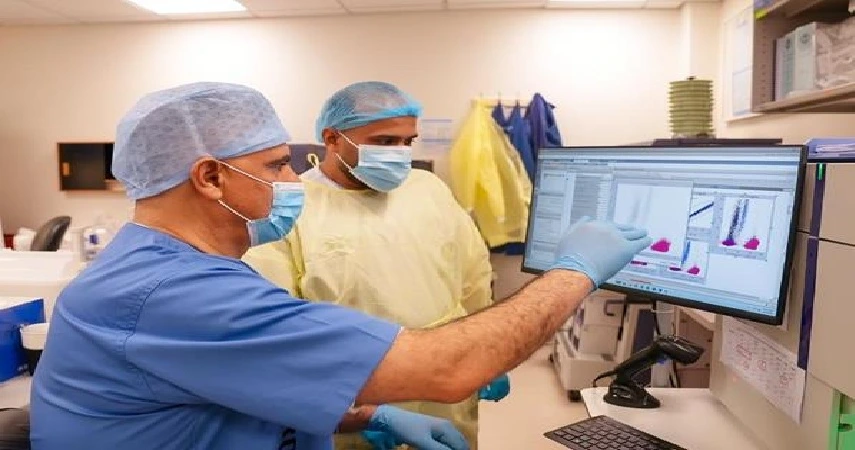
King Faisal Specialist Hospital and Research Centre in Jeddah (KFSH Jeddah), Saudi Arabia, has developed and implemented a pioneering single-session stem cell collection protocol that improves both donor safety and stem cell transplantation outcomes.
Believed to be the first protocol of its kind globally, the approach uses an algorithm to estimate the expected stem cell yield from each donor. This enabled stem cell collection to be completed in a single session for all male donors and nearly 95 per cent of all donors, while eliminating the need for third or fourth collection sessions.
According to the developers, the protocol was designed to limit repeat collection sessions and the risks they can pose to donor safety.
Data from the US National Marrow Donor Program reveals that donors who undergo repeat collection sessions are six times more likely to require hospitalization for recovery.
“Sparing healthy donors from repeated stem cell collection sessions is both a clinical and an ethical priority,” said Professor Ashraf Dada, chair of the Department of Pathology and Laboratory Medicine at KFSH Jeddah and the study’s principal investigator.
By minimizing repeat procedures, the new protocol enhances donor safety while improving the overall efficiency of the transplant process.
The Centre reported a 100-day post-transplant survival rate of 91.2 per cent, exceeding the global average. The findings have been published in Blood Global Hematology, a journal of the American Society of Hematology.
Professor Dada said the algorithm was developed over three years and tested on 138 donors.
Not only does the protocol help improve the donor’s experience and safety, but it also enables the medical team to better plan the collection process and speeds treatment for patients awaiting a transplant.