




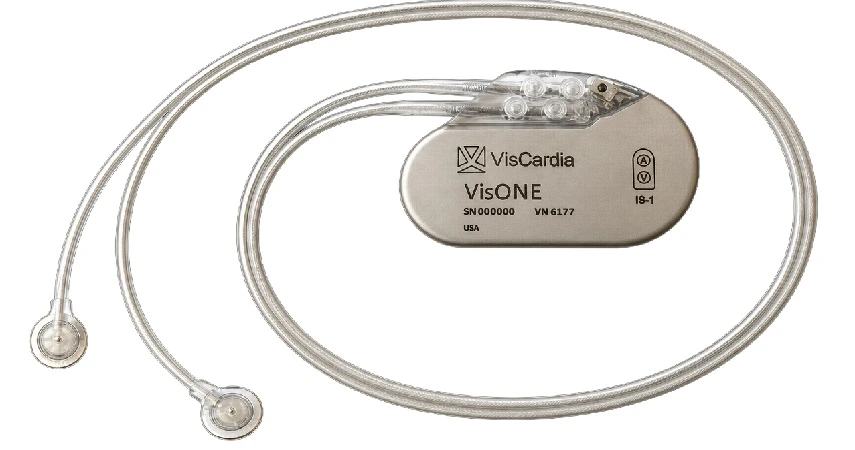
Oregon-based medical device company VisCardia has announced the first US patient implantation in its RECOVER-HF pivotal trial evaluating VisONE Synchronized Diaphragmatic Stimulation (SDS) Therapy, an investigational treatment for patients with symptomatic heart failure with reduced ejection fraction (HFrEF).
The procedure was performed at the University of Pennsylvania by Jarrod Predina, MD, MTR, in collaboration with Lee R. Goldberg, MD, Vice Chair of Medicine, a member of the Advanced Heart Failure and Cardiac Transplant Program, and the national principal investigator of the RECOVER-HF study.
VisONE Therapy, also known as cardiac diaphragm support, has received Breakthrough Device Designation from the US Food and Drug Administration (FDA). The therapy is designed for patients with symptomatic HFrEF who continue to experience limitations despite receiving guideline-directed medical therapy (GDMT) and have limited treatment options beyond advanced mechanical support or heart transplantation.
“The first US implant marks a significant milestone for VisCardia and the RECOVER-HF trial, more importantly, for the patients with symptomatic heart failure who continue to need better options,” said Peter Bauer, President & CEO of VisCardia.
The VisONE system is a minimally invasive, implantable device that delivers precisely timed electrical stimulation to a small region of the left hemi-diaphragm in synchrony with the cardiac cycle. Implanted laparoscopically through a two-port technique, the system does not require hardware to be placed in or on the heart, allowing patients to remain eligible for any future device therapy such as cardiac resynchronization therapy and implantable defibrillators if needed.
“VisONE represents a promising and intuitive therapy for the substantial population of heart failure patients who continue to struggle despite optimized medical therapy,” said Goldberg.
“By leveraging the diaphragm’s natural physiologic contribution to cardiac function, VisONE supports the heart without placing any hardware in or on it. RECOVER-HF is designed to rigorously evaluate whether this approach can benefit patients with symptomatic HFrEF,” he added.
The RECOVER-HF trial is a prospective, multicenter, randomized, double-blind, sham-controlled study evaluating the safety and effectiveness of VisONE SDS Therapy in patients with symptomatic HFrEF.
The trial is expected to enroll patients across up to 30 sites in the United States and internationally as VisCardia advances the technology toward a premarket approval (PMA) submission to the FDA.
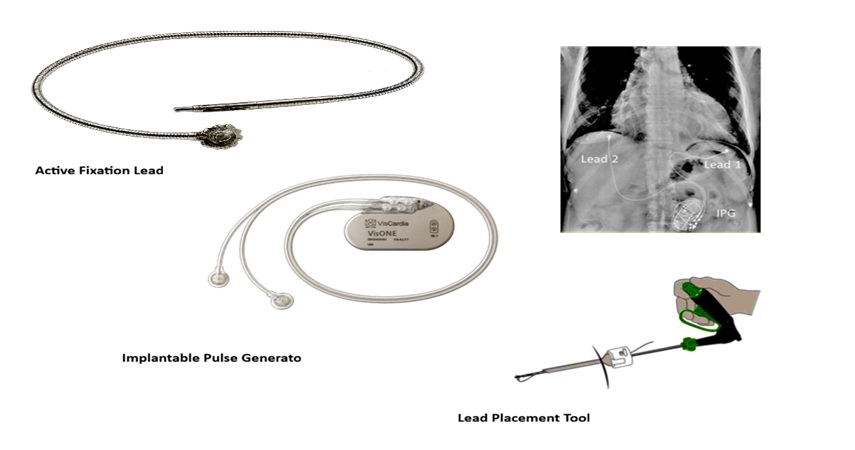
VisONE is implanted using a minimally invasive laparoscopic procedure in which two leads are attached to the underside of the diaphragm. The leads deliver electrical stimulation to a small section of the diaphragm muscle in synchrony with the cardiac cycle. An implantable pulse generator is placed subcutaneously in the abdomen to power the system.