





Hundreds of thousands of adults in the United States continue to undergo knee surgery for age-related meniscus tears despite strong clinical evidence showing that many patients gain little or no additional benefit compared with physical therapy, according to a new analysis by Motive Medical Intelligence.
The study, which examined more than 100 million US insurance claims, found that unnecessary arthroscopic meniscectomy remains common across the country, with the likelihood of receiving the procedure varying significantly by state.
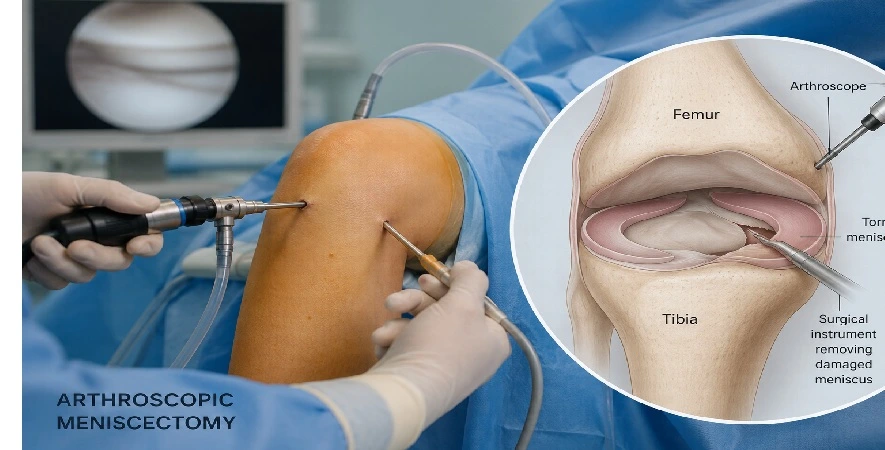
Meniscectomy, the surgical removal of damaged tissue from the knee’s meniscus (a crescent-shaped cartilage that cushions and stabilizes the joint), has long been one of the most commonly performed orthopaedic procedures in the US. However, research over the past decade has shown that most middle-aged adults with degenerative meniscus tears—caused by ageing rather than trauma —may not need surgery, and can achieve similar outcomes through physical therapy.
In one landmark study, meniscectomy provided no benefit compared with sham, or placebo, surgery.
Despite this evidence, more than 500,000 arthroscopic meniscectomies are performed annually in the US, costing an estimated US$4 billion each year, the study said.
“Because many of these procedures are unlikely to improve patient outcomes, reducing unnecessary meniscectomies represents a significant opportunity to protect patients from avoidable surgery while lowering healthcare costs,” it noted.
The report also highlighted wide geographic variation in the use of low-value meniscus surgery. South Dakota recorded the highest percentage of unnecessary procedures at 46%, followed by Iowa and Wisconsin (42% each), Arkansas (40%), and Utah (40%).
In contrast, New Jersey reported the lowest rate at 19%, followed by California (20%), while Florida, Maryland and New York each recorded 22%.
Even in the best-performing states, around one in five eligible patients underwent meniscus surgery that evidence suggests was unlikely to provide to improve outcomes.
Julie Scherer, Motive’s Chief Data Scientist, said, “One of the striking findings in these data is the enormous variation across states. Some states have reduced unnecessary meniscus surgery to fewer than one in five eligible patients, while others continue to perform these low-value procedures in nearly half of eligible patients. Variation of this magnitude tells us that improvement is possible.”
The findings align with recommendations from the American Academy of Orthopaedic Surgeons (AAOS), which advises that arthroscopic meniscectomy should be reserved for patients who have not responded to conservative treatment and have symptoms that may justify surgery, rather than relying solely on MRI abnormalities.
The recommendation is supported by major clinical studies, including the METEOR and FIDELITY trials. The METEOR trial found no significant difference in functional improvement between patients treated with arthroscopic partial meniscectomy and those who received structured physical therapy. The FIDELITY trial further demonstrated that patients undergoing meniscectomy experienced no better outcomes than those who underwent sham, or placebo, surgery.
“It is rare for a surgical procedure to be subjected to the ultimate rigor of a sham-controlled randomized trial. Doctors have a duty to incorporate such convincing evidence into their practice,” said Rich Klasco, Motive’s Chief Medical Officer.
Researchers said reducing unnecessary meniscus surgery could help patients avoid risks, recovery time, inconvenience and expense associated with a procedure that may not improve their pain or function.