





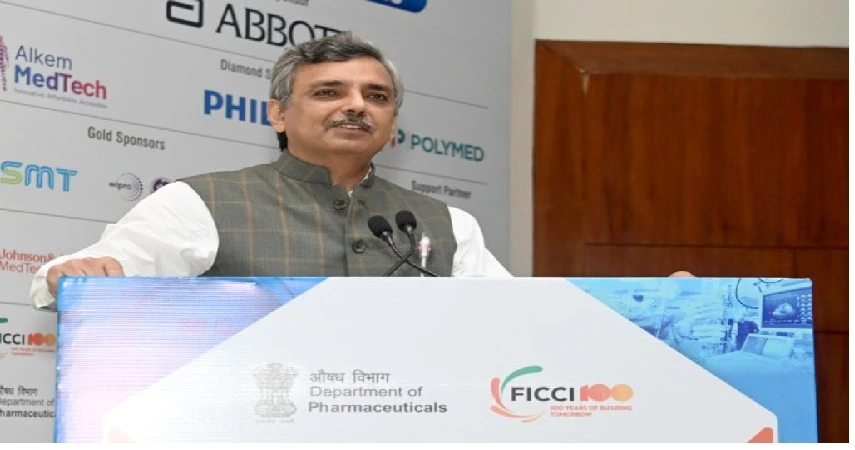
India’s medical devices sector is at a defining moment in its journey towards becoming a globally competitive and innovation-led industry, said Manoj Joshi, secretary, Department of Pharmaceuticals, Government of India, while addressing the 9th edition of India Medical Device 2026 at Vigyan Bhawan, New Delhi on Friday.
“Our endeavour is not only to strengthen domestic manufacturing, but to create an ecosystem that encourages innovation, supports indigenous technology development, promotes localisation of critical components, and enables Indian manufacturers to compete confidently in global markets,” Joshi said.
He added that the government remains committed to creating an enabling policy environment that supports the entire medical devices value chain.
“India Medical Device 2026 provides an important platform for all stakeholders to exchange ideas, forge partnerships and identify new opportunities, and will further strengthen our collective resolve to position India as a trusted global hub for quality medical devices,” he said.
Organised by the Department of Pharmaceuticals in association with the Federation of Indian Chambers of Commerce & Industry (FICCI), the two-day event (7–8 August 2026) brings together policymakers, regulators, industry leaders, innovators, investors, start-ups, academia and global stakeholders to shape the future of India’s MedTech sector.
Held under the theme, “Towards Viksit Bharat: Advancing India as a Global Hub for Quality Medical Devices,” the conference features high-level policy dialogues, technical sessions, workshops, CEO roundtables and networking opportunities focused on innovation, manufacturing, regulation, exports and investment across India’s rapidly expanding medical technology industry.
Dr. Rajeev Singh Raghuvanshi, Drugs Controller General of India (DCGI), highlighted the growing role of domestic manufacturing in the sector’s expansion.
“The growth of India’s medical devices industry is increasingly being driven by domestic manufacturing,” he said.
He added that over the past three years, domestic production has recorded a compound annual growth rate (CAGR) of around 46%, reflecting a shift from an import-driven industry to a domestic manufacturing-driven industry.
Bharath Sesha, co-chair of the FICCI Medical Devices Committee and managing director, Philips Indian Subcontinent, underscored the importance of maintaining quality throughout the lifecycle of medical equipment.
“Sustainable quality is not a one-time event. Medical equipment must continue to deliver safety, reliability and performance throughout its lifecycle, making service and maintenance an integral part of quality healthcare,” he said.
Jyoti Vij, director general, FICCI, noted that India’s medical devices sector is now valued at nearly US$16 billion and is among the fastest-growing markets globally.
“Sitting at the intersection of healthcare, manufacturing, technology and innovation, it not only strengthens healthcare resilience but also drives industrial growth, high-skilled employment and broader economic development,” she said.
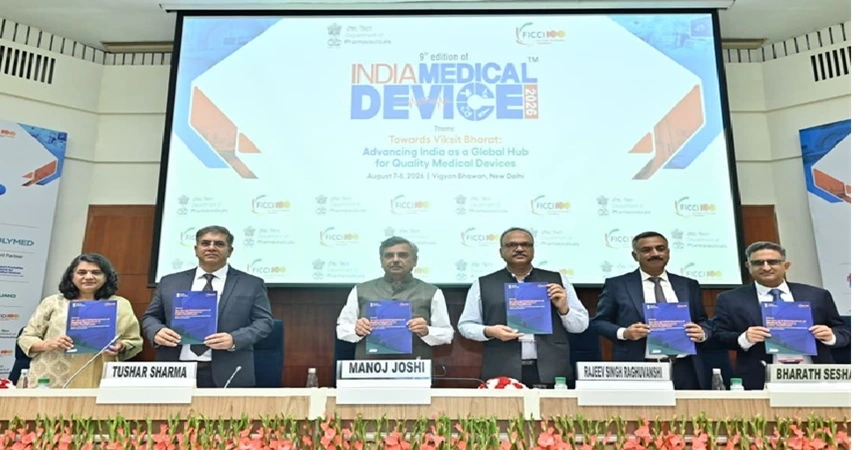
During the event, a white paper titled “Strengthening of Service and Maintenance of Medical Equipment in India” was released as a key initiative to enhance the country’s medical equipment ecosystem.
The white paper emphasises the need for robust service and maintenance systems to ensure the safety, reliability, longevity and uninterrupted performance of medical equipment across healthcare facilities in India.