






By Dr. Srikanth Sola, Senior Cardiologist and Chief Medical Officer, mlHealth 360
Poor mental health can affect the entire body. As a cardiologist, I regularly see how anxiety, poor sleep and chronic stress show up in a patient’s blood pressure and heart rhythm. That is why I follow the use of artificial intelligence (AI) in mental healthcare with both interest and caution.
What can AI do today?
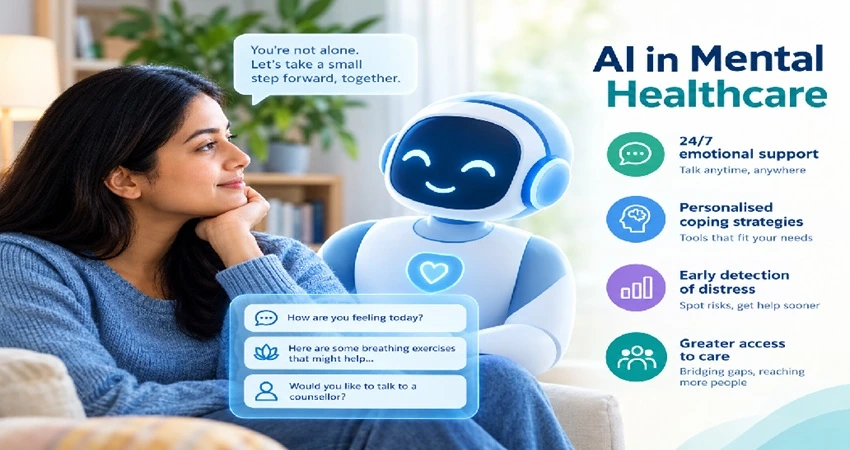
Mental health chatbots such as Wysa and Woebot use language processing to offer support at any hour. They guide users through cognitive behavioural therapy-based exercises and help them reframe negative thoughts.
AI is also being explored to spot trouble early. A growing number of AI tools analyse text, speech patterns and even facial expressions for potential signs of stress, anxiety or depression. Wearable devices, meanwhile, track sleep, heart rate and activity, building long-term mood logs that users can share with their therapists.
In emergencies, services like the Crisis Text Line use AI to triage incoming messages, so people at acute risk of suicide are reached first. Behind the scenes, hospitals and clinics use AI for scheduling, summarising clinical notes and billing, freeing professionals to spend more time with patients.
The benefits
The biggest advantage I see is access. In countries with nationalised health systems, a person may wait weeks for an appointment. In small towns in India, someone may need mental health support but have no specialist nearby. An AI tool is available at midnight, when anxiety often peaks, and it costs little or nothing.
AI tools may also help lower a significant barrier to seeking care: stigma.
Many people dealing with mental health problems find it hard to open up to family, friends or even doctors. A private, non-judgmental space can be the first step towards getting help.
AI can also serve as a support tool. Think of it as a coach who reminds you of coping skills. It can help you stay on track with everyday coping strategies such as exercising, following prescribed treatment, and connecting with friends and family for support.
The risks
Despite these potential benefits, AI has significant limitations.
AI has no genuine understanding of feelings. It predicts statistically likely words. It can assist, but it cannot replace doctors’ years of clinical experience and training.
Privacy is another concern. Conversations with general AI tools may not be covered by the legal and professional confidentiality protections that apply to consultations with licensed therapists. Before you share something deeply personal, ask where that data goes.
Chatbots can also get facts wrong, or agree too readily with unhealthy or paranoid thinking, and they may handle a crisis badly. Over-reliance is a real danger. A tool that always agrees with you is not therapy.
Regulatory oversight remains another challenge. Most consumer mental health apps have not been rigorously validated or held to standard safety rules, such as AI tools that must clear US FDA approval.
Takeaway
AI is a support tool, not a substitute for a therapist. If you are struggling, use these apps as a bridge, not a destination, and speak to a qualified professional. If you or someone you know is in crisis, contact a helpline immediately.