



Motorica India and Tehlin have entered into a partnership to bring advanced lower-limb prosthetic solutions to the Indian market, expanding Motorica’s existing upper-limb portfolio into a more comprehensive “shoulder-to-foot” prosthetic offering.
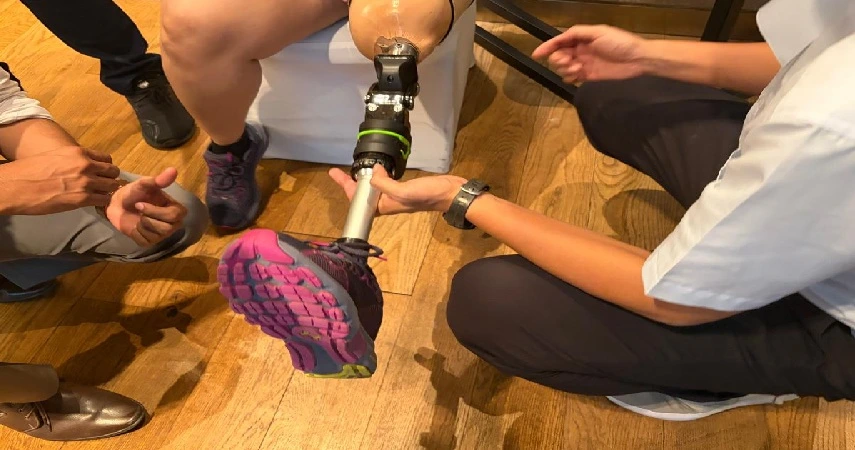
The partnership aims to address gaps in access to advanced lower-limb prosthetic technologies in India, with the initial portfolio including bionic knee joints, prosthetic feet and other lower-limb solutions.
Kavinder Beniwal, COO, Motorica India, said, “When we started engaging with partner clinics, we realised there was an urgent need to address the gap in lower-limb prostheses. That is when we started looking for the right partner in the lower-limb prosthetics segment.”
Why Tehlin? Beniwal said, “We wanted to partner with a world-class product for the Indian market because India is no longer a developing or underdeveloped country. We are moving towards Viksit Bharat. Tehlin is among the top five companies in the world for lower-limb prosthetic products. The company also has extensive R&D experience with Asian patients, which makes its products suitable for Indian requirements.”
Brian Chen, General Manager, Tehlin, represents the third generation of the family business. His grandfather, who lost his left leg in a car accident, founded the company 65 years ago. The company is headquartered in Taiwan and has a manufacturing facility in China, as well as more than 100 clinics.
Chen said, “Tehlin is not just a manufacturer. We manufacture the components, but we also do the fitting. So, we have knowledge from the end-user to the manufacturing and R&D sides. We actually know what Asian people want. The population size of China and India is almost the same. So, I believe we can use our experience in China in the Indian market.”
On the collaboration with Motorica, Chen said Tehlin needed a structured partner with established processes, and Motorica India has a strong clinical team and a well-structured rehabilitation process.
Chen also noted that Tehlin and Motorica share the same mission – to “help people regain their abilities, work again, build self-confidence and return to normal life.”
Products to be launched
The collaboration will initially introduce three product lines: knee joints, carbon feet and connecting accessories.
The knee-joint range will include the lightweight RH1 hydraulic joint designed primarily for elderly patients, classic hydraulic knee joints and microprocessor-based pneumatic knee joints.
Beniwal explained that the microprocessor-based knee joint features software that functions like a brain. Based on the patient’s movements, the knee joint learns and continuously adjusts itself.
The companies will also introduce prosthetic solutions for children, including knee joints, as well as ankle joints and tubing used with lower-limb prostheses.
Motorica India plans to introduce these products through its network of partner clinics and government partnerships.
“We currently have close to 100 partner clinics in India. We are also working with the Government of India and the Department of Empowerment of Persons with Disabilities (DEPwD) to explore how we can bring these technologies to more people,” Beniwal said.
Tehlin’s portfolio also includes hip joints, knee rotators, gel liners and other prosthetic accessories, which are expected to be introduced at a later stage.
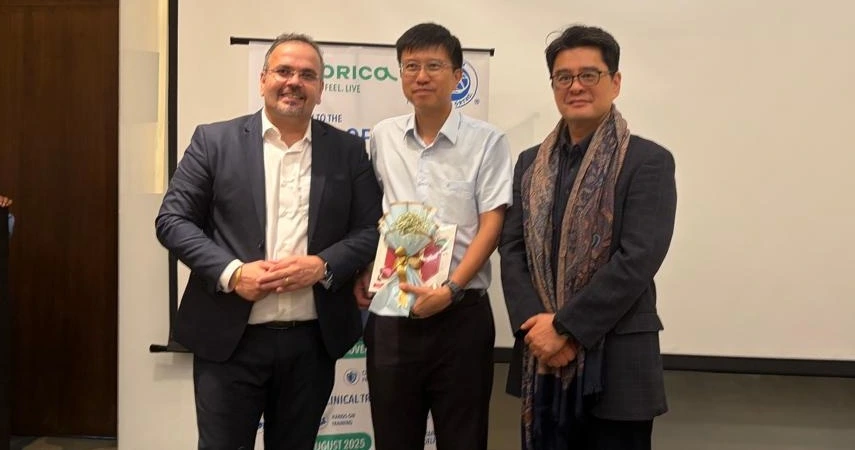
L-R: Kavinder Beniwal, COO, Motorica India; Dr. Lai Hung-Jen, R&D Manager, Tehlin Prosthetics & Orthotics; and Brian Chen, General Manager, Tehlin
Advanced technology at an affordable price
Beniwal said Tehlin’s products will be priced around 35-40% lower than those of major European players such as Ottobock, with the potential for prices to fall further as volumes increase.
“Our aim is also to bring the price further down. As you know, it’s always about economies of scale. As the volume grows, the price will further come down. This is a step towards making the same kind of technology, advanced biomechanics and high-quality products from Tehlin available at an affordable price for the Indian market,” Beniwal said.
According to Chen, Tehlin’s focus in India is not simply on selling low-cost prosthetic joints but on providing patient-specific solutions and building trust. “Since each patient has different requirements, we aim to customise products to help improve their quality of life. We also sell trust. Patients should be able to trust us,” he said.
According to Beniwal, India sees around 27,000 amputations every month, with road accidents being one of the major causes. He added that cancer, other diseases and congenital limb deficiencies also contribute to the demand for prosthetic solutions. However, access to high-quality prosthetic solutions remains a challenge in India.
Motorica India and Tehlin aim not only to address this unmet need but also to improve patients’ mobility, independence and quality of life through more advanced prosthetic technologies.
Manufacturing plans for India
Beniwal said that Motorica India has already started manufacturing its upper-limb range in India, making the products available at lower prices. He hopes to do the same with Tehlin over the next three to four years.
“In the future, I envision a joint manufacturing partnership with Tehlin to produce lower-limb prosthetics in India,” Beniwal said.
Beniwal said that Motorica India is also working towards making advanced prosthetic technologies more accessible to patients in Tier 2, Tier 3 and Tier 4 cities.
“Motorica has already started digital processes. At clinics without 3D scanning, we take pictures of the patient’s limb and use AI technology to create a 3D model. With that, we make sockets for hand fitting. I believe remote technology and digitisation can bring prosthetic care to the last mile, especially for patients who cannot travel to metro cities,” he said.
He cited the example of a patient from Purnia, Bihar, who had suffered an accident and was unable to travel to a metro city. Motorica created his prosthetic hand using 3D mapping.
“Technology can solve many challenges, especially the distance barrier,” he added.
What’s next in prosthetics
Beniwal said Motorica has already started its R&D programme in Russia and has fitted 25 patients with a neural implant for upper-limb prostheses.
“This is basically a vagus nerve stimulation implant that controls upper-limb prostheses, allowing patients to feel sensations such as hardness, softness, and hot and cold,” he said.
According to Beniwal, the patients are doing well as part of the company’s first clinical study, with results expected to be published next year. He added that prostheses incorporating this technology are likely to be available within the next one to two years.
Motorica is also developing upper-limb prostheses with optical sensors for patients with limited or no muscle activity. The technology is expected to be launched next year.
Highlighting the changes in the prosthetics and orthotics industry driven by rapid technological advancements, Chen said traditional methods such as plaster casting are increasingly being replaced by 3D scanning, 3D modelling and 3D printing to create prosthetic sockets. He added that AI and robotics are also being used in prosthetic development.