







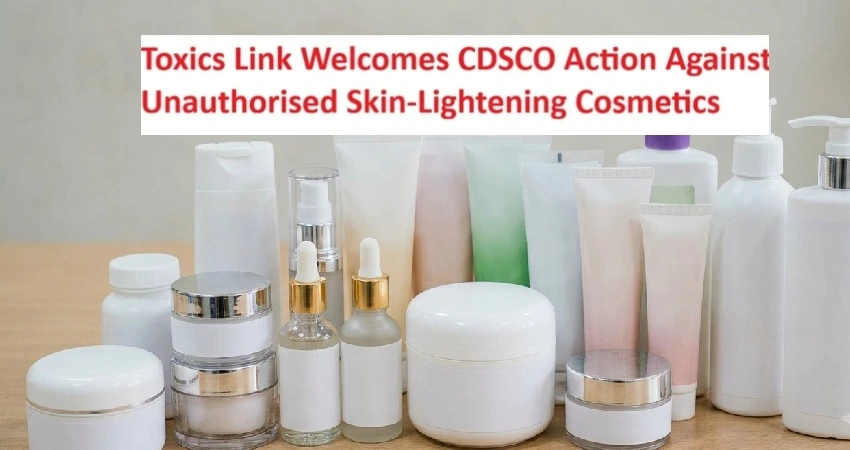
Toxics Link has welcomed the Central Drugs Standard Control Organisation’s (CDSCO) nationwide public health alert against unauthorised skin-lightening cosmetics containing excessive levels of heavy metals.
The environmental research and advocacy organisation described the action as an important step towards protecting consumers from toxic and potentially hazardous cosmetic products.
The CDSCO recently issued a public health alert against the use of two unauthorised cosmetic products manufactured in Pakistan — Goree Beauty Cream and Chandni Whitening Cream. Following testing and analysis, the regulator found both products to contain heavy metals at levels exceeding the specified limits.
The regulator also directed all regulatory enforcement units to ensure that these cosmetic products are not sold within their respective jurisdictions.
“We welcome CDSCO’s timely action against unauthorised skin-lightening products containing excessive levels of heavy metals,” said Satish Sinha, associate director, Toxics Link.
“Toxics Link has been consistently raising concerns about the presence of mercury and other toxic substances in skin-lightening cosmetics and the serious risks they pose to consumers. The latest action demonstrates the importance of strong regulatory surveillance and coordinated enforcement across the country. We hope that the regulatory measures taken will ensure that these products are no longer available in the market,” he added.
Toxics Link cautioned that mercury is a potent neurotoxic substance and exposure can affect the nervous system and kidneys. It said that repeated use of mercury-containing creams can lead to the absorption of mercury through the skin, while environmental contamination can occur when such products enter wastewater and waste streams.
Pregnant women, infants and young children may be particularly vulnerable to the adverse effects of mercury exposure, the organisation said.
Toxics Link also noted that India is a Party to the Minamata Convention on Mercury, under which reducing exposure to mercury is a key component of protecting human health and the environment.
In July 2026, Toxics Link welcomed action by the Maharashtra Food and Drugs Administration against nine skin-lightening cosmetic products found to contain excessive levels of mercury and, in one case, lead. The organisation had also urged national regulatory authorities to extend such action across the country, noting that toxic products could continue to reach consumers through retail outlets, informal markets and online platforms.
“We are pleased to now see CDSCO’s decisive action through nationwide public health warnings and a formal ban. However, there are more toxic skin-lightening and skin-brightening products still openly available and sold in India that need to be brought under this nationwide ban,” the organisation said.
Toxics Link urged the regulator to restrict the sale, use, distribution and import of all skin-lightening and skin-brightening products containing mercury above the permissible limit of 1 ppm.
According to the organisation, such products can pose serious health risks and should be removed from the market to protect consumers. It also referred to earlier reports from hospitals in Nagpur that revealed cases of illness among women who had used skin-lightening or fairness products over several years.
Toxics Link calls for:
- Continued nationwide surveillance and testing of skin-lightening and other cosmetic products for mercury and other hazardous substances.
- Strong monitoring of online marketplaces as well as retail and informal markets.
- Swift recall and removal of non-compliant products from the market.
- Effective enforcement against manufacturers, importers, distributors and sellers of unauthorised or unsafe cosmetics.
- Stronger customs and import controls to prevent non-compliant cosmetic products from entering India.
- Greater public awareness to help consumers identify and avoid unauthorised skin-lightening products.