





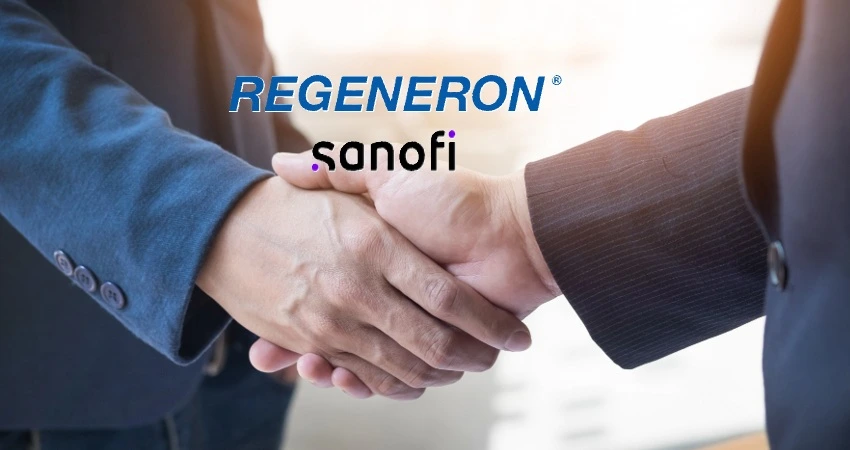
Regeneron Pharmaceuticals and Sanofi have expanded their long-standing antibody collaboration to include four next-generation, long-acting antibody programmes targeting key pathways involved in immune-mediated diseases.
Under the expanded licence and collaboration agreement, the companies will jointly develop and commercialise four Regeneron-invented long-acting antibodies targeting interleukin-13 (IL-13), IL-4xIL-13 bispecific, interleukin-4 (IL-4) and interleukin-4 receptor alpha (IL-4Rα).
Regeneron’s IL-13 antibody, REGN20423, is currently being evaluated in a Phase 1 clinical trial for atopic dermatitis. The other three antibody programmes are expected to enter clinical studies in 2027.
The agreement also gives Regeneron an option to include Sanofi’s investigational lunsekimig in the collaboration. Lunsekimig is a bispecific Nanobody VHH therapy targeting thymic stromal lymphopoietin (TSLP) and IL-13. The option can be exercised upon completion of Phase 3 trials evaluating the therapy in chronic obstructive pulmonary disease (COPD).
The expanded collaboration builds on more than two decades of partnership between the two companies, which has led to the development and commercialisation of Dupixent (dupilumab), a treatment for multiple diseases associated with type 2 inflammation.
Leonard S. Schleifer, president and CEO of Regeneron, said, “By expanding our alliance, we are positioning promising new long-acting antibodies for the kind of rapid, global impact that our shared work on Dupixent has already achieved.”
Sanofi CEO Belén Garijo said the expanded collaboration would support the development of new therapies for patients with immune-mediated diseases while contributing to the company’s long-term growth.
“This is a deliberate first step in igniting Sanofi’s innovation engine,” Garijo said.
Under the terms of the agreement, Regeneron will receive an upfront payment of USD 1 billion from Sanofi, along with the potential for up to an additional USD 7 billion in development, regulatory and commercial milestone payments.
The companies will share development and commercialisation costs for the new programmes and split future profits from any resulting products equally on a global basis.
Regeneron will lead research and development activities, while Sanofi will lead global commercialisation efforts. The existing profit-sharing agreement for Dupixent will remain unchanged, the companies said.
George D. Yancopoulos, president and chief scientific officer at Regeneron and a principal inventor of Dupixent, said the companies’ clinical and commercial alliance dates back to 2003 and has resulted in multiple approved medicines.
“By combining Regeneron’s world-class scientific discovery and antibody development expertise with Sanofi’s global capabilities and reach, we hope to once again deliver the next wave of innovation in immunology,” Yancopoulos said.
The companies have also settled their prior litigation related to their collaboration.