







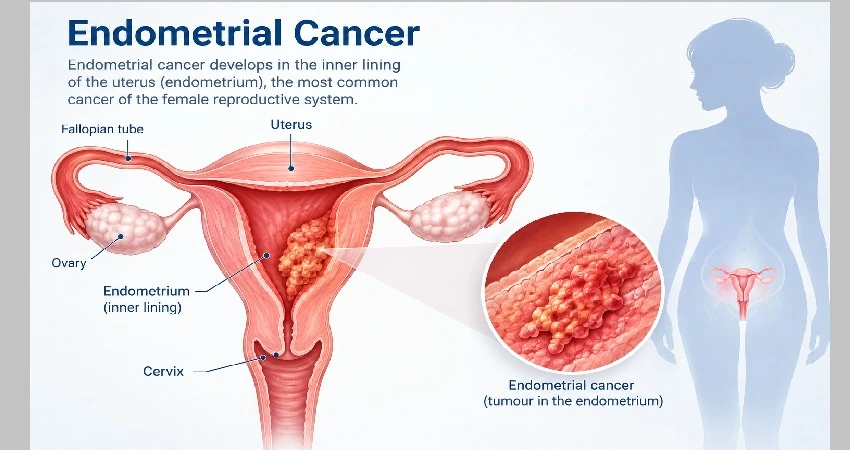
Image: AI-generated allustration of Endometrial Cancer
A new drug, sacituzumab tirumotecan (sac-TMT), developed by Merck, has been shown to reduce the risk of disease progression and death in women with advanced or recurrent endometrial cancer following chemotherapy and immunotherapy, according to results from an international Phase 3 clinical trial.
Led by researchers at NYU Langone Health and its Perlmutter Cancer Center, the study compared sac-TMT with standard chemotherapy in women who had already been treated with chemotherapy and then immunotherapy for advanced or recurrent endometrial cancer.
All participants had previously received pembrolizumab (Keytruda), an established programmed cell death protein 1 (PD-1) inhibitor that helps the immune system recognise and attack cancer cells.
The trial randomly selected 386 women to receive sac-TMT and 390 to receive standard chemotherapy after immunotherapy. Results showed that women treated with sac-TMT had a 41% lower risk of disease progression or spread than those receiving chemotherapy alone (390 endometrial cancer survivors). The risk of death was also 32% lower in the sac-TMT group.
More than twice as many women treated with sac-TMT responded to treatment, such as tumour shrinkage, compared with those receiving standard chemotherapy.
The most common side effects associated with sac-TMT included low blood counts, particularly anaemia and neutropenia, inflammation of the mouth (oral mucositis or stomatitis), and dry or itchy eyes. Researchers reported that these adverse effects were manageable.
Bhavana Pothuri, the study’s principal investigator and a gynaecologic oncologist, said, “These positive results from the first phase 3 trial using sacituzumab tirumotecan after immunotherapy establishes this drug as a new standard treatment in recurrent endometrial cancer.”
Pothuri is a professor in the Department of Obstetrics and Gynaecology at NYU Grossman School of Medicine and medical director of the Clinical Trials Office at Perlmutter Cancer Center.
She said that the findings could prompt a reassessment of clinical guidelines for endometrial cancer to incorporate sac-TMT.
Pothuri added that effective therapies like sac-TMT are needed as endometrial cancer is becoming more common and deadly, with poor overall survival once the cancer has spread outside the uterus.
The study was funded by Merck, which manufactures sacituzumab tirumotecan and pembrolizumab.
How sacituzumab tirumotecan works
Sac-TMT is an antibody-drug conjugate (ADC) designed to target trophoblast cell-surface antigen 2 (Trop-2), a protein expressed at high levels on the surface of many endometrial cancer cells.
By binding to Trop-2, the drug delivers a targeted dose of a chemical that leads to cancer cell death.
According to Pothuri, the trial success offers promise that sac-TMT could also serve as a therapy for other cancers in which Trop-2 is overexpressed, including tumours of the lungs, breasts, ovaries, and intestines.
The trial enrolled endometrial cancer patients at more than 200 cancer centres across 29 countries in Europe, Asia and North America, including the US. Three patients in each treatment group died during the follow-up period. Most participants were monitored for at least one year after enrolment and randomisation.
Addressing an unmet need in endometrial cancer
Endometrial cancer, which develops in the inner lining of the uterus, is the most common cancer of the female reproductive system. Treatment options remain limited, particularly for patients diagnosed at an advanced stage. Until now, there has been no established standard therapy specifically to prevent or delay recurrence following initial chemotherapy and immunotherapy, according to the researchers.
The findings offer renewed hope for patients worldwide, said Michelle Lightfoot, a study co-investigator, assistant professor at NYU Grossman School of Medicine and gynaecologic oncologist at Perlmutter Cancer Center.
Lightfoot noted that rising death rates from endometrial cancer could be partly attributable to highly aggressive disease subtypes, which are more frequently observed in Black patients. Black patients also have twice the risk of dying from the disease.
“Antibody drug conjugates such as sacituzumab tirumotecan are effective in targeting and treating these aggressive cancers to delay its progression and prolong survival when it recurs,” she said.
Initial data from the Phase 3 trial were scheduled for presentation at the European Society for Medical Oncology (ESMO) annual meeting on October 26 and simultaneously published online in The Lancet.