



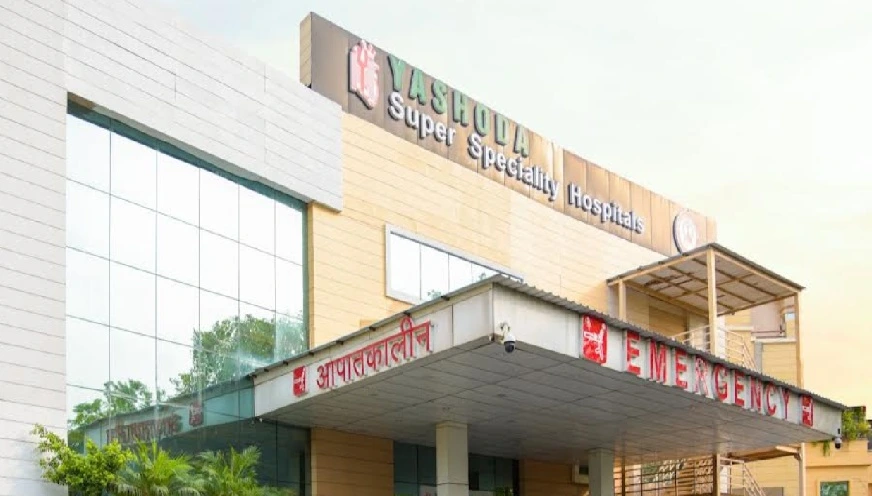
Doctors at Yashoda Super Speciality Hospitals, Kaushambi, have successfully removed bile duct stones from a 73-year-old patient using SpyGlass DS, a miniature camera system, after previous stomach surgery made conventional endoscopic access impossible.
The patient, a resident of Vaishali, Ghaziabad, developed a life-threatening infection following a blockage in the common bile duct. The infection had begun affecting his kidneys, while pneumonia further complicated his condition.
Investigations revealed two stones in the common bile duct, which carries bile from the liver to the intestine. Doctors initiated targeted antibiotic treatment and inserted a thin tube through the skin and liver to drain infected bile.
Four days later, Dr Kunal Das, Director of Gastroenterology, Hepatology and Endoscopy, and Dr Deepak Hans from the Department of Interventional Radiology performed the stone removal procedure using SpyGlass DS-guided electrohydraulic lithotripsy (EHL).
The technique uses controlled energy pulses to break stones into smaller fragments. Under direct visual guidance, the team removed the stones and obstructing sludge and placed a stent to maintain bile flow.
The intervention was performed four days after establishing access through the liver, earlier than the usual waiting period of one to two weeks for the channel to stabilise. The decision was made considering the patient’s critical condition and the need for timely relief from the obstruction.
No post-procedural complications were reported. According to the hospital, the patient was discharged in a stable condition and was doing well at a follow-up approximately six weeks later, with normal liver function and no jaundice.
“The biggest challenge was to clear the obstruction when the conventional endoscopic route was inaccessible because of the patient’s previous surgery. His infection and kidney injury made timely treatment critical. Direct visualisation of the bile duct helped us locate and remove the stones through an alternative route,” said Dr Das.
Dr Hans said the team carefully weighed the risks of delaying treatment against those of proceeding with the intervention earlier.
“The channel created through the liver usually needs time to stabilise before further intervention. Given the patient’s condition, we had to carefully weigh the risks of waiting against those of proceeding earlier. The procedure enabled us to clear the blockage without open surgery, and his recovery at follow-up was encouraging,” he said.
According to the hospital, the case highlights the role of image-guided interventions in managing complex biliary obstruction in selected high-risk patients, particularly those whose previous surgeries make conventional treatment difficult or inaccessible.