



The global ophthalmic equipment market is projected to grow from USD 21.2 billion in 2026 to USD 30.5 billion by 2031, registering a compound annual growth rate (CAGR) of 7.5% during the forecast period, according to a new study by Wissen Research.
The market growth is being driven by rising cataract surgery volumes, increasing prevalence of diabetes-related eye diseases, an ageing population and growing demand for early diagnosis and treatment of vision disorders.
Factors Driving Growth in the Ophthalmic Equipment Market
Several clinical and healthcare infrastructure trends are supporting demand for ophthalmic equipment across diagnostic, surgical and vision-care settings.
Rising cataract surgery volumes: The burden of cataract-related vision loss is driving demand for phacoemulsification systems, surgical microscopes, biometry devices and intraocular lens (IOL) implantation instruments as healthcare facilities expand surgical capacity.
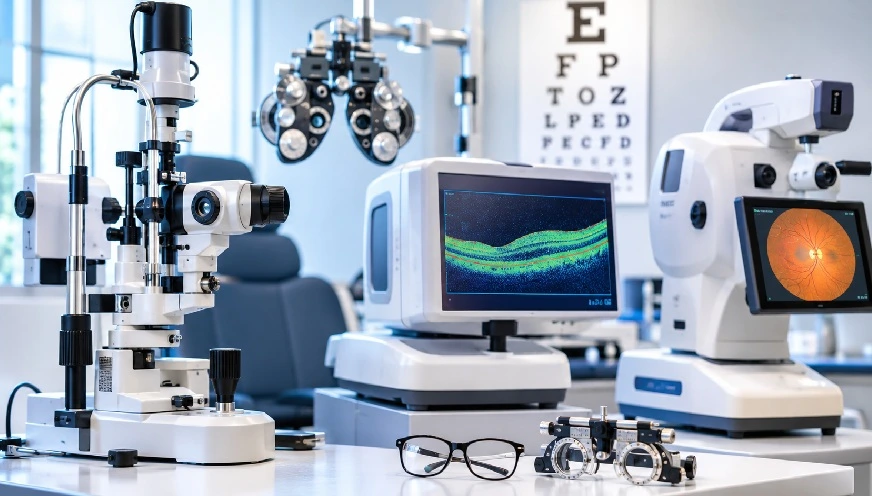
Increasing diabetes-related retinal disease: The growing prevalence of diabetes is increasing demand for fundus cameras, optical coherence tomography (OCT) systems and other retinal imaging equipment used to detect diabetic retinopathy and support treatment decisions.
Earlier glaucoma detection: The often-silent progression of glaucoma is driving demand for tonometers, OCT systems and automated visual field analysers to identify structural and functional changes before irreversible vision loss occurs.
Ageing population: Age-related conditions such as cataracts, presbyopia and macular degeneration are supporting demand for slit lamps, optical biometry, retinal imaging and ophthalmic surgical equipment.
Growing need for myopia management: Rising myopia prevalence is increasing demand for autorefractors, lensmeters, corneal topographers and optical biometers across optometry and ophthalmology settings.
Expansion of community-based eye care: Governments and healthcare providers are extending vision services beyond specialist hospitals, creating demand for portable fundus cameras, compact refraction systems and other screening devices.
The report noted that AI-enabled retinal screening devices are facilitating automated retinal assessments and early disease detection, particularly in areas with limited access to specialist eye-care facilities.
Asia-Pacific is the fastest-growing region
North America held a leading position in the market in 2025, supported by established surgical infrastructure, access to advanced diagnostics, reimbursement for eligible procedures and the presence of major equipment manufacturers.
Asia-Pacific is projected to be the fastest-growing regional market, supported by a large patient population, expanding healthcare infrastructure, rising eye-care awareness and investment in ophthalmology. China, Japan and India are among the key markets, driven by screening and surgical volumes, advanced imaging systems and adoption of modern surgical techniques.
In India, the National Programme for Control of Blindness and Visual Impairment supports efforts to expand eye-care services. Japan’s established healthcare system and China’s ophthalmic equipment manufacturing capabilities also contribute to regional growth. Demand for affordable diagnostic devices, surgical instruments and portable screening tools remains an important growth driver.
According to the study, ophthalmic surgical implants and consumables represented a major product category in 2025, supported by recurring cataract procedures, demand for intraocular lenses and the continued use of procedure-specific supplies.
Non-AI-enabled equipment held the leading position by technology type in 2025. Established devices and workflows continue to support routine eye examinations, conventional imaging, refractive assessment and ophthalmic surgery. Adoption of AI-enabled systems may require additional clinical validation, software integration and workflow adjustments.
Key Players in the Ophthalmic Equipment Market
Leading companies are focusing on ophthalmic diagnostic and imaging systems, surgical equipment, laser-based platforms, refractive measurement devices and advanced visualisation technologies.
Competition is shaped by diagnostic performance, surgical precision, product reliability, technological innovation, installed equipment base, service networks, regulatory compliance and integration with digital clinical workflows.
The report identifies the following as the five leading companies in the market:
- Alcon (Switzerland)
- Carl Zeiss Meditec (Germany)
- Topcon Corporation (Japan)
- NIDEK (Japan)
- Bausch + Lomb Corporation (Canada)
Challenges Facing the Ophthalmic Equipment Market
The Wissen Research report cited that high acquisition and maintenance costs remain a major constraint on market growth. Advanced equipment, including OCT devices, digital retinal imaging systems and femtosecond lasers, requires substantial capital investment, potentially limiting adoption among smaller clinics and resource-constrained healthcare facilities.
The total cost of ownership extends beyond the initial purchase price to include installation, calibration, maintenance, software upgrades and technical support. A shortage of ophthalmologists, trained technicians and effective patient referral systems can also limit equipment utilisation. Infrastructure and access gaps further complicate adoption.
The report highlights a global eye-care market facing a significant challenge: a large backlog of treatable vision disorders alongside the high cost of equipment required to diagnose and treat them.
According to the World Health Organization (WHO), at least 2.2 billion people worldwide have near or distance vision impairment, with at least 1 billion cases remaining unaddressed.
Cataracts affect more than 94 million people globally, while nearly half of those experiencing cataract-related blindness still lack access to surgery.