





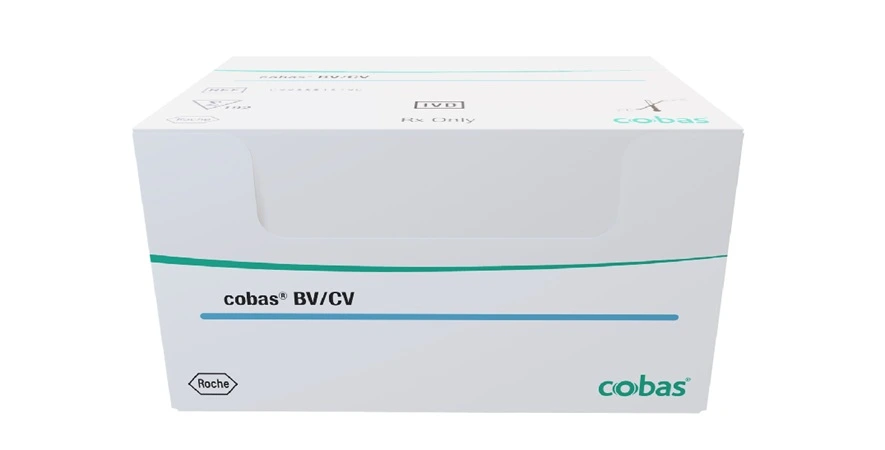
Roche has received US Food and Drug Administration (FDA) 510(k) clearance for its cobas BV/CV (Bacterial Vaginosis/Candida Vaginitis) assay, a molecular diagnostic test that detects two of the most common causes of vaginitis from a single vaginal swab.
The test simultaneously detects organisms associated with Bacterial vaginosis (BV) and Candida vaginitis (CV), enabling faster and more accurate diagnoses that can support timely treatment and improve patient outcomes.
According to Roche, vaginitis is among the most common reasons women visit a healthcare provider, with BV and CV being the most common causes of infection. These infections can cause symptoms such as itching, burning, irritation and abnormal discharge, and may also increase the risk of acquiring sexually transmitted infections (STIs).
The company said traditional testing methods – including microscopy, pH testing and clinical assessment – lack precision, and nearly 50% of vaginitis cases are misdiagnosed, increasing the risk of recurrence.
“Compared to traditional methods, the cobas BV/CV test can help improve diagnostic accuracy for women affected by vaginitis, addressing a critical need in women’s health,” said Brad Moore, President and CEO, Roche Diagnostics North America.
The cobas BV/CV assay is an in vitro diagnostic test intended for professional laboratory use upon a clinician’s order. It uses real-time polymerase chain reaction (PCR) technology to identify the specific bacteria and yeast responsible for BV and CV in vaginal samples from symptomatic patients.
The test detects DNA targets for organisms associated with BV, including Gardnerella vaginalis, Atopobium vaginae and Lactobacillus spp. For Candida vaginitis, it detects multiple clinically relevant Candida species, including C. albicans, C. glabrata, C. krusei, C. parapsilosis, C. tropicalis and C. dubliniensis.