




At the NeuroNext Forum in Delhi, patients with Parkinson’s disease shared how an incision-free treatment had transformed their daily lives. Many described being able to eat without spilling food, drink from a cup with steady hands, and write legibly again—simple activities that had become difficult because of their condition.
These stories highlight the growing impact of magnetic resonance-guided focused ultrasound (MRgFUS), a non-invasive treatment that is redefining care for neurological movement disorders such as Parkinson’s disease and essential tremor.
To raise awareness about MRgFUS and its potential in treating these conditions, the Vattikuti Foundation recently organised the NeuroNext Forum in Ahmedabad, Chennai, Delhi, and Chandigarh. The Forum brought together more than 400 patients, caregivers, leading neurologists, neurosurgeons, and over 125 healthcare professionals to encourage informed discussions around Parkinson’s disease, essential tremor, and advancements in neurological care.
The forums also featured interactive sessions where patients and caregivers engaged directly with medical experts, asking detailed questions about treatment suitability, expected outcomes, and accessibility.
Speaking on the significance of the initiative, Abhi Vattikuti, Vice President, Vattikuti Foundation, said, “Through the NeuroNext Forum, our goal has been to bridge the gap between medical expertise and the people who need it most by creating opportunities for patients and caregivers to engage directly with leading specialists, ask questions openly and better understand their treatment journey.”
What is MRgFUS?
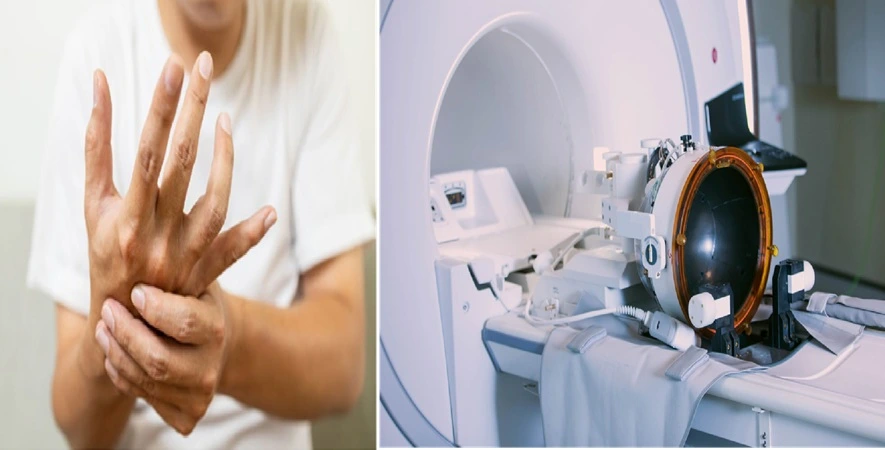
MRgFUS is an FDA-approved, non-invasive treatment that uses highly focused ultrasound waves guided by real-time magnetic resonance imaging (MRI) to precisely target a small area of abnormal brain tissue responsible for causing symptoms of Parkinson’s disease or other movement disorders while sparing surrounding healthy tissue.
The entire procedure is performed inside an MRI scanner, allowing physicians to visualise the target in real time and continuously monitor treatment progress.
Unlike conventional brain surgery, MRgFUS requires no incisions, implants, or general anaesthesia, and the treatment is typically completed within 1.5 to 2.5 hours. Most patients experience immediate tremor relief and are discharged the same day or the following morning, returning to normal daily activities within a few days.
Patients often report the greatest improvements in fine motor skills, including: eating without spilling, drinking from a cup, writing legibly, buttoning shirts, and using smartphones.
For patients with Parkinson’s disease, the treatment may also improve stiffness, slowness, dystonia (cramping /twisting movements) and dyskinesias (dancing movements).
MRgFUS Treatment Centres in India
MRgFUS is currently available at four centres across India.
Royal Care Super Speciality Hospital (RCH), Coimbatore: Thehospital introduced MRgFUS in 2022 and has since treated more than 300 patients successfully.
Sir Ganga Ram Hospital (SGRH), Delhi: The programme began in 2025 in technical collaboration with the MRgFUS team at Royal Care Super Speciality Hospital. More than 25 procedures have been completed.
KIMS Hospital, Hyderabad: MRgFUS services commenced in 2025, with over 55 successful treatments performed to date.
Christian Medical College (CMC), Vellore: Launched in 2026, CMC Vellore’s Centre for Excellence in Neurotechnology, established in collaboration with the Vattikuti Foundation, offers advanced incision-free treatment for patients with complex movement disorders.
Who is Eligible for MRgFUS?
Patient selection involves a comprehensive neurological evaluation along with a specialised CT scan to assess skull density, which determines whether ultrasound waves can safely reach the targeted area of the brain.
The treatment is generally recommended for patients with Parkinson’s disease or essential tremor whose symptoms are inadequately controlled with medication or who experience severe medication-related side effects. Eligibility is determined by a qualified movement disorder specialist.
Patients may not be suitable candidates if they have severe dementia, untreated psychiatric disorders, severe claustrophobia (unable to lie in an MRI), and a skull shape or density that does not allow safe transmission of ultrasound waves.
“For years, I believed my tremors were something I simply had to live with. I never knew that advanced treatment options even existed. Today, after hearing doctors explain the possibilities and meeting patients who have undergone treatment, I am leaving with hope, which I never had before,” said a participant at the NeuroNext Forum.
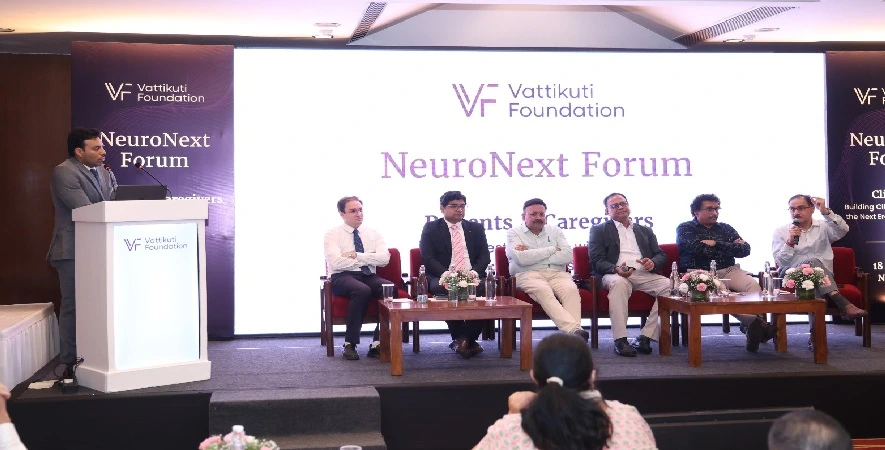
The Forum featured some of India’s leading neurological specialists, including Dr. Sudhir V. Shah, Head of the Department of Neurology at Smt. NHL Municipal Medical College, Ahmedabad; Dr. K. Vijayan, Consultant Neurologist and Neurosonologist at Royal Care Super Speciality Hospital, Coimbatore; Dr. Aniruddha Bhagwat, Consultant Functional Neurosurgeon at Deenanath Mangeshkar Hospital and Research Center; Dr. Manas Kumar Panigrahi, Head of Department and Senior Consultant Neurosurgeon at KIMS Hospital, Hyderabad; Dr. Anshu Rohatgi, Senior Consultant and Co-Chairperson, Department of Neurology at Sir Ganga Ram Hospital, New Delhi; and Dr. Atif Shaikh, Professor, Department of Neurological Sciences at Christian Medical College, Vellore, along with several other experts.
Experts Answer Frequently Asked Questions
During the NeuroNext Forum in Delhi, neurologists and neurosurgeons from Sir Ganga Ram Hospital and KIMS Hospital interacted with patients and caregivers, answering their questions about MRgFUS and movement disorder treatment.
Q. Does MRgFUS cure Parkinson’s disease?
No. There is currently no cure for Parkinson’s disease. MRgFUS is designed to relieve movement-related symptoms and improve patients’ quality of life.
Q. Can MRgFUS be performed on both sides of the body?
Yes, but not during the same procedure. MRgFUS is usually performed on one side of the brain to treat symptoms affecting the opposite side of the body. Treatment on the other side may be considered six to nine months later, depending on disease severity, patient preference, and the treating specialist’s recommendation.
Q. How does MRgFUS compare with Deep Brain Stimulation (DBS)?
MRgFUS does not require surgery, general anaesthesia, or brain implants, making it a safer option for patients who are not willing to have invasive surgery. Age is generally not a limiting factor for MRgFUS, whereas it may be a consideration for Deep Brain Stimulation (DBS).
However, MRgFUS creates a permanent therapeutic lesion in the brain. DBS, on the other hand, is adjustable and reversible because it uses implanted electrodes connected to a programmable neurostimulator.
Q. Can MRgFUS cause serious side effects?
Apart from temporary (transient) side effects, serious complications have not been reported in most cases, as the procedure precisely targets the affected area without damaging the surrounding brain tissue.
Q. What is the approximate cost of MRgFUS in India, and is it covered by insurance?
Treatment costs typically range from Rs 5 lakh to Rs 20 lakh, depending on the hospital and individual clinical requirements. Insurance coverage varies. Some private insurance policies provide reimbursement, while philanthropic organisations such as the Vattikuti Foundation may offer financial assistance to eligible patients receiving treatment at select centres.
The Vattikuti Foundation said it is making efforts to support the Make in India initiative, which is expected to reduce the MRgFUS treatment costs by 30–50 per cent over the next three to four years.
The Vattikuti Foundation said India’s ageing population is contributing to a rising burden of neurological disorders, highlighting the need for greater awareness of available treatment options. While medications remain the first-line treatment, many patients continue to experience disabling symptoms, and awareness of advanced therapies such as MRgFUS remains limited among patients and caregivers.