





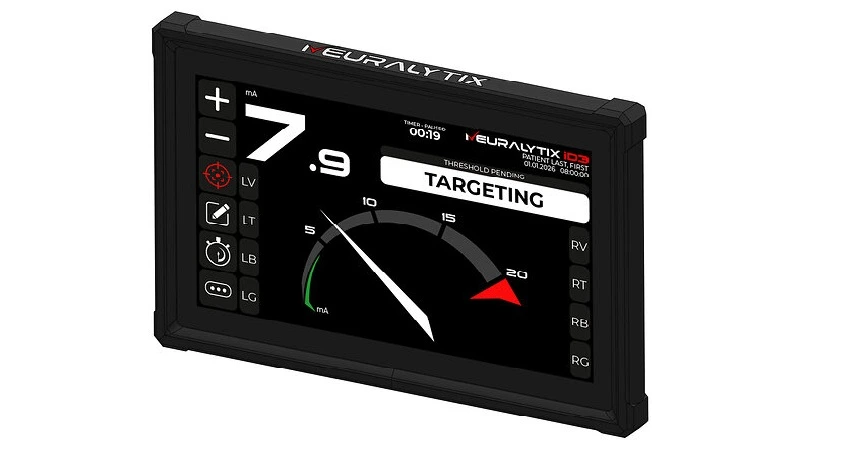
American medical device company Neuralytix has announced the commercial availability of its iD3 System, an FDA 510(k)-cleared mechanomyography (MMG) platform designed for intraoperative nerve assessment during spine surgery.
The iD3 System is designed to enhance surgical decision-making by helping surgeons locate and map nerves and assess neurophysiologic changes in real time during decompression procedures. Designed to fit into existing surgical workflows, the system is surgeon-directed and requires no dedicated technician or neurophysiologist.
The commercial launch builds on the system’s initial release in October 2025. The iD3 System is now available through Neuralytix’s network of distributors across the US.
Christopher Wybo, Founder and CEO of Neuralytix, said, “At the end of every nerve decompression procedure, surgeons face the same question: is the nerve adequately decompressed? Cardiology pairs the angiogram with the stress test because structure and function often diverge. With iD3, we’re bringing that same functional stress test to spine surgery.”
Dr. Vikram Mehta, a neurosurgeon based in Newport Beach, became the first surgeon in California to adopt the iD3 System for MMG-guided nerve decompression.
He has incorporated iD3 into two distinct areas of his practice. During lateral lumbar interbody fusion and other lateral approaches, he uses MMG to help confirm safe, nerve-free access through the psoas corridor. During cervical and lumbar decompression procedures, he uses real-time MMG threshold measurements as an additional data point to inform his intraoperative judgment on decompression adequacy.
“Safe access and adequate decompression present two distinct challenges, and MMG gives me useful, objective information for each,” Mehta said.
Decompressive Surgery
Nerve compression can cause symptoms including pain, paresthesia, dysesthesia, numbness and weakness. Decompressive surgery may be recommended when conservative treatment fails or when patients develop severe neurological deficits.
Traditionally, surgeons have relied largely on visualisation and tactile feedback to determine whether a nerve has been adequately decompressed. However, visualisation can be limited, particularly during minimally invasive procedures, while tactile assessment is subjective.
Conventional surgical techniques primarily rely on visualization and tactile feel to assess adequacy of decompression. Often, visualisation can be limited, particularly during minimally invasive procedures, while tactile feedback is subjective, making the evaluation of successful nerve decompression difficult.
MMG offers an effective way to differentiate normal and compressed nerves by measuring their response to an electrical stimulation current.
According to Neuralytix, the technology enables surgeons to assess the effects of decompression in real time and eliminate the subjectivity seen in tactile feedback methods