



Air pollution in India has become a widely debated issue, featuring prominently in online discussions and news coverage. As air quality continues to deteriorate in several cities, health experts are increasingly raising concerns about its impact on public health.
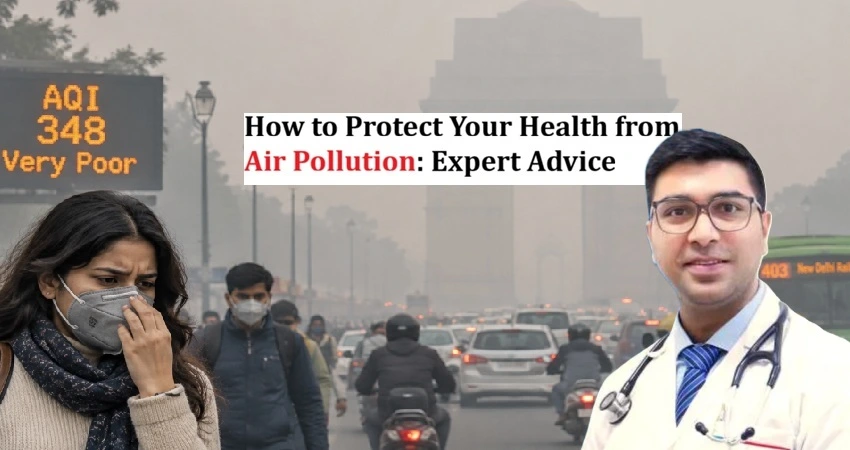
Delhi’s overall Air Quality Index (AQI) stood at 348 on Saturday (14 November), placing it in the ‘Very Poor’ category. Fine particulate matter (PM2.5) remains the primary pollutant across the capital. Exposure to PM2.5 is associated with a range of serious health complications.
So, how can we minimise the health risks associated with air pollution in our everyday lives?
We spoke to Dr Akshay Budhraja, Senior Consultant and Head of Respiratory and Sleep Medicine at Aakash Healthcare, to understand the health impact of air pollution and explore practical steps people can take in their daily lives to minimise exposure.
Excerpts from the discussion follow:

Health impact: How does prolonged exposure to air pollution affect human health, particularly the respiratory and cardiovascular systems? What are the potential short-term and long-term health consequences?
Short-term exposure may cause coughing, throat irritation, shortness of breath, wheezing and exacerbation of asthma or allergies. Long-term exposure to air pollution can be devastating to respiratory and cardiovascular health. Fine particles (PM2.5) can travel deep into the lungs and even the bloodstream, causing inflammation and oxidative stress.
Long-term exposure can lead to decreased lung function and a greater risk of chronic respiratory diseases, including chronic obstructive pulmonary disease (COPD) and lung cancer. It can also cause heart attacks, strokes and other cardiovascular problems like high blood pressure. It’s particularly susceptible among pregnant women, children, elderly people and people with heart or lung issues.
Everyday precautions: What practical steps can people take in their daily lives to minimise exposure to air pollution and reduce its impact on their health?
Minimise outdoor time on days of heavy pollution, particularly near congested roads and traffic jams. Keep doors and windows closed during high oil pollution, especially at peak hours of pollution. Wear a good-fitting N95 mask when outdoors, and air out your home once the outside air is better. Do not have indoor pollution sources, such as smoking, incense sticks and an overabundance of candles. Drinking plenty of water and eating a healthy diet are good for your health in general, but they won’t help you ward off the adverse effects of pollution.
Long-term exposure to air pollution can lead to decreased lung function and a greater risk of chronic respiratory diseases, including chronic obstructive pulmonary disease (COPD) and lung cancer.
Masks and protection: How effective are N95 masks in protecting against particulate matter, particularly PM2.5?
If an N95 mask is properly fitted, it will filter out excess soot, including PM2.5, that you breathe in. These are rated to filter at least 95% of airborne particles. However, these masks are very dependent on a good fit, and some air can leak around the nose and cheeks. Make sure that the mask covers your mouth and nose and there are no gaps. Cloth and surgical masks offer less protection against small particles.
Outdoor exposure and commuting: What precautions should people take while travelling, commuting or spending time outdoors during periods of poor air quality?
Days of heavy commuting can also be especially susceptible to elevated air pollution, so people should try to limit their time outdoors. Those commuting in cars should close their windows and keep the air-conditioning on recirculation mode to avoid taking in dirty air. Cyclists and pedestrians/bikers should wear well-fitted N95 masks. They should also avoid heavy traffic, construction and industrial areas as far as possible. Don’t spend extended periods outdoors; retreat to cleaner indoor spaces.
Exercise and physical activity: Should people avoid morning walks, jogging and outdoor exercise when AQI levels are high? How should they modify their physical activity based on air quality levels?
Yes, they should modify activity based on AQI levels. For example, with very unhealthy and hazardous AQI, people should avoid vigorous outdoor activities such as running, jogging, cycling, and power walking. Exercising causes increased breathing, which means more pollutants will be inhaled. Instead, people should engage in indoor activities such as yoga, stretching, light exercise, or treadmill workouts in a well-filtered environment. Even the mornings don’t prove safe because of a high level of pollution due to temperature or weather inversions.
Don’t ignore persistent coughing, wheezing, throat irritation, chest tightness, unusual shortness of breath and exacerbation of asthma symptoms!
Indoor air quality: How can people improve indoor air quality at home and in workplaces? How effective are air purifiers in reducing indoor air pollution, particularly PM2.5?
We should be concerned about indoor air quality while people are spending all this time inside. HEPA air purifiers may also work well in filtering particulate matter in the air, such as PM2.5, provided the air purifiers in the room are large and cleaned often. Refrain from sources of pollution in your home, such as smoking tobacco products or marijuana, burning incense, lighting mosquito coils, or heavy cooking without an exhaust fan. When outdoor pollution is high, close doors and windows, but open them to ventilate the premises if the outdoor air quality is good. Routine damp dusting and mopping will help to minimise settled dust being kicked up.
Warning signs: What symptoms or health changes should prompt someone to seek medical attention following exposure to polluted air?
Don’t ignore persistent coughing, wheezing, throat irritation, chest tightness, unusual shortness of breath and exacerbation of asthma symptoms! Repeated bouts of headaches, dizziness or fatigue after prolonged exposure should also prompt you to see your doctor, particularly if the symptoms continue.
People who already have heart or respiratory problems should take protective measures. You should also get emergency care for chest pain, severe difficulty breathing, or sudden weakness or fainting. Early examination will catch pollution complications and help stop existing conditions from getting worse.