



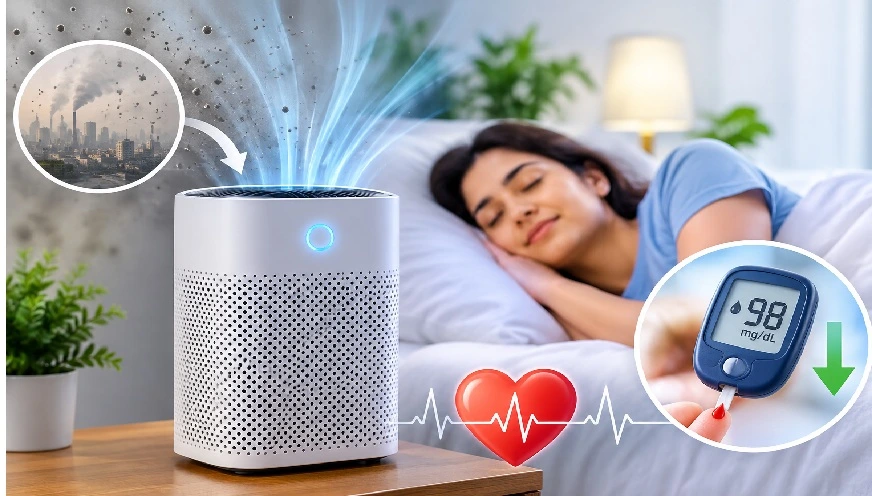
Using high-efficiency particulate air (HEPA) filters at home to reduce exposure to air pollution during sleep may help stabilise blood sugar levels in people with prediabetes, according to a new study led by researchers at NYU Langone Health.
Prediabetes is a condition in which blood glucose levels are higher than normal but not high enough to be classified as diabetes. It increases the risk of developing type 2 diabetes and cardiovascular disease. Previous research has also linked exposure to air pollution with an increased risk of prediabetes and cardiovascular conditions. However, until now it remained unclear whether indoor air filtration could improve blood sugar control in people with prediabetes.
The study, conducted in New York City, involved more than 150 men and women with prediabetes who had no known atherosclerosis, a condition characterised by the build-up of cholesterol and other substances in the arteries.
Researchers had half the study participants sleep with functional portable air filters in their bedrooms for about one month, while the remaining participants used sham filters that did not remove air pollutants.
The functional filters reduced levels of tiny, harmful air particles by 36 per cent. This reduction was associated with an almost 8 per cent decrease in daily blood glucose fluctuations, as well as smaller morning blood sugar spikes following breakfast.
The total excess glucose in the blood after breakfast decreased by an average of approximately 17 per cent, while peak post-breakfast glucose levels fell by 13 per cent.
“Our findings suggest that cleaner air at home, especially in the bedroom, may help people with prediabetes keep their blood sugar steady and blunt morning spikes,” said study lead author and cardiologist Sharine L. Wittkopp, clinical instructor in NYU Grossman School of Medicine’s Department of Medicine and Leon H. Charney Division of Cardiology.
She added that installing HEPA filters could offer an easy, low‑cost tool to help protect heart and metabolic health, alongside healthy eating, regular exercise and prescribed medications.
Air Pollution and Prediabetes
In addition to established risk factors such as poor diet, physical inactivity and smoking, previous studies have associated prediabetes with exposure to air pollutants from vehicle exhaust, wildfires, power plants and industrial emissions.
These fine particles can be less than one-thirtieth the average width of a human hair. When inhaled, they can penetrate deep into the lungs and enter the bloodstream, potentially contributing to various health conditions.
According to the researchers, the new study is the first to investigate whether in-home HEPA air filtration can improve glucose control in adults with prediabetes.
“Our results add to a growing body of evidence that poor air quality is a threat not only to lung health but to heart and metabolic health as well,” said study senior author Jonathan Newman, associate professor in the Department of Medicine and Leon H. Charney Division of Cardiology at NYU Grossman School of Medicine.
He said the findings support broader efforts to reduce air pollution and suggest that healthcare providers should consider indoor air quality when helping patients manage their cardiometabolic risk.
The research team plans to conduct longer-term studies to determine whether air filtration can slow or prevent the progression of prediabetes to diabetes. Future research will also examine whether reducing exposure to indoor air pollution can lower the risk of heart attacks, strokes and other signs of cardiovascular-kidney-metabolic syndrome.
However, Newman cautioned that the findings may not apply to people who already have diabetes or those living in other geographical regions, where the types and levels of air pollution may differ.