






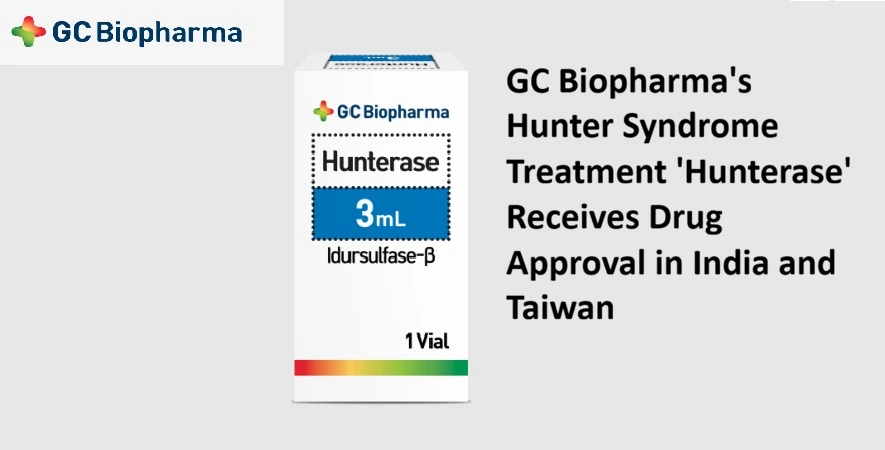
South Korea-based pharmaceutical company GC Biopharma has received marketing authorization from India’s Central Drugs Standard Control Organisation (CDSCO) and Taiwan’s Food and Drug Administration (TFDA) for its Hunter syndrome treatment, Hunterase IV.
In Taiwan, the company has also secured approval for Hunterase ICV, an intracerebroventricular infusion marketed under the brand name Irifaze ICV.
Following the latest approvals, Hunterase IV is now authorized in 14 countries, while Hunterase ICV has been approved in four countries, according to GC Biopharma.
India’s approval of the intravenous formulation is expected to provide significant growth potential for the company, given the country’s high unmet medical need and the relatively low proportion of Hunter syndrome patients receiving existing treatments.
In Taiwan, approval of both the IV and ICV formulations provides access to a market supported by established Hunter syndrome screening programmes and patient-support systems.
GC Biopharma has previously established a presence in key Asian markets, including Japan, China and Malaysia. The company said the latest approvals in India and Taiwan will support its efforts to expand its presence in the global rare disease market.
“These approvals are significant as they address the unmet medical needs of local Asian patients who previously lacked sufficient treatment options. We will continue to dedicate our efforts to improving the quality of life for patients worldwide,” said Eun-Chul Huh, CEO of GC Biopharma.
Hunter syndrome, or mucopolysaccharidosis type II (MPS II), is a rare congenital disorder caused by a deficiency of the lysosomal enzyme iduronate-2-sulfatase (I2S), which is required to break down glycosaminoglycans (GAGs).
The resulting accumulation of GAGs can cause progressive damage across multiple organs, leading to skeletal abnormalities, cardiac dysfunction and cognitive decline. The condition predominantly affects males and occurs in approximately one in 100,000 to 150,000 live male births.
Hunterase ICV is designed to deliver the therapeutic enzyme directly into the cerebral ventricles, effectively bypassing the blood-brain barrier (BBB) into the central nervous system (CNS). The approach is intended to manage symptoms associated with CNS damage, including cognitive decline.
According to GC Biopharma, approximately 70 per cent of all Hunter syndrome patients suffer from severe forms of the disease accompanied by CNS impairment.