





Image: Magnific
Johnson & Johnson has announced two-year results from the Phase 3 ICONIC-LEAD study evaluating ICOTYDE (icotrokinra) in adults and adolescents aged 12 years and older with moderate-to-severe plaque psoriasis (PsO).
ICOTYDE is an oral peptide designed to precisely block the IL-23 receptor, which plays a role in the inflammatory processes associated with moderate-to-severe plaque psoriasis.
According to Johnson & Johnson, the peptide binds to the receptor with single-digit picomolar affinity and has demonstrated potent, selective inhibition of IL-23 signalling in human T cells. The clinical significance of these laboratory findings, however, remains unknown.
The new findings, presented at Fall Clinical Dermatology (FCD) 2026, demonstrated consistently high levels of skin clearance and patient-reported symptom improvement at Week 112, with no new safety signals identified.
“These long-term results affirm that ICOTYDE, as the first and only targeted oral peptide, represents a groundbreaking shift in the treatment of plaque psoriasis,” said David M. Lee, Global Immunology Therapeutic Area Head, Johnson & Johnson.
He added that long-term management is essential for plaque psoriasis and that ICOTYDE aims to address patients’ treatment needs through continued innovation.
Plaque psoriasis
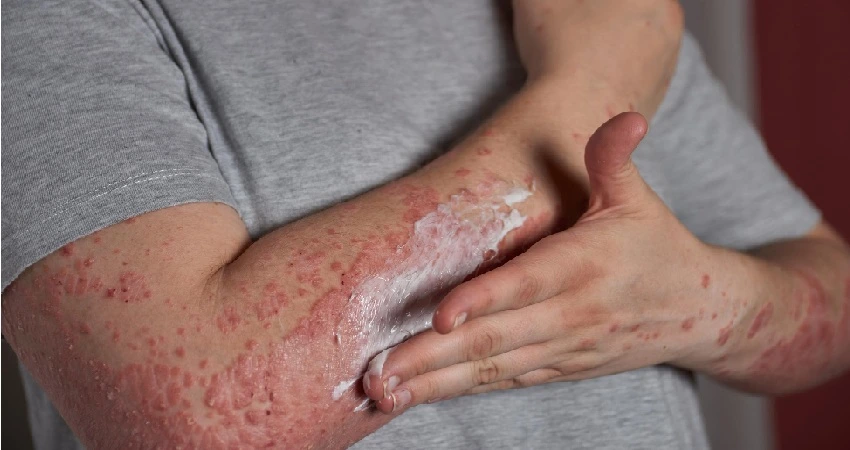
Plaque psoriasis is a chronic, immune-mediated disease characterised by overproduction of skin cells, leading to inflamed, raised and scaly patches that may be itchy or painful. More than 125 million people worldwide are estimated to live with the condition, with nearly one-quarter of those with plaque psoriasis having moderate-to-severe disease.
The plaques may appear red with silvery-white scales on lighter skin tones, while on darker skin they may appear purple, grey or dark brown. Commonly affected areas include the scalp, knees, elbows and torso.
Beyond physical symptoms, plaque psoriasis can affect emotional well-being, relationships and everyday activities, highlighting the need for effective long-term disease management.
ICONIC-LEAD study results
ICONIC-LEAD was a Phase 3 randomised controlled trial evaluating the efficacy and safety of ICOTYDE against placebo in 684 participants aged 12 years and older with moderate-to-severe plaque psoriasis. Of these, 456 received ICOTYDE and 228 received placebo. The study included 66 adolescent patients.
The co-primary endpoints were achieving at least a 90% improvement in the Psoriasis Area and Severity Index (PASI 90) and clear or almost clear skin, defined as an Investigator’s Global Assessment (IGA) score of 0 or 1, with an improvement of at least two grades from baseline.
Key findings through Week 112 included:
Sustained skin clearance: At least 72% of ICOTYDE-treated patients achieved PASI 90, while at least 70% achieved clear or almost clear skin from Week 64 through Week 112.
Complete skin clearance: At least 44% achieved PASI 100, indicating complete clearance according to the PASI measure, and at least 46% achieved an IGA score of 0, indicating clear skin, over the same period.
Sustained itch improvement: Clinically meaningful improvements in itching were maintained in 78% of patients from Week 64 through Week 112.
Response after retreatment: Among patients who achieved PASI 90 at Week 24 and subsequently discontinued treatment, 85% regained the PASI 90 response within 24 weeks of restarting ICOTYDE.
Safety: The safety findings through Week 112 remained consistent with the established safety profile of ICOTYDE, with no new safety signals identified.
“As plaque psoriasis is a chronic lifelong disease, durable results are essential in therapy selection. With two-year data that show long-term skin clearance and a consistent safety profile, ICOTYDE is transforming how we think about plaque psoriasis treatment,” said Mark Lebwohl, Professor and Chair Emeritus, Department of Dermatology, Icahn School of Medicine at Mount Sinai and ICONIC-LEAD study investigator.
Approvals and future indications
Currently, ICOTYDE is approved in the United States for the treatment of moderate-to-severe plaque psoriasis in adults and paediatric patients aged 12 years and older who weigh at least 40 kg and are candidates for systemic therapy or phototherapy. The approved regimen is one pill once daily upon waking, taken with water on an empty stomach at least 30 minutes before eating.
The company also reports approvals in Europe, Japan and China for adults and adolescents with psoriasis.
ICOTYDE was jointly discovered by Protagonist and Johnson & Johnson and is being developed under a licensing and collaboration agreement between the two companies. Johnson & Johnson holds exclusive worldwide rights to develop the treatment in Phase 2 clinical trials and beyond and to commercialise compounds arising from the collaboration across a broad range of indications.
The drug is also being investigated for active psoriatic arthritis, moderately to severely active ulcerative colitis and moderately to severely active Crohn’s disease.