



NITI Aayog (National Institution for Transforming India) has released a sector-wise assessment of the Production Linked Incentive (PLI) Scheme across all 14 sectors, highlighting positive outcomes in pharmaceutical drugs, mixed performance in bulk drugs and an evolving impact in medical devices manufacturing.
Titled ‘Impact Assessment of PLI Schemes‘, the report was prepared in collaboration with the Indian Institute of Management (IIM), Ahmedabad, as the knowledge partner. It evaluates the schemes against four key parameters: investment, production, employment and exports.
The assessment found that the PLI Scheme for Pharmaceuticals Drugs has demonstrated broadly positive outcomes across all four parameters. The Bulk Drugs PLI Scheme, however, presents a mixed picture across its four target segments, while the Medical Devices PLI Scheme remains in an evolving phase, with relatively low incentive disbursement.
PLI Scheme: Background and objectives
The PLI Scheme is a flagship government initiative aimed at strengthening India’s manufacturing competitiveness, integrating domestic companies into global value chains (GVCs) and accelerating the country’s progress towards an Atmanirbhar Bharat.
Launched in April 2020, the scheme initially covered three sectors: mobile manufacturing and specified electronic components; critical key starting materials (KSMs), drug intermediates and active pharmaceutical ingredients (APIs); and medical devices manufacturing.
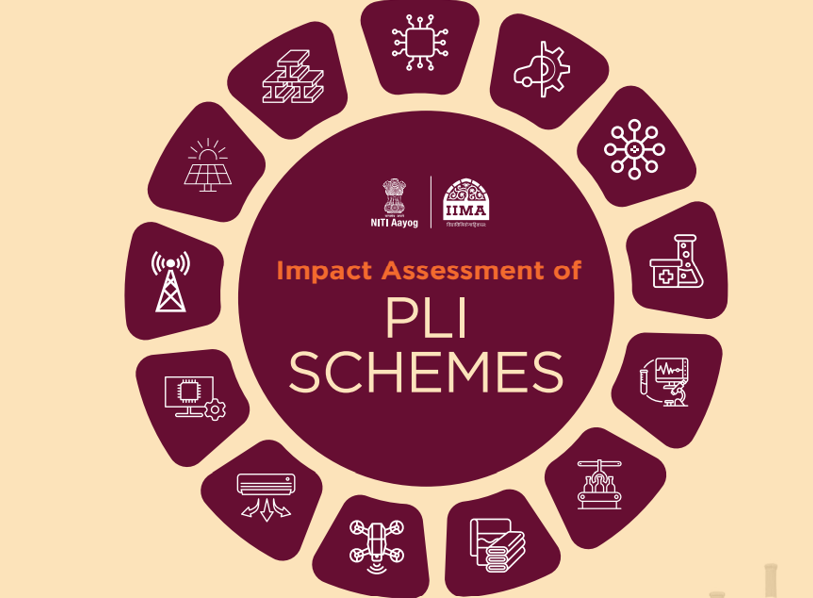
It was subsequently expanded to cover 14 sectors, including automobiles and auto components, pharmaceutical drugs, specialty steel, telecommunications and networking products, electronic products, white goods (air conditioners and LEDs), food products, textiles, solar photovoltaic modules, advanced chemistry cell batteries, and drones and drone components.
The scheme provides financial incentives to eligible companies on incremental sales of goods manufactured in India.

PLI Scheme for Bulk Drugs: Mixed performance across segments
With an outlay of INR 6,940 crore, the PLI Scheme for Bulk Drugs aims to strengthen domestic manufacturing of identified KSMs, drug intermediates and APIs while attracting large-scale investments in the sector.
It covers four product segments: key fermentation-based KSMs and drug intermediates (Segment I); niche fermentation-based KSMs, drug intermediates and APIs (Segment II); key chemical synthesis-based KSMs and drug intermediates (Segment III); and other chemical synthesis-based KSMs, drug intermediates and APIs (Segment IV).
As of March 2026, the scheme had generated investments of INR 5,070 crore, production worth INR 3,270 crore and employment for 5,226 people.
However, performance varied considerably across the four segments, with significant differences in sales, exports, employment and investment.
Segment IV emerged as the strongest and most consistent performer, while Segment I recorded a relatively late but sharp scale-up in production. Segment II showed gradual growth from a low base, whereas Segment III experienced a sustained decline across key performance indicators.
A sharp increase in investment during FY 2024–25, however, points to renewed industry confidence and potential future capacity expansion. Overall, the scheme has supported additional growth, although outcomes remain uneven across segments.
The report highlighted the scheme’s role in reducing India’s dependence on imported pharmaceutical ingredients. India has transitioned from being a net importer of bulk drugs, with a deficit of INR 1,930 crore in FY 2021–22, to a net exporter, recording a surplus of INR 2,280 crore in FY 2024–25.
Before the PLI intervention, India imported nearly 70–80% of its bulk drugs. The scheme has helped establish manufacturing capacity of approximately 55,000 metric tonnes across 26 critical APIs, strengthening domestic production and reducing import dependence on products such as paracetamol, levofloxacin and norfloxacin.
Medical Devices PLI Scheme: Investment and production growth, but impact still evolving
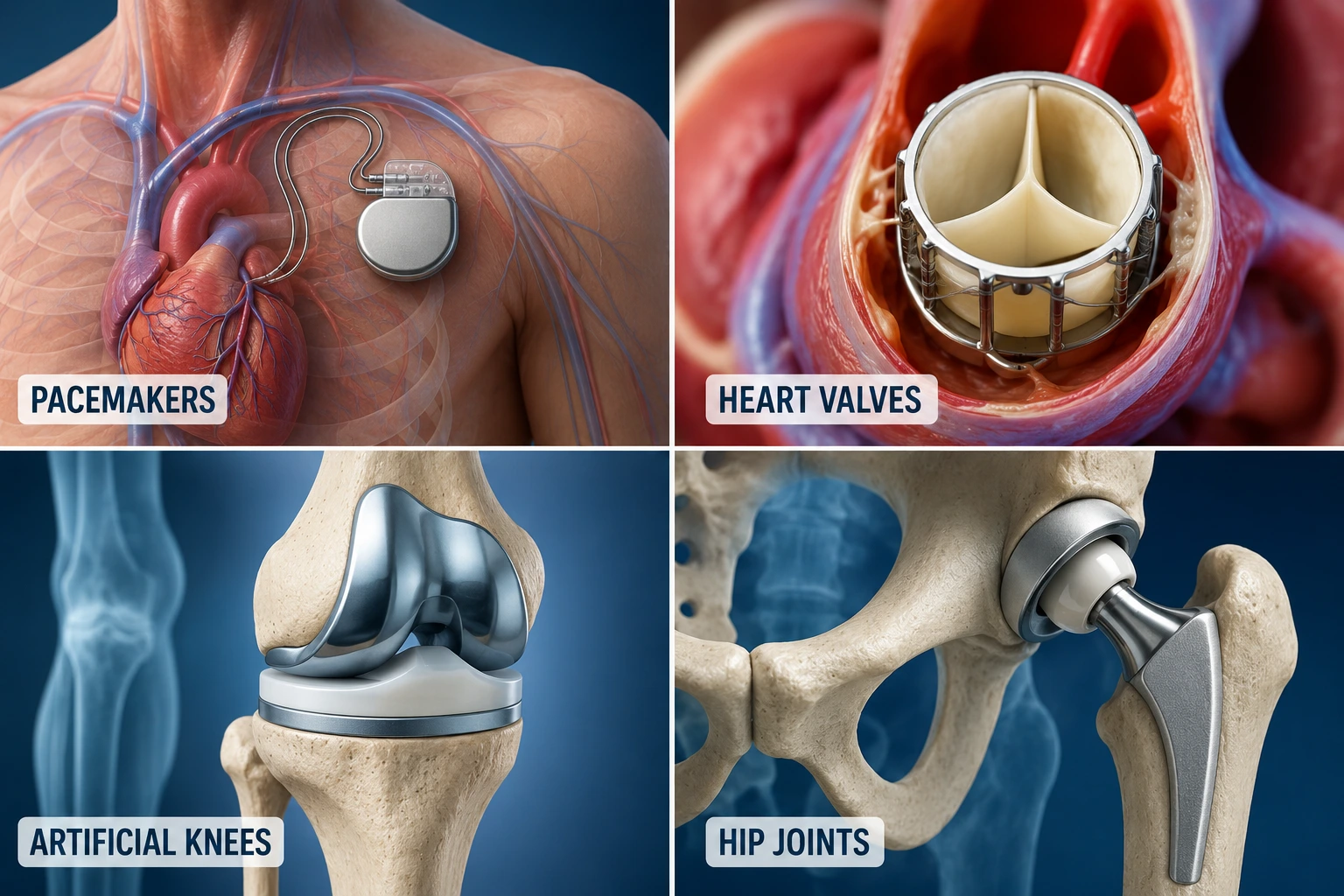
With an outlay of INR 3,420 crore, the PLI Scheme for Medical Devices aims to reduce import dependence and develop a robust domestic medical devices manufacturing ecosystem.
The scheme covers four target segments: cancer care and radiotherapy devices; radiology and imaging medical devices; anaesthesia and cardio-respiratory medical devices; and other medical devices.
Eligible applicants were classified into two categories. Category A covers specified high-value medical devices, while Category B includes other eligible devices. Both categories receive incentives at 5% of eligible incremental sales, subject to a maximum incentive of INR 121 crore per applicant for Category A and INR 40 crore for Category B.
By March 2026, the scheme had generated investments of INR 1,151 crore, sales of INR 14,945 crore and employment for 5,268 people.
According to the assessment, investment has consistently exceeded targets, indicating a strong industry response and additional capital formation. Production, measured through sales, has also followed a steady upward trajectory, while employment has gradually improved and recently surpassed targets.
However, relatively low incentive disbursement and limited information on export trends indicate that the scheme remains in an evolving phase and requires continued monitoring.
“Its full impact, particularly in terms of deep manufacturing capabilities and ecosystem development, is yet to be fully realised,” the report noted.
Pharmaceuticals Drugs PLI Scheme: Strong performance across key indicators
The Pharmaceutical PLI Scheme, with an outlay of INR 15,000 crore, aims to strengthen domestic manufacturing capabilities, promote investment and encourage product diversification towards high-value pharmaceutical goods. It also seeks to enhance India’s position in global pharmaceutical value chains and support the development of globally competitive domestic companies.
Beneficiaries are classified into three groups based on their global manufacturing revenue from pharmaceutical goods and/or in-vitro diagnostic medical devices in FY 2019–20.
Group A comprises companies with revenue of INR 5,000 crore or more; Group B includes companies with revenue of INR 500 crore or more but less than INR 5,000 crore; and Group C covers companies with revenue below INR 500 crore, including micro, small and medium enterprises (MSMEs).
The assessment found a positive overall impact on investment, production, employment and exports, although outcomes varied across company sizes.
Large companies in Group A recorded the strongest performance, supported by economies of scale and integration with global markets. Mid-sized companies in Group B demonstrated steady improvement, while MSMEs experienced more uneven outcomes, particularly in exports, reflecting constraints related to scale and market access.
Investment consistently exceeded targets, while production and employment recorded significant growth, indicating a positive overall industrial impact.
Cumulatively, the scheme had generated investments of INR 45,158 crore, sales of INR 3,64,588 crore and employment for 1,14,880 people by March 2026.
The report highlighted the scheme’s contribution to expanding India’s manufacturing capabilities in high-value formulations, biologics and critical pharmaceutical inputs. The domestic manufacturing of 191 pharmaceutical products for the first time in India was identified as a significant outcome, demonstrating the scheme’s role in expanding technological and manufacturing capabilities.
Pharmaceutical exports also recorded substantial growth, increasing by 32.7% from USD 19,460.5 million in 2021 to USD 25,822.2 million in 2025.
The way ahead lies not merely in continuing the scheme, but in refining its design so that it can deliver deeper and more sustained industrial transformation.
Overall performance of the 14 PLI schemes
The 14 PLI schemes have a combined approved financial outlay of INR 1,91,049 crore. Cumulative incentive disbursements stood at INR 35,354 crore as of March 2026, representing 18.51% of the total outlay.
Across all sectors, the schemes had attracted cumulative investments of INR 2,40,138 crore (76% of the full-tenure target of INR 3,15,092 crore), generated production worth INR 22,66,412 crore (equivalent to 64% of the corresponding full-tenure target of ₹35,37,863 crore) and created employment for 8,49,069 (or 28% of the full-tenure target of 30,18,750) people by March 2026.
The sector-wise assessment found that nearly 70% of the targeted segments were broadly on track, with particularly strong outcomes in large-scale electronics manufacturing, telecommunications and pharmaceutical drugs.
PLI Scheme on Large Scale Electronics Manufacturing, with an outlay of INR 34,193 crore, emerged as one of the strongest performers, particularly in mobile manufacturing, recording significant growth in production, sales, exports and employment across domestic and global companies.
The report also noted that the 14 schemes had completed 58% of their aggregate implementation period, with 578 months completed against a total duration of 996 months. This leaves 42% of the aggregate implementation period, or 418 months, yet to be completed.
Overall, the findings suggest that the PLI Scheme is progressing towards several of its intended objectives, although its full impact is yet to emerge in a number of sectors.
Report calls for targeted policy interventions
The report noted that while the PLI Scheme has delivered encouraging early results, the focus must now shift from assessing its initial success to strengthening its long-term effectiveness.
“The way ahead lies not merely in continuing the scheme, but in refining its design so that it can deliver deeper and more sustained industrial transformation,” it said.
Among its recommendations, the report called for moving beyond a uniform policy approach towards more strategically targeted interventions. It also highlighted the need to incorporate demand-pull mechanisms alongside existing supply-side incentives and standardise data collection and reporting mechanisms across ministries.
The report further emphasised greater industry participation in designing sector-specific policies, along with stronger collaboration between the Central and State governments.
By providing a structured, evidence-based and sector-specific assessment, the report is expected to serve as a reference for policymakers, implementing ministries, industry stakeholders and researchers in shaping a globally competitive, employment-generating and self-reliant manufacturing sector under the vision of Viksit Bharat@2047.
NITI Aayog and IIM Ahmedabad on the way forward
Dr Ashok Kumar Lahiri, Vice Chairman, NITI Aayog, expressed confidence that the report would serve as a useful reference for policymakers, industry and researchers and help strengthen the design and delivery of PLI schemes in the coming years.
“Sustaining the momentum of these initial years will be essential to building lasting industrial strength, thereby reinforcing India’s position as a globally competitive manufacturing hub and contributing to the realisation of Viksit Bharat @2047,” he said.
Anurag Jain, CEO, NITI Aayog, said the assessment highlights evolving outcomes, implementation challenges and the need for complementary policy measures.
“The findings are expected to contribute to the strengthening of existing schemes, improve the design and implementation of future manufacturing policies, ensure efficient utilisation of public resources, generate sustainable economic benefits, enhance India’s global competitiveness and deepen its integration into GVCs,” he added.
Ishtiyaque Ahmed, Programme Director – Industry and Foreign Investment, NITI Aayog, highlighted the importance of manufacturing and exports in achieving the vision of a developed India.
“As we move towards the vision of a developed India, or Viksit Bharat, manufacturing and exports will play the central role. By aligning policy, industry, and innovation, we can ensure that India not only participates in global trade – but helps shape its future,” he said.
Prof. Vishwanath Pingali and Prof. Saral Mukherjee of IIM Ahmedabad observed that the PLI Scheme remains a work in progress and requires continued support.
“Directionally, the scheme is starting to bear fruit; however, in terms of quantitative impact, progress remains varied across sectors and is not yet out of the woods,” they said.
“Overall, PLI is a good initiative by the Government, and is likely to help the Indian industry become more globally competitive in the near future,” they added.