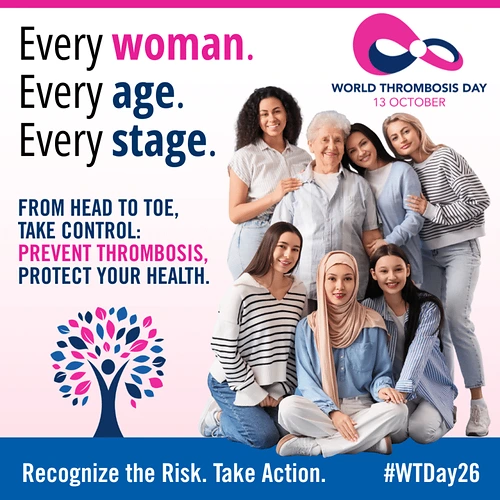







Do you know that women are approximately five times more likely to develop a blood clot (thrombosis) during pregnancy? On World Thrombosis Day, the International Society on Thrombosis and Haemostasis (ISTH) is calling for greater awareness of blood clot risks in women to prevent life-threatening events.
One in four people worldwide die from conditions caused by thrombosis, yet blood clots remain among the most overlooked and misunderstood serious health threats, according to ISTH.
Thrombosis is known as a leading underlying cause of major cardiovascular events, including heart attacks, strokes and venous thromboembolism (VTE). It can also increase the risk of life-threatening complications in people with cancer, heart disease, diabetes, obesity and other chronic conditions.
The World Thrombosis Day 2026 theme, “From Head to Toe, Take Control: Prevent Thrombosis, Protect Your Health,” highlights the links between blood clots and other serious health conditions, empowering individuals with knowledge and prevention strategies to improve health outcomes.
Observed annually on October 13, World Thrombosis Day, led by ISTH, brings together thrombosis professionals, advocates and partners worldwide to raise awareness of blood clot risk factors, warning signs, diagnosis, prevention and timely treatment.
The 2026 global campaign focuses on women’s health, highlighting how blood clot risk can change throughout a woman’s life.
“World Thrombosis Day is more than just one day of awareness. It is a global movement that brings together healthcare professionals, patients, caregivers, advocates and communities to help reduce the impact of blood clots,” said James Douketis, chair of the ISTH World Thrombosis Day campaign.
“This year, we are particularly focused on helping women understand that their risk of blood clots can evolve throughout their lives and that awareness, risk assessment and timely action can make a difference,” he added.
Blood Clot Risks in Women
Although blood clots can affect anyone, women face specific risks associated with reproductive health, hormonal changes and medications that affect hormone levels.
“Women’s risk of developing a blood clot can change throughout life, influenced by hormonal changes, pregnancy, the postpartum period, hormonal medications, surgery and periods of limited mobility,” ISTH said.
The official World Thrombosis Day website notes that while the overall risk of blood clots remains low among healthy women of reproductive age, it is higher among those using estrogen-containing contraceptives than among those not using hormonal contraception.
The website identified key risk factors for deep vein thrombosis (DVT) and pulmonary embolism (PE) in women as follows:
- Hormonal contraception and hormone therapies
- Pregnancy and postpartum recovery
- Reproductive health conditions such as antiphospholipid syndrome
- Inherited clotting disorders such as thrombophilia
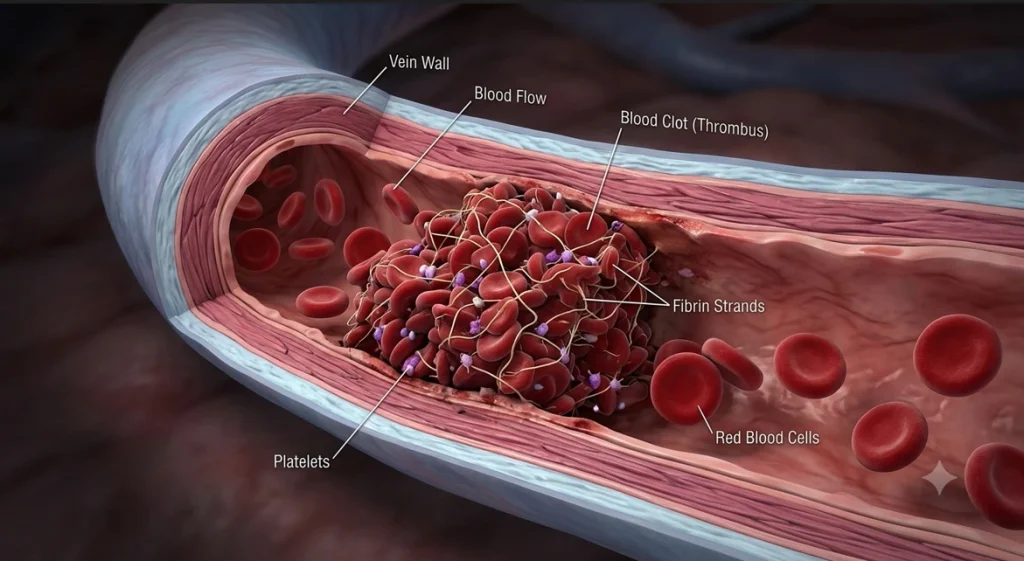
AI-created illustration showing a blood clot within a vein
Hormonal Contraceptives and Blood Clots
Estrogen-containing birth control is associated with increased risk of developing venous thromboembolism.
Some contraceptives containing newer-generation progestins, such as desogestrel or drospirenone, are also believed to carry a slightly higher VTE risk than those containing levonorgestrel.
Other factors that can affect a woman’s chance of developing a blood clot include a previous blood clot, inherited clotting disorders, smoking, obesity, older age and certain medical conditions.
Women are advised to discuss their medical history and individual risk factors with a healthcare professional when choosing a contraceptive method.
Pregnancy and the Postpartum Period
As mentioned on the official World Thrombosis Day website, pregnancy increases the risk of VTE by approximately four to five times compared with the non-pregnant state.
The risk rises further after childbirth, particularly during the first six weeks postpartum, when it may be around 20 times higher than in non-pregnant women.
Blood clot risks during pregnancy are associated with changes in the body that help prevent excessive bleeding during childbirth. Blood becomes more prone to clotting, blood flow through the veins slows, and the growing uterus places pressure on pelvic veins.
Blood clots can develop at any stage of pregnancy or after delivery.
ISTH cited that up to 60% of VTE cases occur during or within 90 days of hospitalisation, highlighting the importance of identifying risk factors and implementing appropriate preventive measures before, during and after hospital care
Perimenopause, Menopause and Blood Clot Risks
Perimenopause, which typically begins in the mid-to-late 40s, can cause symptoms such as hot flashes, night sweats and sleep disturbances. For women considering hormone therapy to manage these symptoms, the type and route of estrogen administration can influence VTE risk.
Oral estrogen therapy is associated with an approximately two- to three-fold increase in VTE risk, while transdermal estrogen delivered through patches, gels or sprays appears to carry a lower risk.
Women with inherited clotting disorders, including Factor V Leiden and the prothrombin gene mutation, may face additional risks when using hormone therapy.
Treatment decisions should be made in consultation with a healthcare professional after assessing the potential benefits and risks.
Recognising and Preventing Blood Clots
Awareness of personal risk factors and early recognition of symptoms can help reduce the risk of serious complications from thrombosis.
Deep vein thrombosis (DVT) and pulmonary embolism (PE), collectively known as venous thromboembolism (VTE), occur when blood clots form in veins.
DVT typically causes swelling, pain, warmth and redness in the affected limb, while PE occurs when a clot travels to the lungs, potentially causing chest pain, shortness of breath and a rapid heart rate. In severe cases, PE can be life-threatening.
ISTH’s World Thrombosis Day campaign encourages communities to take action to improve awareness of blood clot risks.