






India is working towards eliminating hepatitis as a public health threat by 2030 through a comprehensive and integrated healthcare strategy. Under the National Viral Hepatitis Control Programme (NVHCP), the government has expanded access to screening, diagnosis and treatment while integrating hepatitis services with several existing national health programmes.
The initiative focuses on breaking healthcare barriers by providing free diagnostics and medicines, raising awareness, and improving access to care across the country.
What is Hepatitis?
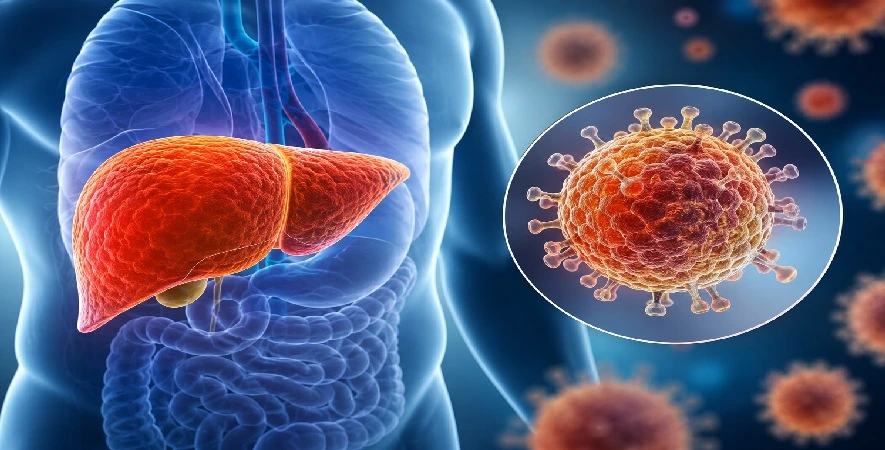
Hepatitis is an inflammation of the liver caused primarily by hepatitis viruses, although it can also result from excessive alcohol consumption, certain medications, toxins, or autoimmune diseases.
There are five main types of hepatitis viruses—A, B, C, D and E. Among these, Hepatitis B (HBV) and Hepatitis C (HCV) are the most serious because they can cause chronic liver disease, cirrhosis and liver cancer if left untreated.
Hepatitis Burden in India
According to India’s 2021 HIV Sentinel Surveillance, approximately 0.85% of people tested positive for Hepatitis B, while 0.29% tested positive for Hepatitis C. This translates to roughly one in every 118 people living with Hepatitis B and one in every 345 people living with Hepatitis C.
National Viral Hepatitis Control Programme
Recognising hepatitis as a major public health concern, the Government of India launched the National Viral Hepatitis Control Programme (NVHCP) in 2018 to combat this disease by providing screening and treatment services. The programme aligns with the United Nations’ Sustainable Development Goals (SDGs), which aim to eliminate viral hepatitis as a public health threat by 2030.
According to the Ministry of Health and Family Welfare, as of March 2026, the programme has screened around 21.06 crore people, treated nearly 6.12 lakh patients with Hepatitis B and C, and established 1,153 treatment centres across the country.
The programme combines preventive, promotive and curative interventions, with a focus on raising awareness, increasing access, and providing diagnosis and treatment for everyone in need.
Key Features of NVHCP
The programme addresses all five hepatitis viruses—A, B, C, D and E—and includes several targeted interventions:
- Hepatitis A and E, which are usually acute, symptomatic and prone to outbreaks, are monitored through the Integrated Disease Surveillance Programme (IDSP).
- Free diagnostic tests and medicines are provided for eligible patients with Hepatitis B and C.
- A paperless Management Information System (NVHCP-MIS) enables digital recording, reporting and patient monitoring across treatment centres
Integration with National Health Programmes
The government’s hepatitis elimination strategy is closely integrated with several existing national health programmes.
Reproductive, Maternal, Newborn, Child, Adolescent Health and Nutrition programme
- Universal screening of pregnant women for Hepatitis B
- Universal immunisation programme, ensuring hepatitis B birth dose to all newborns and Hepatitis B immunoglobulin (HBIG) for babies born to Hepatitis B-positive mothers, along with the birth dose vaccine within 24 hours of birth.
National AIDS Control Programme (NACP)
- Screening of high-risk groups for hepatitis B and C either through health facilities and outreach programmes.
- Hepatitis B vaccination for healthcare workers and Hepatitis B-negative high-risk groups.
National Tuberculosis Elimination Program (NTEP)
- Existing molecular testing infrastructure under NTEP is also used for hepatitis diagnosis, improving access to testing.
Blood Transfusion services
- Blood donors who test positive for Hepatitis B or C are linked to appropriate treatment and follow-up care.
Modes of Transmission, Prevention and Treatment
Hepatitis A (HAV)
Transmission
- Faecal-oral route via contaminated food or water.
- Poor sanitation and unsafe drinking water.
Prevention
- Safe drinking water.
- Improved sanitation and good personal hygiene.
Treatment
- Usually resolves on its own.
- Supportive care, including adequate hydration and nutrition.
- No specific antiviral available
Hepatitis B (HBV)
Transmission
- Mother-to-child transmission during childbirth.
- Contact with infected blood, blood products or body fluids.
Prevention
- Vaccination under the Universal Immunisation Programme.
- Birth dose within 24 hours, followed by doses at 6, 10 and 14 weeks.
Treatment
- Eligible patients with chronic Hepatitis B receive antiviral medicines as per national treatment guidelines.
Hepatitis C (HCV)
Transmission
- Exposure to blood from unsafe injections and medical procedures.
- Sharing contaminated needles or syringes.
- Exposure to infected blood or body fluids.
Prevention
- Safe injection practices.
- Harm-reduction measures such as needle-exchange programmes.
- There is currently no vaccine against Hepatitis C.
Treatment
- Direct-Acting Antiviral (DAA) medicines can cure nearly all patients within 12 to 24 weeks.
Hepatitis D (HDV)
Transmission
- Contact with infected blood and body fluids.
- Occurs only in people already infected with Hepatitis B.
Prevention
- Hepatitis B vaccination also protects against Hepatitis D by preventing HBV infection.
Hepatitis E (HEV)
Transmission
- Contaminated food and water.
- Poor sanitation and lack of safe drinking water.
Prevention
- Safe drinking water
- Improved sanitation and hygiene practices.
Treatment
- Usually self-limiting.
- Supportive care (hydration and nutrition) remains the primary treatment, as there are no specific antiviral medicines.