





India is emerging as a key growth market for gastroesophageal reflux disease (GERD) devices, supported by rising disease prevalence, increased diagnosis and the growing demand for minimally invasive treatment options.
According to a new report by Future Market Insights (FMI), India’s GERD device market is expected to grow at a compound annual growth rate (CAGR) of 4.5 per cent through 2036, making it the second-fastest growing market globally, behind the United States (5.2 per cent).
Globally, the GERD device market is projected to increase from USD 1.3 billion in 2026 to USD 1.9 billion by 2036, registering a CAGR of 3.9 per cent during the forecast period.
Growing burden of GERD fuels demand
The rising prevalence of acid reflux and related gastrointestinal disorders is driving demand for advanced diagnostic and treatment technologies worldwide.
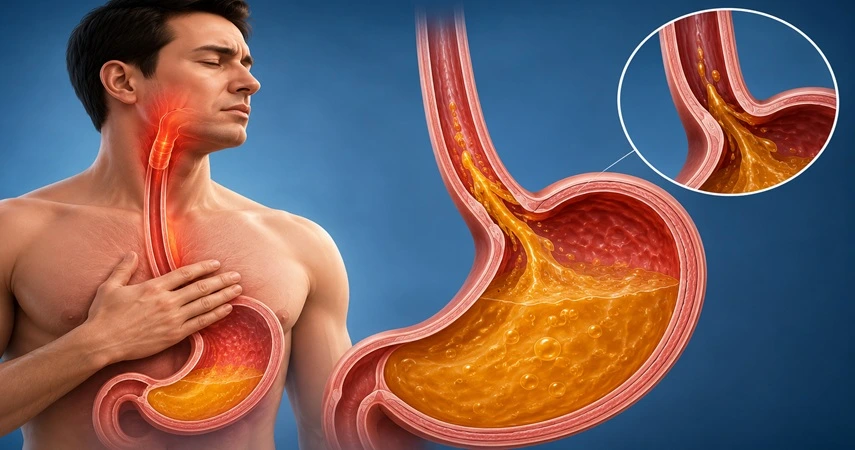
GERD is a chronic and often recurrent gastrointestinal disorder that occurs when stomach acid flows back into the oesophagus, causing troublesome symptoms and, in some cases, serious complications. The most common symptoms include heartburn, acid regurgitation and chest discomfort, although the condition may also present with extra-oesophageal manifestations such as chronic cough, hoarseness and asthma-like symptoms.
Globally, GERD is believed to be one of the most common gastrointestinal disorders, affecting around 20 per cent of adults in Western countries and increasingly emerging as a significant public health concern in developing economies, including India.
If left untreated, chronic GERD can lead to complications such as oesophagitis, oesophageal strictures, Barrett’s oesophagus, oesophageal adenocarcinoma and certain pulmonary disorders.
The growing prevalence of GERD has been linked to sedentary lifestyles, obesity, high-calorie and processed diets, increasing consumption of fast food, and chronic stress.
As more patients experience persistent symptoms that do not respond adequately to medication, healthcare providers are increasingly turning to objective diagnostic tools such as pH monitoring, oesophageal manometry, endoscopy, and upper gastrointestinal imaging before recommending advanced interventions.
The FMI report notes that the expansion of hospital endoscopy infrastructure and growing investments in private healthcare are supporting growth in India’s GERD device market.
Shift towards minimally invasive procedures
The adoption of minimally invasive anti-reflux procedures is also gaining momentum. Procedures such as fundoplication and magnetic sphincter augmentation are increasingly being considered for patients with chronic or refractory GERD, offering long-term symptom control while reducing recovery time.
Manufacturers are also introducing technologies designed to improve both patient experience and clinical outcomes. Wireless pH monitoring systems are replacing traditional catheter-based testing in many settings, while advanced endoscopic imaging platforms are enabling clinicians to better identify anatomical causes of reflux and plan appropriate treatment.
Digital workflow integration and procedure guidance tools are also helping improve treatment precision and clinical outcomes.
As per the report, oesophagoscopes and gastroscopes are projected to hold the largest market share at 42 per cent, reflecting continued demand for upper gastrointestinal visualisation during GERD diagnosis.
Fundoplication devices, pH monitoring systems, manometry systems, sphincter augmentation devices and radiofrequency ablation technologies are also expected to see growing adoption as treatment options expand.
Challenges remain
Despite favourable growth prospects, the report highlights several barriers that could slow market expansion.
High costs associated with advanced GERD procedures and implantable systems continue to limit wider adoption, particularly in cost-sensitive healthcare settings. Hospitals also require specialised surgical expertise and sufficient patient volumes to justify investments in advanced technologies.
In addition, reimbursement constraints, pricing pressures, lengthy regulatory approval processes and the need for specialised physician training remain key challenges for device manufacturers.
Market leaders
The market continues to be led by global medical technology companies with strong endoscopy and gastrointestinal portfolios, including Olympus Corporation, Fujifilm Holdings Corporation and PENTAX Medical. Other notable players include KARL STORZ, Johnson & Johnson MedTech, Merit Medical Systems, LABORIE and Diversatek.
Future outlook
FMI concludes that the GERD device market is transitioning from a niche reflux treatment segment into a high-value diagnostic and procedural care market. Companies that combine device innovation with strong clinical support and service infrastructure are expected to be best positioned to capitalise on the next phase of market growth.