





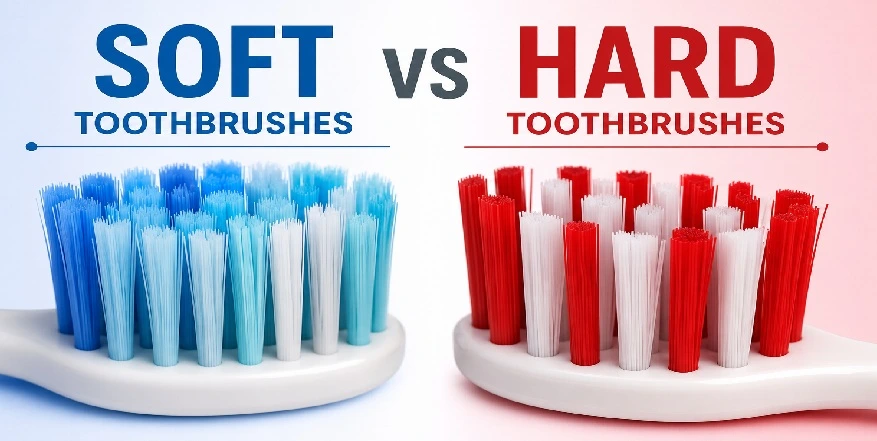
Many people believe that a firmer toothbrush cleans teeth better. However, a growing body of clinical evidence suggests otherwise. Research increasingly shows that soft-bristled toothbrushes are just as effective at removing plaque—and in some situations, they may even perform better than medium or hard-bristled brushes.
A study conducted by researchers at the University of Zürich evaluated the cleaning efficacy of soft and medium-bristled toothbrushes on teeth fitted with fixed orthodontic brackets, where plaque tends to accumulate around wires and attachments. The findings, published in PubMed in April 2026, revealed that toothbrushes with softer bristles consistently cleaned more effectively than harder ones. This advantage remained consistent with both new toothbrushes and those subjected to six months of simulated wear, regardless of the brushing motion used.
The researchers also found that horizontal brushing was more effective than circular brushing at every stage of the study.
“The choice of softer bristles and horizontal brushing techniques may increase the cleaning efficacy on orthodontic appliances,” the researchers noted.
The benefits of soft bristles are not limited to people wearing braces. An earlier study by the same research team, published in May 2023, compared soft and medium-bristled toothbrushes on regular tooth surfaces using bovine dentin as a substitute for human dentin.
The study assessed brushing at four different pressure levels and found no significant difference in cleaning efficacy between the two types of toothbrushes. Importantly, increasing the brushing force during the two-minute brushing time did not improve cleaning performance.
What did differ was the amount of tooth wear. Medium-bristled toothbrushes caused greater dentin abrasion, particularly when used with higher brushing pressure. In other words, brushing harder with a firmer toothbrush does not clean teeth better—it simply increases the risk of damaging tooth structure.
The impact on gum health is equally significant. A systematic review of 13 clinical studies, published in October 2020 in the same journal, found that hard-bristled toothbrushes caused more gingival lesions than medium- or soft-bristled brushes. The review concluded that soft and extra-soft bristles are generally safe for everyday use, while harder bristles pose a measurable risk of gum tissue damage over time.
“The instinct to brush harder is understandable, but the research keeps pointing in the same direction. Gentle, consistent brushing with soft bristles is more effective and less destructive,” said Rachel Zhang, Founder and Designer of Tonochi, an oral care firm based in San Francisco.
Preventing Oral Diseases
Experts say regular removal of dental plaque biofilm is essential for preventing oral diseases such as dental caries, gingivitis, and periodontitis. This is particularly important for patients wearing fixed orthodontic appliances, who often struggle to clean around brackets and wires. Increased plaque accumulation in these areas can disrupt the balance of the oral microbiome (dysbiosis), leading to the formation of white spot lesions (an early sign of tooth decay) that frequently appear after braces are removed and can be difficult to treat.
The University of Zürich study suggests that using a soft-bristled toothbrush together with a horizontal brushing technique may improve plaque removal around orthodontic appliances and help reduce this risk.
Using a toothbrush with fluoride toothpaste remains the most common and effective way to remove plaque. However, researchers emphasised that brushing alone is not enough to prevent white spot lesions. Maintaining good plaque control and limiting the frequent consumption of sugary foods and acidic drinks are all essential for protecting teeth and reducing the risk of tooth decay.