





Apollo TeleHealth has expanded its Digital Dispensary network to 66 centres across Odisha’s Keonjhar district, providing healthcare services to more than 30,000 patients every month.
Launched in September 2023, the initiative aims to improve access to doctors, diagnostics and medicines for remote tribal and mining communities. The programme is being implemented in partnership with the Chief District Medical & Public Health Officer (CDM&PHO), Keonjhar, with support from the District Mineral Foundation (DMF).
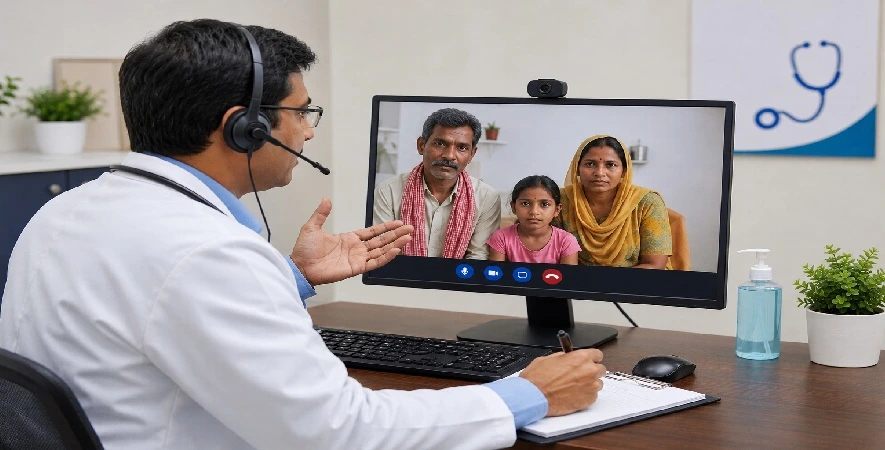
The Digital Dispensary model integrates teleconsultations, diagnostics, pharmacy services and referral care within the public healthcare system, enabling patients to access multiple healthcare services closer to home.
According to Apollo TeleHealth, the initiative is among Odisha’s first integrated Digital Dispensary models and demonstrates how technology-enabled public-private partnerships can strengthen healthcare delivery in underserved regions.
In less than three years, the programme has grown rapidly to 66 centres across the district. It has crossed one million teleconsultations, generated more than one million prescriptions, facilitated over 200,000 diagnostic tests and supported more than 20,000 referrals for specialised care.
Apollo TeleHealth said over 90 per cent of patients now receive treatment at the point of care, with waiting times reduced to just five to eight minutes. The model has also significantly lowered the time and cost involved in travelling long distances to access essential healthcare services.
Commenting on the milestone, Dr. Sangita Reddy, Joint Managing Director, Apollo Hospitals Group, said, “When we started this work in Keonjhar, the goal was simple — get care to people who’d otherwise have to travel hours just to see a doctor. Crossing a million teleconsultations tells us that’s actually happening, at a scale most people wouldn’t have thought possible in a district like this.”
Dr. Reddy said the milestone was significant not only because of the number of teleconsultations but because it reflected an integrated healthcare model that combines diagnostics, medicines and referral services.
She noted that one of the biggest challenges in rural healthcare is not the availability of treatment, but timely access to it, adding that such integrated models can help bridge that gap.
“If we can keep building models like this, ones that plug into the public health system rather than sit alongside it, I think we start to change what primary healthcare looks like for a lot of underserved parts of the country,” she added.
Dr Rina Pradhan, IAS, CEO of the District Mineral Foundation (DMF), Keonjhar, said the one million teleconsultation milestone highlights how DMF resources can create long-term public health value when invested in innovative, community centric healthcare models.
According to her, the initiative demonstrates how “technology, when embedded within the public health system and supported through strong institutional partnerships, can significantly improve healthcare access, enable early diagnosis, and reduce avoidable delays in treatment for vulnerable communities.”
Beyond expanding access to healthcare, the initiative has strengthened the early detection and management of conditions such as malnutrition, malaria, dengue and chronic diseases. It has also improved utilisation of antenatal care services and enabled timely referrals for patients requiring advanced treatment, contributing to stronger primary healthcare outcomes across the district.
Building on this progress, Apollo TeleHealth plans to strengthen services across its existing Digital Dispensaries by expanding access to specialist consultations, point-of-care diagnostics, preventive health screening, digital disease management and referral services.
The organisation also intends to explore extending the model to other tribal, remote and underserved regions across India, adapting it to local healthcare needs while strengthening technology-enabled primary healthcare delivery.