





India has made significant progress in improving healthcare affordability and reducing the financial burden on households over the past decade.
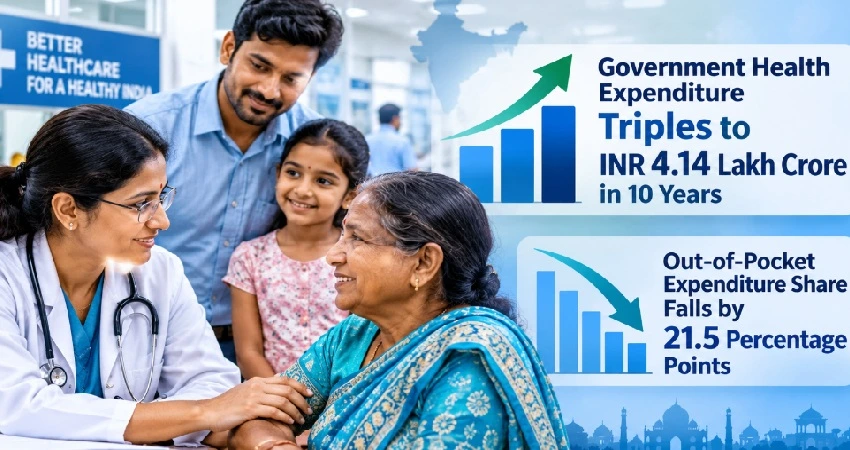
According to the National Health Accounts (NHA) Estimates for India 2023–24, released by the Union Ministry of Health and Family Welfare, Government Health Expenditure (GHE) has more than tripled over the past decade, reaching INR 4.14 lakh crore in 2023–24. Meanwhile, households’ Out-of-Pocket Expenditure (OOPE) as a share of Total Health Expenditure (THE) declined from 64.2% in 2013–14 to 42.7% in 2023–24.
The government has attributed these changes to sustained efforts to strengthen public healthcare infrastructure, expand primary healthcare services, improve financial protection and enhance access to affordable medicines, diagnostics and treatment.
“The simultaneous increase in public healthcare financing and decline in the proportion of spending borne directly by households reflects India’s progress towards a more accessible, affordable and financially protective healthcare system,” the Ministry stated.
Households’ out-of-pocket expenditure falls by 21.5 percentage points
One of the key findings of the NHA 2023–24 estimates is the significant decline in households’ share of out-of-pocket healthcare expenditure.
OOPE as a proportion of Total Health Expenditure fell from 64.2% in 2013–14 to 42.7% in 2023–24, marking a reduction of 21.5 percentage points. The share also declined from 43.4% in 2022–23 to 42.7% in 2023–24.
The decline indicates a reduction in the proportion of total healthcare expenditure financed directly by households.
Government health expenditure triples to INR 4.14 lakh crore
Government Health Expenditure increased from INR 1,29,778 crore in 2013–14 to INR 4,14,196 crore in 2023–24, representing more than a threefold increase over the decade.
The government’s share in Total Health Expenditure also increased by 14.9 percentage points during this period.
“This growing contribution signifies a major shift in the country’s healthcare financing pattern, with public resources playing a considerably larger role in meeting healthcare expenditure,” the Ministry noted.
Public healthcare spending per person rises nearly threefold
Per capita Government Health Expenditure increased from INR 1,042 in 2013–14 to INR 2,959 in 2023–24, representing an approximately 2.8-fold increase.
The rise reflects the expansion of government healthcare spending on a per-person basis and public healthcare financing over the past decade.
Primary healthcare receives major boost
The NHA estimates highlight the government’s increased focus on strengthening primary healthcare, with expenditure on primary healthcare reaching approximately INR 1.53 lakh crore in 2023–24.
The investment comes amid the expansion of Ayushman Arogya Mandirs, which aim to bring comprehensive primary healthcare services closer to communities.
These facilities provide a range of services, including preventive and promotive healthcare, screening for non-communicable diseases, essential medicines, diagnostics and other primary healthcare interventions.
The focus on primary healthcare is intended to strengthen early disease detection, prevention and access to care at the grassroots.
Social security financing share increases to 11%
Social Security Expenditure on Health increased from 6% of Total Health Expenditure in 2013–14 to 11% in 2023–24, registering an increase of five percentage points.
This category includes government-financed health insurance schemes such as Ayushman Bharat – Pradhan Mantri Jan Arogya Yojana (AB PM-JAY), state-specific health insurance schemes, social health insurance and medical expenditure for government employees.
According to the Ministry, the increase in social security financing is particularly significant as it strengthens mechanisms designed to protect individuals and families against financial risks associated with medical treatment.
Private Health Insurance Expenditure also recorded an increase, rising from 3.4% of Total Health Expenditure in 2013–14 to 10.2% in 2023–24. The rise reflects deepening health insurance penetration across the country.
Government initiatives expanding access to affordable healthcare
India’s changing healthcare financing landscape has been accompanied by several government initiatives aimed at making healthcare more accessible, affordable and inclusive.
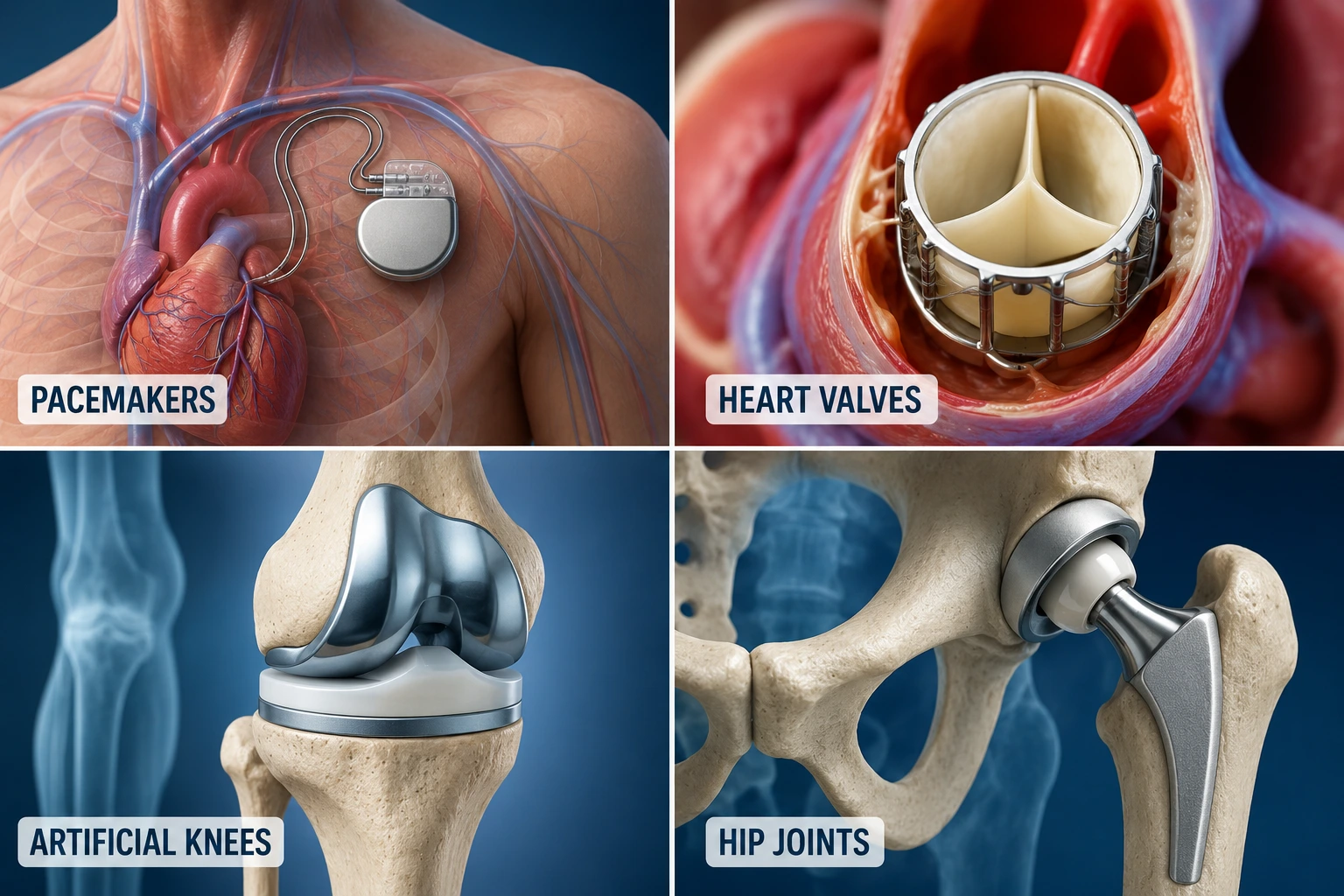
These include the Free Drugs and Diagnostics Initiatives, Pradhan Mantri National Dialysis Programme, Pradhan Mantri Bhartiya Janaushadhi Pariyojana and Affordable Medicines and Reliable Implants for Treatment (AMRIT) pharmacies.
Ayushman Arogya Mandirs are expanding comprehensive primary healthcare services closer to people’s homes, while AB PM-JAY provides eligible beneficiaries with cashless hospitalisation benefits.
These efforts are complemented by pharmaceutical price regulation undertaken by the National Pharmaceutical Pricing Authority (NPPA), the Ministry stated.
National Health Accounts Estimates for India 2023–24
The National Health Accounts Estimates for India 2023–24 constitute the eleventh round of estimates prepared by the National Health Accounts Technical Secretariat (NHATS) at the National Health Systems Resource Centre (NHSRC), under the Ministry of Health and Family Welfare.
The estimates have been prepared using the internationally recognised System of Health Accounts 2011 framework.
Commenting on the findings, Union Health Minister Jagat Prakash Nadda said, “As the country progresses towards Viksit Bharat, evidence from NHA estimates shows that, alongside substantial economic growth, the government has played an important role in ensuring equitable and accessible healthcare for all.”
He said the findings reflect the effectiveness of government initiatives in improving healthcare access across the country.
Union Minister of State for Health and Family Welfare Prataprao Jadhav said the regular availability of NHA estimates would help monitor progress towards healthcare financing goals and support evidence-based policymaking at both national and state levels.