





Environmental research and advocacy organisation Toxics Link has urged the government to impose a nationwide ban on the manufacture, import, sale and distribution of mercury-containing skin-lightening products following the Maharashtra Food and Drugs Administration’s (FDA) recent crackdown on toxic cosmetics.
The organisation welcomed the Maharashtra FDA’s action against nine skin-lightening products found to contain unsafe levels of mercury, with one product also testing positive for excessive lead. It described the move as “a critical public health intervention” and called for similar enforcement across India.
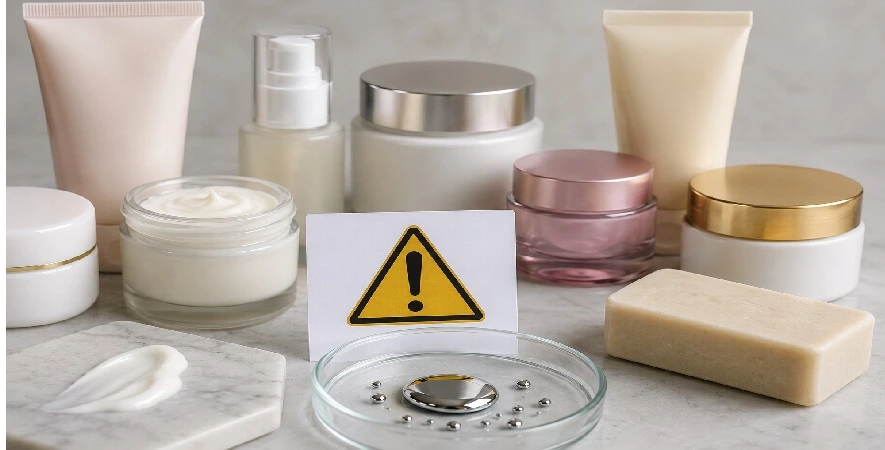
In a public alert issued on July 10, 2026, the Maharashtra FDA declared nine cosmetic skin-lightening products (eight creams and one soap) as “Not of Standard Quality” after laboratory testing detected mercury levels beyond the prescribed limits. The regulator ordered an immediate halt to their sale, stocking and distribution and initiated a market recall.
The affected products include Skinia Korean Goree Beauty Cream, Face Fresh Gold Plus Beauty Cream and Beauty Serum, Dazller Eterna Day Care Light Cream, Parley Beauty Cream, Malika Premium Beauty Cream, Goree Beauty Cream with Lycopene, Goree Whitening Soap, Parley Goldie Advanced Beauty Cream Pearl Shine and Hania Beauty Cream.
According to Toxics Link, most of these products are manufactured in Pakistan and remain easily available in India, particularly through e-commerce platforms. Several of these products were also found to be misbranded, lacking mandatory information such as manufacturer details, batch numbers, manufacturing dates and expiry dates. All of the products violated the national standard for mercury content in creams.
While applauding Maharashtra’s prompt response, the organisation warned that consumers across the country remain at risk as mercury-containing skin-lightening products continue to be widely available through retail stores, informal markets and online platforms.
“The Maharashtra FDA has demonstrated that regulatory vigilance can protect consumers from hazardous products. However, restricting action to one state is not enough. Toxic cosmetics do not respect state boundaries. India urgently needs a nationwide ban on mercury-containing skin-lightening products, backed by strict enforcement and sustained public awareness,” said Satish Sinha, associate director, Toxics Link.
Toxics Link cautioned that mercury is a potent neurotoxin capable of damaging the brain, kidneys and nervous system. Prolonged use of mercury-containing creams allows the metal to be absorbed through the skin, posing serious health risks to users, particularly for pregnant women, infants and young children, whose neurological development may be affected. Mercury from these products can also enter wastewater systems, contributing to long-term environmental pollution.
The organisation further highlighted that the continued sale of such products exploits deep-rooted social biases around skin colour while exposing consumers to hazardous substances without their knowledge.
Toxics Link also pointed out that India is a signatory to the Minamata Convention on Mercury, a global treaty aimed at protecting human health and the environment from mercury pollution. It said the continued availability of mercury-containing cosmetics is inconsistent with the Convention’s objectives and reflects gaps in market surveillance and enforcement.
The organisation has urged the Ministry of Health and Family Welfare, the Central Drugs Standard Control Organisation (CDSCO) and the Bureau of Indian Standards (BIS) to ban mercury-containing skin-lightening cosmetics nationwide, strengthen surveillance and routine testing of products sold both online and offline, ensure swift product recalls and strict action against violators, and tighten customs checks to prevent the import of non-compliant cosmetic products.